

by Aksel Sundström
While ecomodernist ideas—e.g., the notion that modern technology can solve environmental problems—are widespread among citizens, we know little about their stability. In my article, I explore how ecomodernist beliefs are affected by major catastrophes. Leveraging the happenstance that the Fukushima-Daiichi accident occurred during the fieldwork of a 2011 public opinion survey in Israel, this piece makes several interesting inferences.
Ecomodernism advocates that humanity can reduce its environmental footprint through technological innovation while maintaining economic growth. Ecomodernists often promote technologies like nuclear power and geoengineering as vital tools for rapidly cutting carbon emissions. However, not everyone shares this optimism. Critics argue that a technology-first approach may overlook ecological limits and social risks. This raises an important question: how does techno-optimistism shift when technology fails dramatically?
My study identifies a unique opportunity to investigate attitude shifts surrounding the Fukushima disaster. This event occurred during data collection for the European Social Survey (ESS) in Israel, a survey fieldwork that was unaffected by the events in Japan, creating quasi-natural conditions to experimentally analyze how sudden catastrophes influence ecomodernist beliefs. As seen in figures 1 and 2, both news media and people’s Google search trends in the country suggest that the events were very much present in the public debate.
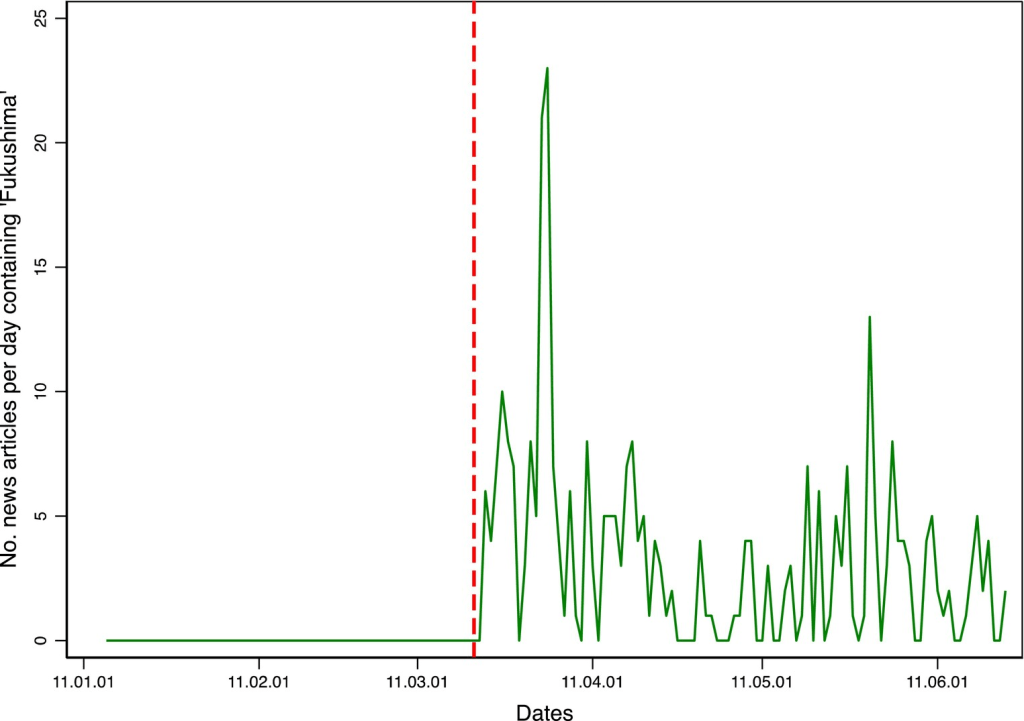
Figure 1. Print media news attention.
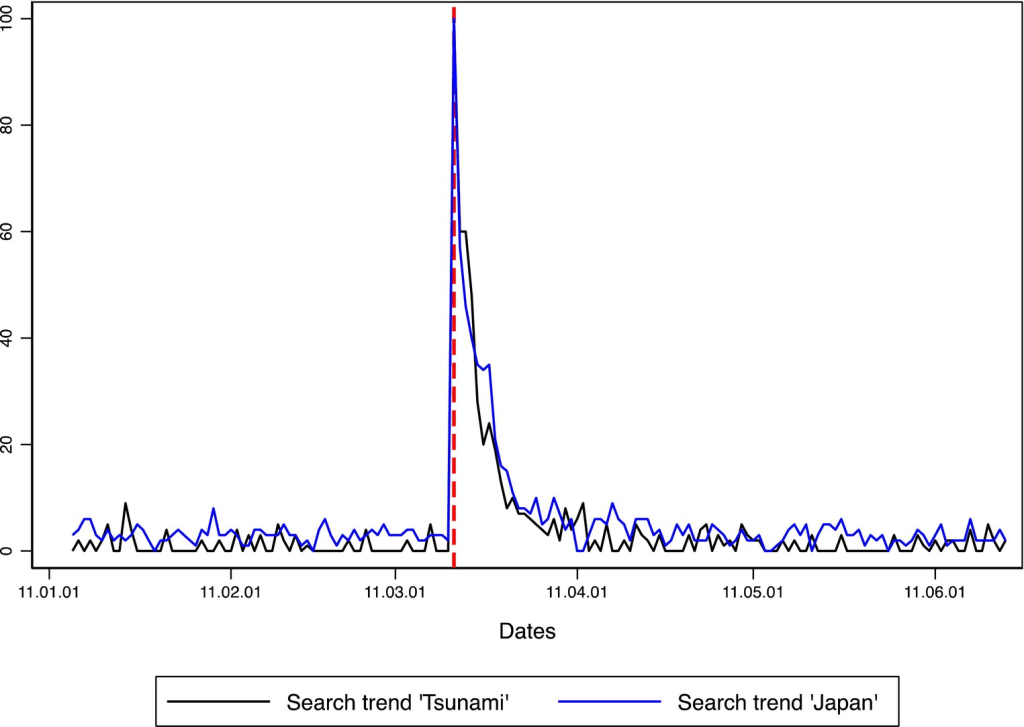
Figure 2. Google search trends.
The ESS survey – rolled out to a nationally representative sample – measured survey participants’ agreement with the statement: “Modern science can be relied upon to solve environmental problems.” The disaster took place in the middle of the fieldwork period. Results reveal that those surveyed after Fukushima were, on average, less likely to agree with this statement than those interviewed before the disaster. The effect was particularly pronounced among respondents with higher education, a group typically more trusting of science and technology. Figure 3 illustrates this interaction, showing how the effect is stronger among those with longer education.
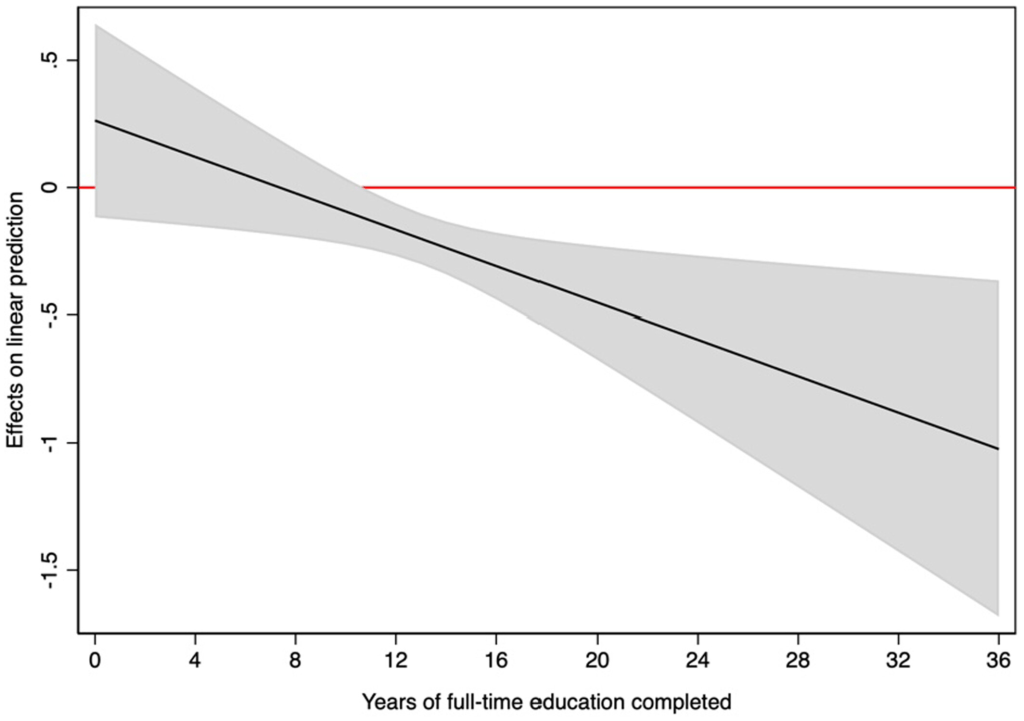
Figure 3. Main effects from Fukushima by respondents’ education years.
The study also corroborates these findings in a survey experiment with participants in two settings: Israel and the United States. In this extended analysis, an information vignette about the risk of nuclear power plant failures (compared to a control group that received no such information) provided similar effects on ecomodernist beliefs, suggesting that these effects are found when replicated with alternative approaches.
In the literature, environmental disasters can be seen as focusing events that draw attention to the risks of technological solutions. Interestingly, several authors have still described people’s beliefs about technological optimism as a “stable trait.” The events at Fukushima-Daiichi exposed vulnerabilities in complex technological systems, prompting heightened awareness of the risks with nuclear power and undermining broader trust in science’s ability to tackle environmental challenges. Hence, ecomodernist attitudes are more malleable than often assumed.
Given that public trust in technology wanes after disasters, it can become harder to rally support for large-scale technological initiatives, such as building new nuclear power plants or advancing geoengineering projects.
Policymakers need to recognize that trust in technological solutions is fragile and sensitive to external shocks. This study highlights that people’s beliefs about technology’s role in solving environmental problems are not static. By better understanding how such attitudes are shaped, we gain further insights in the public support for environmental policies in times of crises.
You can read the original article in Policy Studies Journal at
Sundström, Aksel. 2024. “ Environmental Disasters and Ecomodernist Beliefs: Insights From a Quasi-natural Experiment.” Policy Studies Journal 00(0): 1–31. https://doi.org/10.1111/psj.12562.
About the Author

Aksel Sundström is the PI of the Quality of Government (QoG) Data and an associate professor at the Department of Political Science, University of Gothenburg, Sweden. His research agenda is focused on comparative politics, with an interest in environmental politics, especially in the Global South, and the study of political representation.
 Policy Studies Journal Blog