How Japanese Policymakers Talk About Integrating Immigrants without Saying “Immigrants”

Migration continues to be a major area of policymaking globally. Decisions about how to best manage the economic and social impacts of more diverse populations represent important policy challenges for governments. This is particularly true for industrialized Asian countries like Japan which are turning to immigration as a way of addressing shrinking workforces due to some of the world’s fastest rates of aging.

Recent Japanese resident registry data suggests foreign-born people comprised about 2.6% of the population as of 2025, or about 3.32 million people. While this is much lower than North American and European immigrant-receiving countries, it nevertheless marks a high point for Japan. Not surprisingly, this shift has renewed political and public attention towards how to successfully handle these increasing numbers.

While successive Japanese governments have consciously avoided publicly talking about “immigrants” or “immigration policy”, in practice they have devoted sizable national efforts and resources toward integrating them into society. Under the banner of “multicultural coexistence”, this approach has largely fallen to subnational (prefectural) governments to devise their own local policy plans and initiatives.

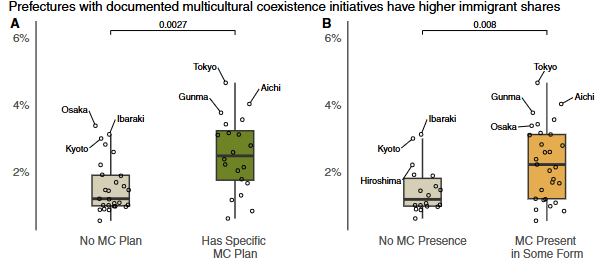
As of October 2025, two-thirds (31) of Japan’s 47 prefectures had publicly done so, either as an explicit coexistence plan or as part of broader internationalization efforts. These prefectures tend to have higher shares of foreign-born people (Figure 2). While we can’t say whether these plans reflect or attract growing numbers of immigrants, it is clear they theoretically apply to a large proportion of Japanese citizens and foreign-born people alike.

Figure 2. Share of foreign-born population by prefectures and public presence of multicultural coexistence initiatives.

Yet despite their widespread presence and policy importance, there is little systematic evidence about what is actually in these plans. In our recent study, we analyzed all 31 available sets of multicultural coexistence plans and implementation documents. We thematically identified three key areas: what is multicultural coexistence, why is it needed, and how is it meant to be implemented.

First, multicultural coexistence at the prefectural level involves creating a state of existence where foreign residents and native-born Japanese relate with each other on equal terms. Moreover, policymakers stress how these relationships involve mutual effort by both groups while emphasizing their “naturalness” by using metaphors like atoms or trees. Second, the plans justify coexistence on several grounds including the growing size and driver of change and an opportunity for Japan. Third, implementation ought to happen in two ways: first, by providing key services like language training and disaster preparedness; and second, by promoting greater awareness via intercultural exchanges involving festivals, volunteering, and civic education about rights and responsibilities. Notably, these mechanisms are ideally developed and supported by leaders within foreign-born communities, children of immigrants, and exchange students.

Identifying how prefectural-level plans present multicultural coexistence matters because these elements potentially shape how this approach to integrating immigrants gets put into practice. Although we focused on how these ideas are “imagined” and represented on paper, these documents play important roles in capturing and conveying national efforts at managing immigration to more local levels of government. These subnational levels of policymaking are likely to remain important places for a range of social policies that directly affect newcomers and citizens alike-especially in Asian contexts facing similar demographic challenges.

Read the original article in Policy Studies Journal:

Mariri Niino and William L. Allen. 2026. “Imagined Integration: The Logics of Japanese Immigrant Integration Policy” Policy Studies Journal 54(3). https://doi.org/10.1111/psj.70137.

About the Article’s Author(s)

Mariri Niino is a graduate of the MSc Migration Studies at the University of Oxford and St. Anne’s College. Her research interests are in policy-making and public opinion, particularly around migration. 

William Allen is an Associate Professor of Political Science in the Department of Politics and International Relations (PAIR) at the University of Southampton. His research focuses on how citizens engage with information about political and economic issues, notably migration, and what this means for global public opinion and policy-making.

Follow Willian Allen on BlueSky: @williamlallen.bsky.social

Follow the authors on LinkedIn: William Allen and Mariri Niino.

Unveiling and Explaining the Procedural Justice in the Policy Design of Renewable Energy Siting Process in the United States

Social justice has been understood to be a critical value necessary for ensuring that designed policies and practices ensure fairness and equality to the communities being served. Researchers have attempted to study the role of social justice in shaping the decisions and structure of public policy yet faced challenges in measuring particular facets of the concept. Specifically, procedural justice, or the level of fairness that is encoded into decision-making processes has not been properly examined in the context of policy design. This article aims to fill this literature gap by analyzing state renewable energy siting policies in the United States to evaluate how procedural justice, particularly public participation, is incorporated into state-level policy design. Through this approach, the authors seek to connect scholarly understandings of policy design and justice to spotlight potential opportunities for improving the social propriety of policymaking.

Methodology

The authors obtained state-level renewable energy siting rules using state government agency websites and filtered key words to extract relevant siting documents. To empirically evaluate policy design features of siting policies, policy statements and intentions were extracted from the policies and coded into two main segments: equity-related and non-equity-related goals. Additionally, the authors developed a procedural justice score (0 to 9 points) that assigned a score based on the measurement of three components: access, information, and decision-making. After assigning codes and scores to the dataset, cross-sectional analyses were conducted to determine whether equity goals correlated with procedural justice scores.

Key Findings

Most U.S. States Fall Behind in Designing Fair Renewable Siting Policies

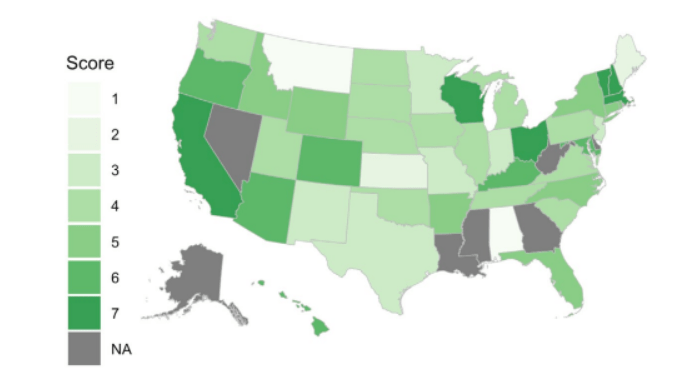
The vast majority of U.S. states fall behind in terms of designing renewable energy siting policies that are participatory, inclusive, and transparent to stakeholders. As shown in Figure 4, the national mean procedural justice score sits at 4.51, with most states achieving scores below 5. Although the top-performing states, such as California, Massachusetts, New Hampshire, and Wisconsin, achieved a score of 7, there is not a single state that exceeds this score. These results indicate that the procedural design of renewable energy siting policies varies across U.S. states, with notable limitations in stakeholder participation, inclusiveness, and transparency.

Figure 4. Geographic distribution of procedural justice scores.

The Role of Siting Agencies in Procedural Policy Design

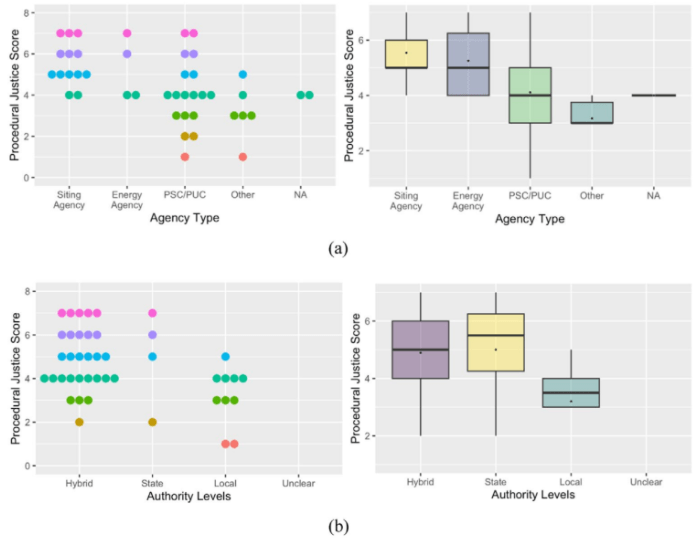
The extent to which renewable energy siting policies incorporate procedural justice principles appears to be associated with the type of agency responsible for siting decisions. Figure 7 illustrates that states with an existing siting agency exhibit the highest average procedural justice scores. Similarly, states possessing an energy agency assigned to siting policy also demonstrate relatively strong performance scores. These results suggest that specialized agencies may provide the technical capacity and institutional focus needed to develop renewable energy siting policies that support public participation.

Figure 7. The distribution of procedural justice scores by agency and authority. (a) presents the distribution of procedural justice scores by agency. (b) presents the distribution of procedural justice scores by authority.

Why It Matters

Ultimately, this article emphasizes a significant gap in the design of participatory renewable energy siting policies across most U.S. states. Because renewable energy siting often involves multiple stakeholders and locally specific impacts, policy design provides an important setting for examining how participation, transparency, and inclusiveness are incorporated into decision-making processes. This finding provides a valuable opportunity for researchers and policymakers to identify weaknesses in current design processes, as well as identify promising improvements. In terms of potential avenues for future research, the authors recommend analyzing procedural justice at the local-level and examining the conditions that explain high procedural justice scores amidst an absence of equity-related goals.

Read the original article in Policy Studies Journal:

Gao, Xue, Shan Zhou and Dori Schurr. 2025. “Unveiling and Explaining the Procedural Justice in the Policy Design of Renewable Energy Siting Process in the United States.” Policy Studies Journal, 53(3): 556-579. https://doi.org/10.1111/psj.12563.

About the Article’s Author(s)

Xue Gao is an assistant professor at the Askew School of Public Administration and Policy at Florida State University. Her research centers around the interplay between policy, politics, technology, economy, and society in the energy transition process. 

Shan Zhou is an assistant professor at the Department of Political Science at Purdue University. Her research focuses on the intersection of public policy, social equity, and sustainability.

Dori Schurr is an undergraduate student at the Harris School of Public Policy at the University of Chicago. 

Latent Target Groups – A Methodological Contribution of Social Identities to Policy Design Research

Researchers have traditionally studied target groups as homogenously constructed groups. Thereby, the groups of interest were assigned single social identities, such as, e.g., people in unemployment. However, it can be questioned whether a singular identity approach is appropriate for studying populations of interest, and in turn, designing effective policies. The authors in this article argue that the internal characteristics of at first sight, and from a traditional policy design perspective, homogenous groups are internally highly heterogenous and respond differently to policies based on their overlapping identities. These concerns have prompted the authors to explore the concept of “latent” target groups, or the idea that individuals have multiple competing identities to analyze the extent of subgroup diversity within these target populations.

Theoretical Arguments

The authors establish two primary arguments to guide their investigation of latent target groups in their study:

  1. Target groups are not homogenous and as a result, their heterogeneity must be considered in policy design.
  2. Social identities serves as a useful conceptual backdrop for target group diversity by structuring how they are composed of different subgroups and identities.

Methodology

This study applies Latent Class Analysis (LCA) as the primary methodological tool to uncover individual attributes through a person-centered design. An original dataset of 2,042 German adult respondents was used, specifically examining two groups: non-vegetarians and car users. The authors focused on these groups due to the consequences of their behaviors on the environment and contributions to increased carbon emissions. To identify hidden social identities, the demographic, local, and organizational identities of the respondents were measured through LCA. Furthermore, the authors utilized regression modeling to predict policy preferences toward specific types of nutrition and mobility policies within the subgroups.

Key Findings

Non-Vegetarians and Car Users are not Monolithic Identity Groups

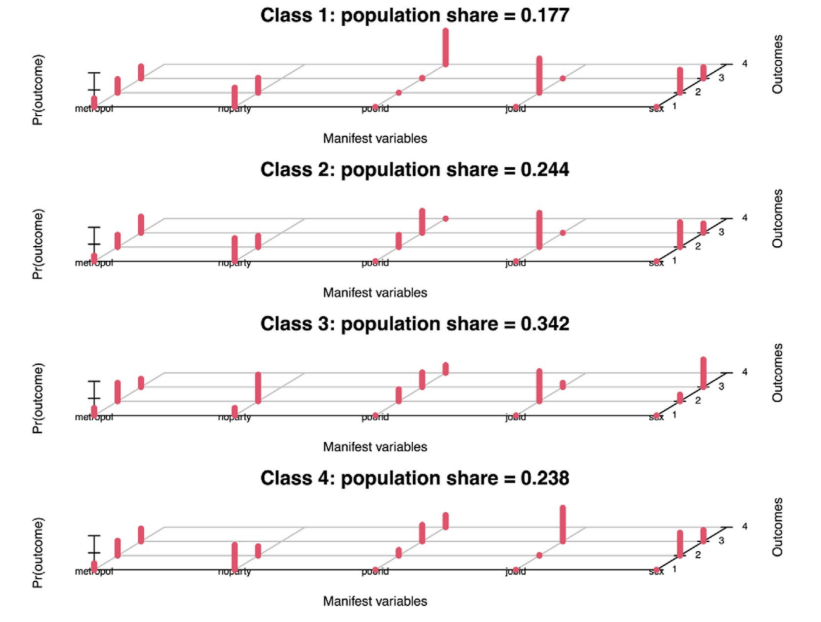
The results of the LCA, as shown in Figure 1 demonstrated that four hidden subgroups existed within the broader population of non-vegetarians and car users examined. These latent groups consisted of four classes: Wealthy and status-seeking people of the rural and provincial upper class (Class 1); politically engaged men in metropolitan areas influenced by monetary incentives (Class 2); a disengaged subset of women expressing minimal social or political engagement (Class 3); and socially/politically active citizens (Class 4). These discoveries confirm the authors’ expectations that seemingly cohesive groups are distinctly characterized by various identity groups making up their composition. Unique to non-vegetarians and car users, these groups are clearly not monolithic and instead shaped by various socioeconomic and political experiences.

Figure 1. Probability of membership in classes.

Hidden Groups Only Predict Policy Preferences for Car Use

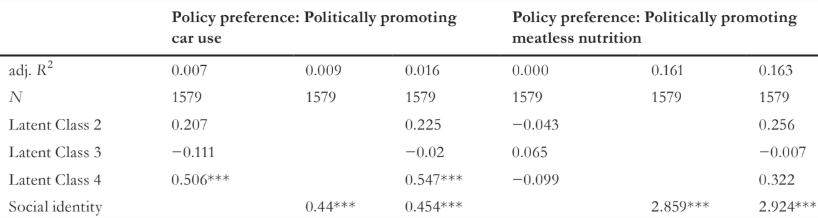
Table 3 shows that the observed latent classes exhibit a higher probability of predicting preferences toward mobility policy. In particular, citizens who are socially and politically active (Class 4) are the most likely subgroup to promote car usage policies. This indicates that underneath the broad socially constructed identity groups, specific subgroup identity cohorts drive support or opposition toward policy preferences. Effectively, this revelation confirms that receptiveness to policy designs is a complex phenomenon heavily influenced by conflicting and salient identity factions.

Table 3. Results of logistic regression analyses.

Why It Matters

This article thoughtfully reevaluates how policymakers should approach the design of policy measures and/or programs intended to serve specific target populations. The understanding of identity transcends the traditionally broad social construction of groups into a defined category, as shown in the article. Complex policy issues such as environmental restrictions can spark multiple conflicting identities that create unique policy preferences that differ from others in the demographic segment. Future research directions suggested by the authors include examining how the internal cohesiveness of subgroup identities are affected by policy instruments such as regulations or incentives. By continuing to study latent target groups, policymakers can begin to transition away from “one-size-fits-all” policy approaches and instead pursue tailored design frameworks that align with the behaviors, identities, and values of diverse subgroups.

Read the original article in Policy Studies Journal:

Hornung, Johanna, Nils C. Bandelow, and Madita Olvermann. 2025. “Latent Target Groups—A Methodological Contribution of Social Identities to Policy Design Research.” Policy Studies Journal 53(3): 774–794. https://doi.org/10.1111/psj.70028.

About the Article’s Author(s)

Dr. Johanna Hornung is an assistant professor in Public Policy at the University of Lausanne. She is co-editor-in-chief of the Review of Policy Research (RPR) and the European Policy Analysis (EPA) journal. Her research interests lie in public policy research, particularly health policy, and the integration of psychological perspectives in actor-centered explanations of policy processes. 

Dr. Nils C. Bandelow is professor Political Science and Head of the Institute of Comparative Politics and Public Policy (CoPPP) at the TU Braunschweig. He is co-editor-in-chief of the journals Review of Policy Research (RPR) and European Policy Analysis (EPA). He is interested in policy process research, particularly health policy and infrastructure policy, and integrating psychological perspectives in actor-centered explanations of policy processes.

Dr. Madita Olvermann is an Innovation Manager at the Project House of the TU Braunschweig. She earned her PhD at the Chair of Industrial/Organizational and Social Psychology at the TU Braunschweig. She is passionate about interdisciplinary research and focuses on applying individual-level insights from the psychological field to emerging transition pathways. 

Indirect Restrictions Demobilize Supporters of Abortion Rights

Abortion rights remain a high-stakes issue in American politics, provoking a lot of moral debate and public reactions. Since the landmark ruling in Dobbs v. Jackson (2022), several states have added more restrictions on abortion access. Researchers have found that public opinion shapes state policies on abortion, but it is not clear how citizens judge indirect restrictions on abortion rights. To investigate this phenomenon, this study examines how people’s judgments and political mobilization depends on whether the restrictions are indirect, such as defunding services, compared to direct, such as complete bans on abortion.

Hypotheses

The authors test two hypotheses to determine how the type and framing of abortion restrictions influence people’s judgments:

  1. Demobilization Hypothesis: Indirect restrictions demobilize abortion supporters by inciting less opposition compared to direct bans or restrictons.
  2. Exclusion Framing Hypothesis: Pro-choice (abortion) supporters will express greater opposition toward exclusion restrictions (indirect restrictions framed as direct) compared to direct restrictions.

Methodology

Two experiments were conducted in 2015 and 2016 with participants from the United States. In the first experiment, participants read one of three policy conditions: banning, defunding, or excluding. Then participants answered how much they support or oppose the policy, and their willingness to participate in politics to express their views. The second experiment replicated the prior design, except provided participants with a statement indicating the substantial number of women who would be deprived of abortion services because of the restriction, holding constant the number of women who would be affected across the three types of policy.

Key Findings

Pro-Choice Supporters Oppose Banning more than Defunding

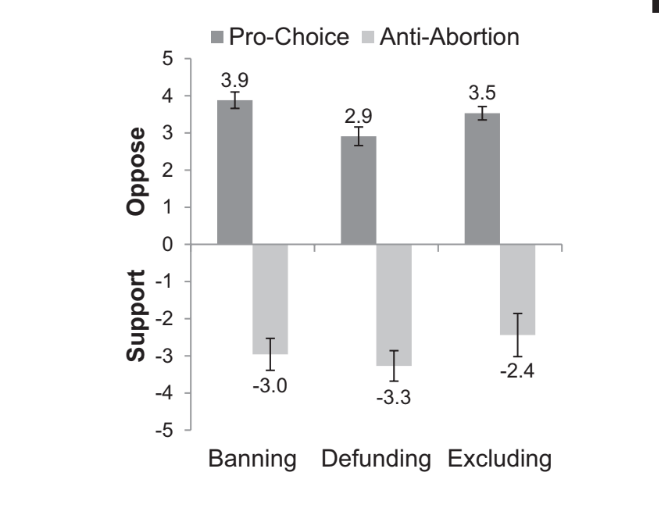
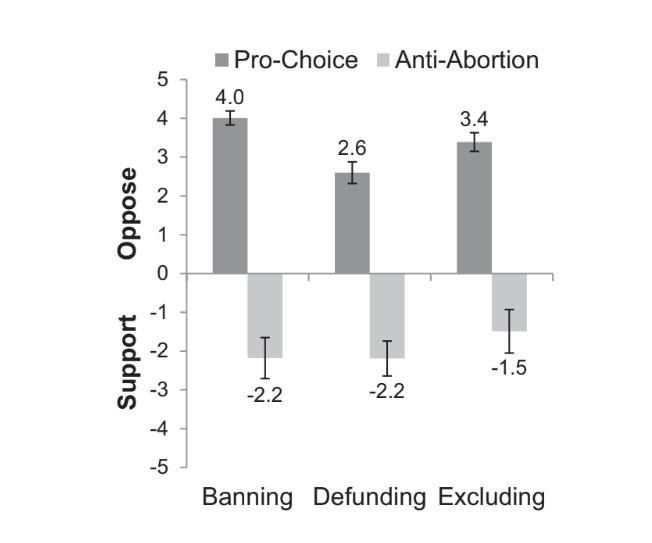
Figure 1 from Experiment 1 reveals that pro-choice supporters expressed less opposition to policies defunding abortion services than to outright bans. Pro-choice supporters also opposed exclusion policies more than defunding policies. These patterns support the demobilization hypothesis, indicating that indirect restrictions reduce public and political opposition compared to direct restrictions. This finding suggests that subtle differences in policy design and framining could bypass mobilized opposition.

Figure 1. Participants’ judgments of abortion restrictions by abortion stance and policy type, Experiment 1. Error bars are standard errors. The sample sizes for the pro-choice groups were: banning n=104, defunding n=117, and excluding n=111. For the anti-abortion group, they were: banning n=43, defunding n=45, and excluding n=33.

Consequences Do Not Overcome Demobilization

Experiment 2 replicated the findings while holding constant the number of women who would be affected. Figure 2 shows that pro-choice participants opposed defunding abortion less than a complete ban, despite the fact that both policies prevented the same number of women from receiving abortion access. Even when participants knew the consequences, pro-choice supporters were still less opposed to the indirect restriction. The findings also demonstrated that pro-choice supporters opposed exclusionary policies less than direct bans. People’s judgements of restrictions depended on the framing of the policy, particularly how direct the restriction appeared.

Figure 2. Participants’ judgements of abortion restrictions by abortion stance and policy type, Experiment 2. Error bars are standard errors. The sample sizes for the pro-choice groups were: banning n=103, defunding n=94, and excluding n=1-3. For the anti-abortion group, they were: banning n=40, defunding n=49, and excluding n=39.

Why It Matters

This study shows that people’s judgments of abortion restrictions depend on how directly they prevent abortion, determining their willingness to politically mobilize in response. For policymakers and political activists, the takeaway is clear: the directness of the policy, in design and framing, will determine how much people support and oppose those restrictions. As for future research, the authors call for more attention to the psychology of indirect restrictions to better understand public opinion on abortion rights and how state legislatures may seek to minimize opposition.

Read the original article in Policy Studies Journal:

Connors, Elizabeth C., Alessandro Del Ponte, and Peter DeScioli. 2025. “Indirect Restrictions Demobilize Supporters of Abortion Rights.” Policy Studies Journal 53(4): 1123–1137. https://doi.org/10.1111/psj.12575.

About the Article’s Author(s)

Elizabeth C. Connors is an associate professor in the Department of Political Science at the University of South Carolina. 

Alessandro Del Ponte is an assistant professor in the Department of Political Science at the University of Alabama, a Visiting Research Professor at the Global Asia Institute at the National University of Singapore, and a Visiting Assistant Professor at the Smith Institute for Political Economy and Philosophy at Chapman University.

Peter DeScioli is an associate professor in the Department of Political Science at Stony Brook University. 

Linking Policy Design and Diffusion

In Policy Paradox, Deborah Stone (1989) argues that the work of policy analysis is too often divorced from the politics of the democratic process. To truly understand policies and their effects, one must consider politics.

Yet, many areas of policy research remain siloed including from understanding the politics of the process. We believe there is much to be gained by bringing policy design and policy diffusion research into dialogue with one another with an eye toward the political motivations of policy designers. Indeed, it is likely that policy designers make purposeful choices to increase the chances lawmakers adopt their policy. In other words, the design of policy should have some bearing on policy adoption and diffusion.

In our article, we argue that a key policy attribute – complexity – is one missing link between policy design and policy diffusion. We present a theory for how each of the five elements of design – goals, tools, targets, causal models, and implementation – map onto the attribute of policy complexity. By making purposeful choices during the political process over framing goals, telling causal stories, identifying targets, and picking tools and implementation strategies, policy designers can affect the level of complexity of the policy. And a policy’s complexity shapes its diffusion breadth and speed.

We leveraged several data sources and methodological tools to provide a proof-of-concept test that these literatures belong in dialogue with one another. First, we hand coded policy design elements across 84 model policies promulgated by the Uniform Law Commission (ULC). The ULC is ideal because, as an interstate organization that writes model laws and disseminates the bills for passage in as many states possible, it is a clearly identifiable policy designer with the desire to seed policy adoption across the states. The ULC also provides policy texts, allowing us to measure complexity using automated text analysis tools. On the diffusion side, ULC provides detailed accounts of which states adopted each of their model policies and when.

Interestingly, we found substantial variation in how the ULC designed its model policies, with clusters of design elements identified. For example, some policies use direct provision tools and top-down implementation to advance the welfare goals of weakly constructed populations (e.g., Child Witness Testimony by Alternative Methods Act).

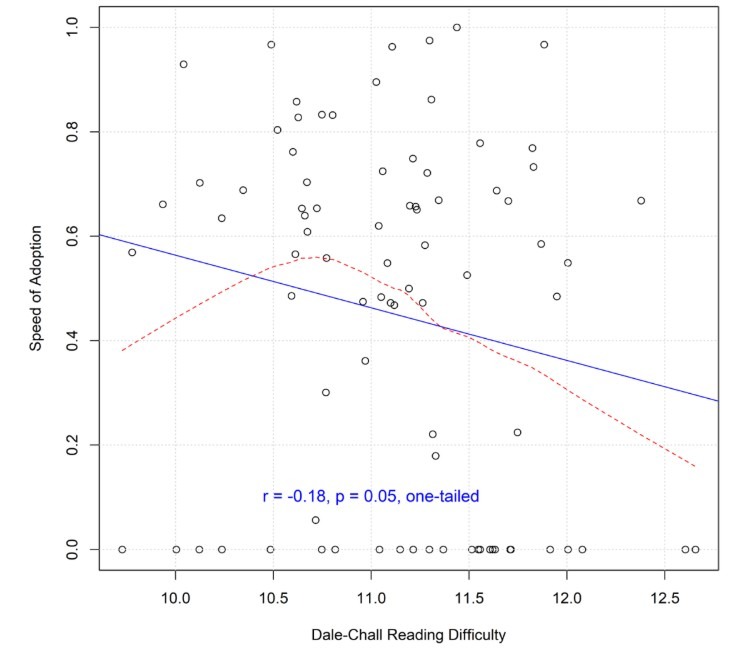
Figure 5. Dale-Chall Reading Difficulty for Diffusion Speed.

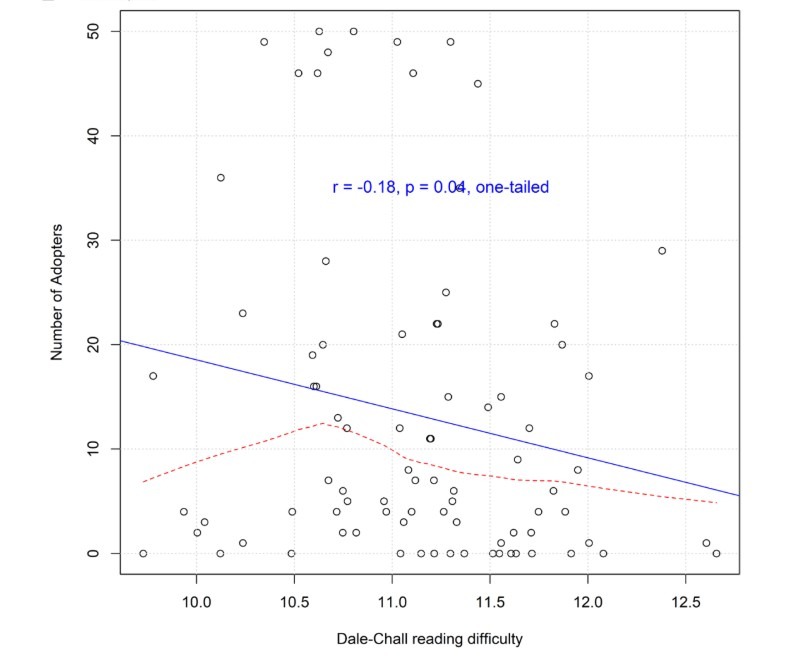
We posit that some design choices imbue the policy with more complexity than others, like using the direct provision of government services rather than tax expenditures. Indeed, we find that when you add up all these design choices, the policies that have more complex elements are indeed more textually complex. The level of complexity, in turn, affects the diffusion patterns we observe. More complex policies are less likely to be adopted and are slower to be adopted, though the strength of this relationship depends on the measure used.

Figure 6. Dale-Chall Reading Difficulty for Number of Adopters.

We see this piece as the beginning of an effort to bring design and diffusion research together for the purpose of better understanding the policy process. We hope others will join in expanding this work to the full breadth of innovation diffusion attributes (relative advantage, compatability, complexity, trialability, and observability) and policy design elements.

Read the original article in Policy Studies Journal:

Jansa, J. M., & Mallinson, D. J. (2025). Linking policy design and policy diffusion to advance both theories: Evidence from the elements, attributes, and adoptions of Uniform Law Commission model legislation. Policy Studies Journal53(3), 747-773. https://doi.org/10.1111/psj.12591

About the Article’s Author(s)

Joshua M. Jansa is an Associate Professor of Political Science at Oklahoma State University. His research focuses on policy diffusion, state politics, political and economic inequality, and civic education.

Daniel J. Mallinson is an Associate Professor of Public Policy Administration at Penn State Harrisburg. His research focuses on policy process theory (principally policy diffusion and punctuated equilibrium theory), cannabis policy, and energy policy.

Centering Critical Race Theory in Policy Design: A Reframing of Multiple Streams Framework

Policy outcomes and concerns about social and racial equity have long been discussed in policy scholarship. A question that often arises is why disparities persist even though scholars and practitioners have increasingly paid attention to equity in policy design.

In this article, I argue that policy design is not only a standalone process. The way policy agendas are set plays a role in shaping policy design. Agenda-setting influences how problems are defined, which issues are elevated, and which solutions are treated as legitimate or workable. Because of that, how we understand and explain agenda-setting matters. If agenda-setting is treated as neutral, it can miss how race, power, and exclusion shape what gets attention in the first place.

To further unpack what may be missing in mainstream approaches, I suggest using a race-conscious framework such as Critical Race Theory (CRT). CRT helps examine how race and racism can be embedded in systems that often present themselves as objective or race-neutral. This is not a claim that mainstream policy process theories lack value. Instead, it is a reminder that many of these theories were not built to center race, even though race and power shape policy processes and outcomes.

MSF & CRT

To illustrate how CRT can strengthen our understanding of agenda-setting, I use the Multiple Streams Framework (MSF), a widely used policy process theory. MSF is one example of a broader set of mainstream policy process theories that often rely on similar assumptions about neutrality and rationality. MSF includes several key elements: the problem stream, policy stream, policy entrepreneurs, and policy windows. It is commonly used to explain how agendas form and why some issues gain traction over others.

So, where does CRT come in? CRT includes key tenets such as interest convergence, voice of color, race as socially constructed, and racism as ordinary. These tenets help explain how race is constructed and how power operates through institutions and processes that are often described as “neutral”. When applying CRT to MSF, it becomes easier to see what race-neutral agenda-setting can overlook. For example, problem indicators can be discussed in ways that hide disparities, policy communities can reflect unequal representation, political institutions carry histories of exclusion, and policy windows can open without producing equity-centered change.

The point is not to dismiss MSF, but to show how a CRT lens can reframe MSF’s components and make racialized assumptions more visible in agenda-setting, which then shapes the foundations of policy design. In the article, I use CRT tenets to reinterpret each MSF component as part of agenda-setting, showing how race-neutral assumptions shape which problems and solutions become the foundation for policy design.

Why It Matters

The article’s contribution focuses on how we think about agenda-setting and policy design, especially the assumptions we bring to both. I argue that if we want to address inequitable policy outcomes, policy scholarship should take race consciousness more seriously and do it early. Centering race in agenda-setting theory can strengthen how we explain why certain problems and solutions become “designable”, and why some equity concerns remain sidelined.

Read the original article in Policy Studies Journal:

Wong, J. (2025). Centering Critical Race Theory in Policy Design: A Reframing of Multiple Streams Framework. Policy Studies Journal53(3), 795-805. https://doi.org/10.1111/psj.70059

About the Article’s Author(s)

Jonathan Wong (he/him) is a doctoral candidate in the School of Public Administration at the University of Nebraska Omaha. His research interests focus on public administration and public policy, with a particular emphasis on civic engagement, equity, and governance. His research explores how deliberative and participatory practices within public administration intersect with questions of racial equity, inclusion, and governance. Jonathan is also committed to integrating research and teaching to strengthen connections between public service, democratic engagement, and social justice.

The Place of Social Cohesion in Policy Design: Lessons from the Evolution of Pension Policy Instruments Mix in OECD Countries

How do countries strike a balance between keeping government budgets in check and providing strong social safety nets for their citizens? As the world becomes more interconnected and demands for services grow, governments must find a way to satisfy this. Scholars have overlooked the connections between government and citizens driving changes in policy design, especially in pension reform. This article investigates the factors that lead to changes in social and pension reform in OECD countries. To do this, the author incorporates “social cohesion” into the study design as a new perspective to determine how state-citizen cohesion (government trust) and civic engagement influence how to achieve policy changes in social and pension design. This study provides valuable insights into how coherence between governments and citizens resolves and encourages policy design problem-solving.

Hypotheses

The author explores the role of social cohesion in influencing the selection of policy tools to achieve changes in social and pension policies.

Methodology

The author analyzes panel data from 30 OECD countries over the period 2010-2020. Social cohesion is measured using “government trust” and “civic engagement” as key indicators to test the relationship with social and pension policy instruments. Because policy choices evolve over time and vary across countries, the analysis employs system Generalized Method of Moments (system GMM), a statistical method well suited to capturing country-specific contexts and policy dynamics in longitudinal data.

Key Findings

Government Trust and Civic Engagement Affect the Multi-Tier Pension System Differently

As shown in Table 3, government trust and civic engagement affect pension policy instruments differently. Model 1 shows that increases in government trust leads to an increase in measures for fiscal sustainability. However, increases in civic engagement correlate with pension benefit levels in a multi-tier system expanding. Interestingly, Model 2 shows that government trust helps sustain and enhance mandatory public pension benefits, while civic engagement reduces citizen reliance on mandatory public pensions, suggesting a gradual shift toward greater diversification through private pension arrangements. In short, government trust and civic engagement shape both policy instruments and citizens’ preferences for addressing pension design challenges in different ways.

Table 3. Impacts of Social Cohesion on Pension Policy Instruments in Multi-Tier Pension System.

Government Trust Strengthens while Civic Engagement Weakens First-Tier Pensions

Table 4 shows that government trust and civic engagement affect first-tier pension systems in different ways. Model 1 tells us that government trust positively affects first-tier pension benefit levels, making them robust. Meanwhile, civic engagement negatively affects the overall level of first-tier pensions by shifting dependency toward private pensions. Furthermore, Model 2 demonstrates that civic engagement strengthens the universal and redistributive nature of non-contributory schemes within first-tier pension systems.

Table 4 Impact of Social Cohesion on Pension Policy Instrument Mix in the First-Tier Pension System.

Why It Matters

This article highlights the importance of applying social cohesion, understood as the interactions between government(s) and citizens, in improving current policy processes. Social cohesion is needed for harmonization between government and citizens to achieve effective policy outcomes. For policymakers, this research shows that social cohesion connects government and citizens to the overall design and application of policy tools to fix structural problems within social and pension policies. Future studies should consider the role of social cohesion, with an emphasis on state-citizen dynamics, to understand how social connections influence the design of important policy programs.

Read the original article in Policy Studies Journal:

Kim, J. (2025). The Place of Social Cohesion in Policy Design: Lessons From the Evolution of Pension Policy Instruments Mix in OECD Countries. Policy Studies Journal53(3), 681-700. https://onlinelibrary.wiley.com/doi/10.1111/psj.70000.

About the Article’s Author(s)

Jiwon Kim, PhD (Seoul National University), is a Professor in the Department of Public Administration at the School of Social Integration, Hankyong National University. Her research centers on policy analysis and evaluation, welfare finance, and social welfare policy, with a particular focus on marginalized groups—such as persons with disabilities, industrial accident workers, and public servants injured in the line of duty—as well as on public performance management. She was a Visiting Scholar at the School of Public Affairs and Administration at Rutgers University—Newark from March 2023 to February 2024. In acknowledgement of her significant contributions to empirical research in social policy, she received the 2024 Commendation from the Deputy Prime Minister and Minister of Education of South Korea.

Mixing and matching: Intra-stream interdependence in the multiple streams framework and the adoption of policy mixes

Public policies rarely rely on a single solution. Instead, they often combine multiple tools—like incentives and regulations—to tackle complex problems. The Multiple Streams Framework (MSF) is an effective way to explain how policies get on the agenda and are eventually adopted, but it usually looks at ideas in isolation. This article asks: Do policy ideas within the same stream influence each other, and how does that shape the way policies are designed? To answer this, the authors introduce a new concept called intra-stream interdependence, specifically how policy ideas within the same stream interact and influence each other. The study applies the Multiple Streams Framework to examine interactions within the policy stream and integrates it with policy mix theory. They explore their research questions using electric vehicle (EV) policies in the United States, using advanced methods (i.e., clustering analysis and fuzzy set Qualitative Comparative Analysis) to uncover patterns of how policies are combined and which combinations work best.

Hypotheses

The authors test two hypotheses:

  1. Similar policy ideas are systematically linked during the policymaking process due to intra-stream interdependence.
  2. The design of different policy mixes will substantively influence the policy outcomes they achieve.

Methodology

The authors analyze 1,736 EV policy actions at the state and local level, using data from the Department of Energy’s Alternative Fuels Data Center. They used k-means clustering to identify which policy tools (e.g., tax credits, rebates, or pollution regulations) tend to appear together. Then, they examined whether certain combinations of tools were linked to higher policy adoption rates and, subsequently, higher EV market share in different states.

Key Findings

Policy Tools Form Consistent Clusters

Policies do not operate in isolation; rather, Figures 1 and 2 show five distinct groupings of incentives and regulations. For example, tax credits and exemptions tended to appear together in the same policy actions, while grants and loans formed separate clusters. Similarly, regulations aimed at improving air quality and addressing climate change tend to cluster, while EV registration fees and vehicle standards combine in another group. These patterns suggest that policy ideas evolve together, not independently, and therefore supports Hypothesis 1. The authors argue that this finding ultimately challenges the idea that policies compete one by one; rather, policymakers actually design them as packages.

Image Description

Figure 1. Clusters of incentives and composition of instruments in each cluster.

Image Description

Figure 2. Clusters of regulations and composition of instruments in each cluster.

Pollution Regulations are Key to Success

To examine the relationship between policy mixes and outcomes, the authors use exploratory factor analysis to identify mixes and then deploy a fuzzy set Qualitative Comparative Analysis (fsQCA) to study the outcomes in the EV markets. Table 1 shows that every successful policy mix for higher EV market shares includes regulations targeting air pollution and climate change, often paired with incentives including tax credits and exemptions.. Financial incentives alone do not drive EV adoption; rather, they work best when combined with supportive regulations. This finding supports Hypothesis 2 and highlights an important lesson: effective policy design requires integrated approaches, not single tools. In this case, regulations create a supportive environment while incentives encourage adoption either at the individual or community levels.

Image Description

Table 1. Outcomes of fsQCA: Policy conditions combinations and outcomes

Why It Matters

This study shows that policy ideas interact and form structured mixes which influence real-world outcomes. By introducing the concept of intra-stream interdependence, the authors expand MSF theory and explain why policy mixes emerge. For policymakers, the takeaway is clear: combining regulations with incentives is essential for promoting EV adoption and more generally for successful environmental action. Future research should explore whether similar dynamics occur in other areas like health or education and examine how these mixes change over time. Furthermore, case studies could look at how advocacy tactics—specifically, the way issues are presented—work together with natural groupings of ideas to shape complex policy packages. Understanding these patterns can help governments design smarter, more effective policies for complex challenges.

Read the original article in Policy Studies Journal:

Soni, Anmol and Evan M. Mistur 2025. “Mixing and Matching: Intra-stream Interdependence in the Multiple Streams Framework and the Adoption of Policy Mixes.” Policy Studies Journal 53(3): 580–603. https://doi.org/10.1111/psj.12582.

About the Article’s Authors

Anmol Soni is an assistant professor in the Department of Public Administration at Louisiana State University. Her research focuses on energy and environmental policy action. Anmol’s recent work examines energy transitions in the global south and policy designs and mixes adopted by sub-national governments to address local sustainability issues.

Evan M. Mistur is an assistant professor in the Department of Public Affairs and Planning at the University of Texas at Arlington. He specializes in public policy, researching a diverse set of topics centered around environmental management, sustainability policy, and policy theory. Evan’s past work includes investigations of policy formation, diffusion, and implementation across both Texas and Georgia.

Does policy design matter for the effectiveness of local content requirements? A qualitative comparative analysis of renewable energy value chains

Governments around the world use local content requirements (LCR) to boost domestic industries by requiring renewable energy projects to use a certain share of locally-made components. The idea is simple: create jobs and build local supply chains. But the results have been mixed—some countries became major exporters of wind and solar technology, while others struggled. This article asks: Does the way these rules are designed explain why they succeed in some places and fail in others? To find out, the author uses Qualitative Comparative Analysis (QCA) to look for patterns in how different policy features and economic conditions combine to produce success.

Hypotheses

The author tests three hypotheses:

  1. Policies work best when countries already have strong technological capabilities.
  2. Combining LCR with other tools (e.g., financial incentives, renewable energy targets) helps in tougher economic environments.
  3. No single factor guarantees success; it’s about the right mix of design and context.

Methodology

The author analyze 27 LCR policies in wind and solar energy across 19 countries from 1995 to 2017, using fuzzy-set Qualitative Comparative Analysis (fsQCA) to uncover patterns. The research examines how policy design elements (e.g., restrictiveness, policy mixes, and targets) interact with the political economy (e.g., investment conditions, economic complexity). Success was measured by whether a country’s exports of wind and solar components grew four years after introducing LCR. The analysis looks for combinations of conditions that consistently led to positive outcomes rather than a one-size-fits-all solution.

Key Findings

Flexibility or Strong Capabilities Are Essential

Figure 1 shows that either a flexible LCR design or a country’s high economic complexity must be present for a policy to be successful. While countries with advanced technology sectors can handle stricter rules without harming investment, those with limited capabilities need more lenient requirements to attract investment. This finding supports Hypothesis 1, demonstrating that there is no universal approach—what works in China or Spain may fail in India or Argentina. The author therefore argues that successful policies must be tailored to local conditions and political-economic contexts.

Image Description

Figure 1. XY-Plot of the necessity relation between (C1 or C5) and LCR Effectiveness.

Policy Bundles Make a Difference

In countries with weaker investment conditions or limited technological capacity, LCR only worked when paired with financial incentives or renewable energy targets (Table 1). These extra measures help attract investors and signal future demand, giving local industries time to grow. This finding supports Hypothesis 2, underscoring the role of strategic policy bundling for green industrial success. Furthermore, the author explains, while simple rules can work in supportive environments, complex policy mixes are essential in challenging one.

Image Description

Table 1. Sufficient conjunctural patterns of policy design elements and contextual factors for LCR policy effectiveness.

Why It Matters

This article reveals that smart policy design matters. LCR effectiveness depends on tailoring rules to local conditions and, when needed, combining them with other supportive policies. This research challenges the idea of universal design principles and shows that success comes from the right mix of tools and context. Future studies should explore how these patterns apply in other sectors and dig deeper into why some policies fail. Scholars could also improve data on granular design features like technology transfer requirements. For policymakers, the message is clear: design green industrial policies with flexibility, consider context, and do not rely on a single instrument.

Read the original article in Policy Studies Journal:

Eicke, Laima. 2025. “Does Policy Design Matter For the Effectiveness of Local Content Requirements? A Qualitative Comparative Analysis of Renewable Energy Value Chains.” Policy Studies Journal 53(3): 604–617. https://doi.org/10.1111/psj.12590.

About the Article’s Author

Laima Eicke is a Research Associate at the Research Institute for Sustainability in Potsdam. Her research focuses on the international political economy of the energy transition, value chains of renewable energy technologies and hydrogen in particular as well as on green industrial policies. She is a former Associate and Research Fellow at the Belfer Center for Science and International Affairs at the Harvard Kennedy School and worked at the German Corporation for International Cooperation (GIZ), the Germany Ministry for International Affairs, NGOs and in consultancy.

The Triangle of Bureaucratic Policy Analysis and the Professional Types of High-Level Civil Servants: Empirical Evidence from Southern Europe

Public policy and public administration research has focused on conceptualizing bureaucrats as pivotal actors in the policymaking process. This has allowed scholars to investigate the capacities and skills of bureaucrats as policymakers and how advice and knowledge inform their behavior. Nevertheless, the literature has proceeded in a fragmented way and without a sophisticated analytical framework that would allow for comparative research. Our recent study aims to address this by proposing a new framework for understanding how high-level civil servants—those at the top of national public administrations—engage in policymaking through the lens of policy analysis.

This study asks a central question: How can we better conceptualize the professional role of senior civil servants in the policy process? To answer this, we developed the “triangle of bureaucratic policy analysis,” which connects three core dimensions of bureaucratic work:

  • Policy Work: What bureaucrats do on a daily basis (e.g., advising, managing, steering).
  • Policy Analytical Capacity: What analytical skills and techniques they use (e.g., economic, legal, statistical).
  • Sources of Information: Where they get their information (e.g., laws, government reports, statistical data).

Figure 1. Triangle of bureaucratic policy analysis.

We applied this framework to a unique dataset: a large survey of 1,014 senior civil servants in the central governments of Greece, Italy, Portugal, and Spain. These countries share a “Napoleonic” administrative tradition and do not typically employ specialized policy analysts, making them ideal cases for examining how policy analysis functions without formal structures.

We used factor analysis to identify patterns in how civil servants combine work, skills, and information. Then, we used principal component analysis (PCA) to cluster these patterns into three main professional “types” of high-level bureaucrats:

  1. Political Generalist: A flexible coordinator and boundary-spanner. These bureaucrats steer ministry activities, interact with politicians and stakeholders, and rely on a broad mix of information sources. They possess “eclectic” analytical capacities—skills gained through both training and professional experience—and play a central role in aligning government priorities across sectors.
  2. Legal Advisor: True to Southern Europe’s legalistic traditions, these civil servants focus on advising political leaders using legal and regulatory tools. Their policy work revolves around assessing legal feasibility, and they rely heavily on juridical sources of information. Their analytical expertise is narrowly focused on legal techniques.
  3. Manager: A newer type, these officials emphasize implementation and results. They are more empirically oriented, favoring evidence-based data and economic analysis. Their policy work includes program management and performance monitoring, reflecting the influence of New Public Management reforms.

Each of these types reflects a different way that bureaucrats contribute to policymaking—one political and strategic, one legalistic, and one managerial.

Image Description

Figure 2. (a) Empirical types of high-level civil servants in Southern Europe: Type 1 (political generalist). (b) Empirical types of high-level civil servants in Southern Europe: Type 2 (legal advisor). (c) Empirical types of high-level civil servants in Southern Europe: Type 3 (manager).

This study contributes to a growing recognition that senior civil servants are more than passive implementers—they are policy actors with distinct analytical profiles. Our “triangle” approach offers a new way to classify and understand how bureaucracies influence policymaking, moving beyond simplistic divides like “generalist vs. specialist” or “bureaucrat vs. politician.” Moreover, these insights are relevant for reform efforts, helping policymakers assess whether administrative roles and skills are well-matched—and whether bureaucrats are being utilized effectively across different policy challenges.

You can read the original article in Policy Studies Journal at

Capano, Giliberto, Alice Cavalieri and Andrea Pritoni. 2025. “The Triangle of Bureaucratic Policy Analysis and the Professional Types of High-level Civil Servants: Empirical Evidence From Southern Europe.” Policy Studies Journal 53(1): 69–90. https://doi.org/10.1111/psj.12577.

About the Article’s Authors

Giliberto Capano is a professor of Public Policy at the University of Bologna, Italy. He specializes in public administration, public policy analysis, and comparative higher education. His research focuses on governance dynamics and performance in higher education and education, policy design and policy change, policy instruments’ impact, the social role of political science, the policy impact of COVID-19, and leadership as an embedded function of policy making. His recent books are A modern Guide to Public Policy (coedited with M. Howlett, Edward Elgar, 2020); Convergence and Diversity in the Governance of Higher Education (coedited with D. Jarvis, Cambridge University Press, 2020); Trajectories of Governance How States Shaped Policy Sectors in the Neoliberal Age (coauthored with A. Zito, J. Rayner, and F. Toth, Palgrave, 2022); The Fate of Political Scientists in Europe (with Luca Verzichellli, Palgrave, 2023). 

Alice Cavalieri is a post-doctoral researcher at the University of Trieste (Italy), where she works on a project about the response of parliaments and governments to different crises. Her main research interests are public budgeting and women’s representation. Her first book, Italian Budgeting Policy (Palgrave Macmillan; 2023), has been awarded the “Pietro Grilli di Cortona” Biannual Prize for the best book published by a member of the Italian Political Science Association. She is a member of the Italian team of the Comparative Agendas Project and former country lead for Italy of the OxCGRT led by the Blavatnik School of Government (University of Oxford).

Andrea Pritoni is an associate professor of Political Science in the Department of Arts at the University of Bologna, where he teaches Electoral Campaigns in Italy and Institutional Relations and Advocacy. His main research interests relate to Italian politics, lobbying and interest group politics, as well as comparative public policy. He has recently published articles on South European Society & Politics (2024), International Review of Administrative Sciences (2024) and European Political Science (2024).