Have you ever wondered if the enforcement of one set of laws creates “domino effects” on incarcerations for other crimes? This article investigates this phenomena in the area of immigration enforcement. As federal criminal prosecutions against immigration crimes continue to increase in the United States, this has raised questions as to how legal mechanisms deployed against other crimes have been impacted. The authors specifically explore whether a spillover effect is witnessed—if a disproportionate span of criminal enforcement toward immigration crimes led to a decrease in prosecutions toward other crimes. By delving into these dynamics, the authors shed light on the unintended policy consequences of prioritizing criminal enforcement in particular areas of law, and how bureaucratic functions are impacted by such decisions.
Hypotheses
The authors propose the following hypotheses to guide their study:
- Hypothesis 1 (Tradeoff): If there is an increase in criminal immigration enforcement, there will be a decrease in enforcement in other areas of law.
- Hypothesis 2 (Tradeoff): An increase in immigration enforcement should be correlated with a decrease in white-collar enforcement.
- Hypothesis 3 (Spillover): As immigration enforcement increases, there will be an increase in enforcement of other types of cases.
- Hypothesis 4 (Spillover-Within Unit): As immigration enforcement increases, enforcement for other types of cases for the unauthorized foreign national subgroup will increase.
- Hypothesis 5 (Spillover-Diagonal): As immigration enforcement increases, criminal immigration enforcement against Latino LPRs (Lawful Permanent Residents) in other areas of law increases.
- Hypothesis 6 (Spillover-Diagonal, Latino-Specific): As immigration enforcement increases, criminal immigration enforcement against Latino LPRs will be greater than Latino citizens.
Methodology
This study draws on several sources of data, primarily utilizing the U.S. Sentencing Commission’s (USSC) annual “Monitoring of Federal Criminal Sentences” volume. The 2001-2019 period is specifically analyzed to cover a longitudinal extension of immigration policy developments in the United States. Moreover, the authors utilized multivariate regression modeling to test for tradeoffs and spillovers in immigration crime enforcement in other areas of crime—mainly narcotics, firearms, and white-collar crimes. The modeling controlled for the effects of political, institutional, and legal variables such as ideology, congressional partisan control, etc.
Key Findings
A Spillover, Not Tradeoff
The authors discovered strong evidence of spillover effects rather than a tradeoff effect. As the criminal enforcement of immigration law increases, this coincides with the increase in federal incarcerations for non-immigration crimes. In Table 3, these effects are most pronounced for unauthorized foreign nationals and Latino LPRs. For both groups, an intensification of immigration enforcement yielded increases for firearm and narcotic-related incarcerations. However, these effects did not extend to Latino U.S. citizens, non-Latino whites, or blacks once all model controls were considered. Collectively, these findings show support for Hypotheses 4-6, and that increases in the criminal enforcement of immigration laws implicate arrest rates for other crimes in the United States.
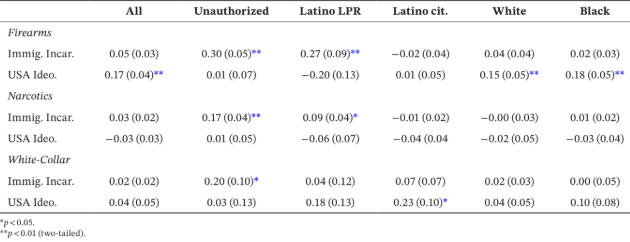
Table 3. Negative binomial regression results.
Immigration Spillover Effects are Not Ideologically-Driven
The results show that political ideology does not condition or influence spillover effects from the increased enforcement of immigration laws. As displayed in Table 5, the ideology of a U.S. Attorney does not alter incarcerations in narcotics, white-collar, or unauthorized foreign national cases. The isolated exception to this is firearm cases. During periods of low immigration enforcement, conservation U.S. Attorneys incarcerate more people per year for firearm offenses compared to liberal U.S. Attorneys. These patterns change when immigration enforcement increases, where conservative prosecutors incarcerate fewer individuals for firearm offenses. However, the authors recognized these results are driven primarily by race, not citizenship, as conservative U.S. Attorneys pursue greater prosecution against Black individuals than liberal prosecutors for firearm cases. Overall, the results hint that spillovers in criminal immigration enforcement are structural and mechanical, dictated by organizational routines rather than individual political philosophies.
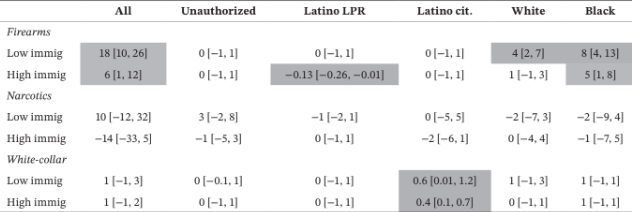
Table 5. Immigration enforcement, USA interaction (Conserv.—Liberal).
Why It Matters
This article cogently illustrates the effects of intensifying enforcement of immigration laws on other non-related crime areas. The observed patterns convey that as immigration policy shifts, the same old bureaucratic practices and routines are triggered in the United States—impacting how laws are enforced. The authors recommend examining the impact(s) of immigration enforcement in localized settings to determine how environmental context affects the spillover effects observed in this study. Furthermore, the authors suggest that future research directions should explore which routine bureaucratic processes are closely connected to the spillover effects in criminal immigration enforcement. By pursuing these opportunities, scholars can add valuable insights regarding the impact of institutional and street-level practices to current conversations surrounding immigration policy.
Read the original article in Policy Studies Journal:
Stobb, Maureen, Banks Miller, and Brett Curry. 2026. “Tradeoffs and Spillovers in US Criminal Immigration Enforcement”. Policy Studies Journal 54(1): e70046. https://doi.org/10.1111/psj.70046.
About the Article’s Author(s)

Maureen Stobb is a professor of political science at Georgia Southern University. Her research specializes in law and courts, and immigration policy. Before her doctoral studies, she practiced law for seven years, primarily as an immigration and asylum attorney.

Banks Miller is a assistant professor of Political Science, Public Policy and Political Economy at the University of Texas at Dallas. His research interests include judicial behavior, judicial politics, public policy, immigration, intellectual property, and American politics.

Brett Curry is a professor of political science at Georgia Southern University, teaching in the field of American politics, with a general focus on law and courts. His research interests encompass judicial decision-making, constitutional law, American government, American political institutions, and research methods.