Size Doesn’t Matter? For the Legitimacy of Deliberative Mini-Publics, It Does.

Justice demands that no one should do more ruling than being ruled, but that all should have their turn – Aristotle

This age-old quote demonstrates the aim of deliberative mini-publics (DMPs). In a DMP, a representative group of citizens comes together to discuss public issues and to create policy recommendations. Such initiatives aim to make the democratic system more participatory and rebuild political trust.

This research aimed to examine how the size of a DMP affects citizens’ perceptions of its legitimacy. While larger groups may enhance representativeness, they can hinder deliberation quality, process efficiency, and outcome efficacy. This study examined how citizens balance these dimensions of legitimacy and which size is seen as optimal.

We conducted two surveys (study 1: n = 516 UK citizens; study 2: n = 527 UK citizens), where participants read about the concept of a DMP and subsequently evaluated eight different group sizes on the four dimensions of legitimacy. Additionally, for each group size, participants filled in an overall evaluation item. Furthermore, participants had to decide how many citizens they thought a DMP should ideally consist of. Lastly, the participants had to indicate their general support for both DMPs and referendums.

The findings showed that the majority of participants (75%) made trade-offs between achieving representativeness and ensuring deliberation, efficiency, and efficacy. They rated the 100-citizen DMP as the most optimal, showing that most citizens intuitively balance the various legitimacy dimensions to come to a feasible size preference.

However, a substantial minority (25%) valued the involvement of large groups of citizens above other considerations. These participants believed DMPs should consist of more than 1,000 citizens. This group also expressed stronger support for referendums than for DMPs. Hence, for a subset of citizens, representativeness is the most important aspect of participatory democracy.

What Do We Learn From This?

As the majority perceived a 100-citizen DMP as most optimal in terms of balancing representativeness, deliberation, efficiency, and efficacy, this could be seen as a practical guideline for organizers of DMPs. However, we want to emphasize that 100 citizens should not be seen as a strict rule, as different contexts may require different approaches. Nevertheless, in any context, we believe it is important to reflect on how participatory initiatives will be perceived by citizens. DMPs may not always match what citizens expect in terms of size, and addressing this concern through clear communication about achieving a balance between ideals and feasibility may help garner support.

Furthermore, this research underscores the importance of using hybrid forms of democratic participation. Some formats promote debate while others ensure representation. By combining different models, the strengths of one can mitigate the weaknesses of the other. For instance, in Ireland, there have been several cases where a DMP formulated propositions that were subsequently approved by the population through a referendum. Such a two-stage format may help in meeting the expectations of all citizens and improve the trade-off between the various dimensions of legitimacy.

Read the original article in Policy Studies Journal:

Waterschoot, Milena, Tessa Haesevoets, and Arne Roets. 2026. “The Optimal Group Size of Deliberative Mini-Publics: A Divide in Perceptions”. Policy Studies Journal 54(1): 1-16. https://doi.org/10.1111/psj.12592.

About the Article’s Author(s)

Milena Waterschoot is a PhD candidate at the Department of Developmental, Personality and Social Psychology of Ghent University. Her research revolves around deliberative democracy and violent extremism. 

Tessa Haesevoets is a senior researcher at the Department of Public Governance and Management of Ghent University. Her research interests include trust repair, participation, expert-based democracy, artificial intelligence, and public administration.

Arne Roets is an associate professor at the Department of Developmental, Personality and Social Psychology of Ghent University. His research focuses on judgment and decision-making, moral and political psychology, participation, and intergroup relations. 

Beyond One-Off Crackdowns: How Regularized Campaigns Can Sustain Compliance

In May 2026, China launched the sixth batch of its third round of central environmental inspections. Seven teams entered seven provinces and the Xinjiang Production and Construction Corps. By June 9, they had inspected entities for rectification. The scale is striking, but the recurrence matters even more: this was not a one-off crackdown but another wave in a structured, recurring form of governance.

Governments everywhere face a familiar implementation problem. National leaders set rules, but local agencies enforce them. Those agencies may lack capacity, pursue competing goals, or protect economically important firms. Formal institutions help, yet discretion and regulatory capture can still produce uneven enforcement. One-off crackdowns can shake up the system, but their effects often fade once inspectors leave.

Our PSJ article identifies a hybrid of campaign-style enforcement and routine regulation: “regularized campaigns.” These are periodic, structured enforcement waves embedded in the ongoing routines of governance. They retain the visibility and intensity of a campaign while using repetition to signal that a policy priority—and the risk of scrutiny—will endure.

We examine China’s central environmental inspections, introduced in 2016. Using an original firm-level dataset that combines environmental monitoring, industrial output, administrative penalties, and citizen complains, we find that before the inspections, economically influential firms polluted more yet were punished less. A one-standard-deviation increase in a firm’s share of local industrial output was associated with 19 percent more environmental violations, even as influential firms faced fewer penalties. After the inspections became institutionalized, the relationship between economic influence and violations was no longer statistically significant. Just as telling, the gap remained closed in 2018—between the first and second full inspection rounds.

Why might repetition matter? These inspections targeted not only regulated firms but also the local officials responsible for enforcement. Recurring waves tied environmental performance to officials’ career incentives, reinforced the credibility of central priorities, and reduced the space for selective enforcement.

The broader lesson is not that every governance problem needs a permanent crackdown. Regularized campaigns can disrupt production, strain administrative capacity, and erode trust if they become indiscriminate. Their design matters: enforcement should be periodic rather than improvised, directed at both implementing agencies and regulated entities, transparent to the public, and calibrated to local conditions.

The underlying logic travels beyond China. In the United States, for example, the National Highway Traffic Safety Administration again launched its annual Click It or Ticket high-visibility seat belt enforcement campaign in May 2026. That campaign targets drivers rather than the agencies that police them, but its regularity is the point: motorists have learned to expect the scrutiny to return. The settings differ, but the common challenge is to combine episodic intensity with institutional safeguards. When that balance is struck, campaigns can change expectations between enforcement waves and make implementation more even over time.

Read the original article in Policy Studies Journal:

Shen, Shiran Victoria, Wing, Qi, and Zhang, Bing. 2026. “Regularized Campaigns as a New Institution for Effective Governance”. Policy Studies Journal 54(1): e70052. https://doi.org/10.1111/psj.70052.

About the Article’s Author(s)

Shiran Victoria Shen is an Assistant Professor of Political Science at Washington University in St. Louis. Previously, she was a National Fellow at the Hoover Institution (2021-2022) and led the China Energy Program at the Standford Doerr School of Sustainability (2022-2025). Her Policy Studies Journal article, “Regularized Campaigns as a New Institution for Effective Governance,” contributed to her receiving the 2025 World Citizen Prize in Environmental Performance from the Association for Public Policy Analysis and Management. She holds a Ph.D. in political science and an M.S. in civil and environmental engineering from Stanford University. 

Qi Wang is a postdoctoral researcher at the School of Business and the School of the Environment, Nanjing University. Her research focuses on environmental economics and regulation, drawing on a multidisciplinary background in economics and environmental policy.

Bing Zhang is a professor in the School of Economics at Nanjing University of Finance and Economics. His research focuses on environmental governance and policy, with an emphasis on their impacts on environmental performance and economic development. 

Toward a New Perspective on Forms and Sites of Democratic Life

How do we determine if democracy is succeeding or failing? Is it people “watching” politics or “doing” politics or both? These are questions that Dr. Andrea Felicetti engages with in his perspective piece, as traditional understandings of civic responsibilities in democracy are reconsidered. According to Felicetti, behaviors once deemed problematic to the health of a democratic society—anonymity, non-participation and spectatorship are now being reconsidered and they might have some benefits for democratic life. In particular, spectatorship, or merely observing political activities, is highlighted in this article as many citizens choose to be bystanders in politics. However, Felicetti encourages us to rethink the role of spectatorship in creating a vibrant democracy, asking the following questions: What forms might positive spectatorship take? In what contexts might we find this? How can we observe them empirically?

How Can Spectatorship Be Positive for Democracy?

Spectatorship has long been criticized as detrimental or burdensome to encouraging engagement with the democratic process—citizens are not engaged or willing to be involved in political activities. That said, Felicetti challenges us to consider that observing politics can be a positive stimulus for political engagement. Citizens can better understand their political environment and the issues being discussed through moments of observatory reflection. At the same time, watching citizens can question information, improving their ability to think critically. Moreover, Felicetti proposes that the learning of political dynamics through spectatorship leads in some cases to eventual collaboration as citizens unite around common interests and form collective identity. In this sense, while many are quick to discount spectatorship as antithetical to democratic engagement, it is actually necessary for building political understanding and action.

Where Does Spectatorship Take Place?

There are several locations where we can witness positive displays of spectatorship take place, according to Felicetti. He illustrates deliberative assemblies, participatory governance, social movements, and the workplace or schools as the common sites of positive spectatorship. These real-world spaces provide opportunities for citizens to present their perspectives and collectively reflect on shared challenges. For example, in the workplace, we do not just work; we are actively observing how shared challenges are managed, thus shaping our sense of democratic responsibility. By empirically examining positive spectatorship in these daily environments, Felicetti believes that researchers can begin to understand how people process their problems together.

Why It Matters

The emphasis on the positive forms of spectatorship in this article ultimately reconceptualizes how political theorists think about current democratic engagement. These activities are necessary for a healthy democratic landscape, challenging traditional arguments that participation alone is a signal of a healthy democracy. Felicetti encourages future researchers to pursue qualitative and quantitative approaches to study positive spectatorship in real-world environments—including social media and digital platforms. By pursuing an empirical-based strategy, we can start to engage with overlooked elements of democratic life beyond participation and learn from a massive segment of the democratic ecosystem.

Read the original article in Policy Studies Journal:

Felicetti, Andrea. 2025. “Toward a New Perspective on Forms and Sites of Democratic Life.” Policy Studies Journal, 53(4): 1098–1107. https://doi.org/10.1111/psj.70021.

About the Article’s Author(s)

Andrea Felicetti (PhD, Australian National University) is an Associate Professor at the Department of Political Science, Law, and International Studies at the University of Padua. His research interests and teaching activities revolve around democratic theories, public spheres, and governance. 

Four More Years! (of Policy Process Research in a Trump Administration)

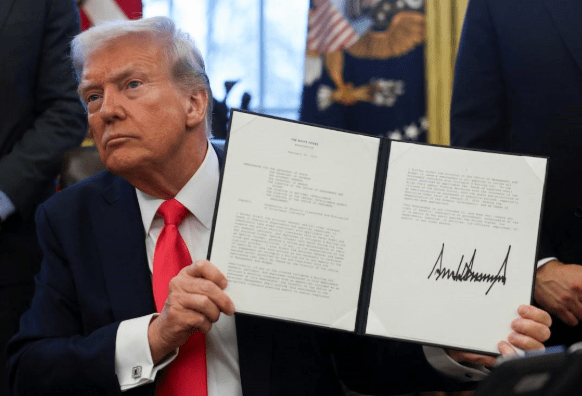
Last January, the editorial staff of PSJ asked me to think about how the new Trump administration might affect policy process research. This is a huge task full of landmines – not only would I need to write something that engaged a vast policy process literature, but I’d have to do something that political scientists should never do: make predictions. With blind confidence befitting a Full Professor, I said yes.

There is little precedent for the Trump presidency in many ways, not least of which is Trump’s re-election in non-consecutive terms. Trump’s impact on American politics and policy choices of the Republican Party has thus far been significant, even in the years out of power. All that said, the conclusion of my article is that it is unclear that a new Trump administration will change how we study public policy; however, his actions should change what we study. I call out five areas of study we, as a community, could focus on.

Executive Policymaking

First, Trump’s focus on executive policymaking challenges the very institutional structure upon which much of the American politics and policymaking research relies. Congress somehow has less power than before – some might say it has lost power, but is it fair to say that something is lost if it is given away? Trump is pursuing a constitutional interpretation that envisions an executive with independent, unchecked powers relative to the legislative and judicial branches. Most of the modern policy process research conceives of a foundational American political environment with stable post-World War II institutions. Those are under threat, and American policy scholars would do well to borrow from the comparative politics literature to understanding policymaking during regime change.

The Politics of Mass Repeal

Second, Trump campaigned on and is engaged in the steadfast commitment to a systematic repeal of his four years out of power – part of his Biden erasure campaign which also includes, incredibly, the results of the 2020 election. Policy scholars, particularly feedback scholars, have the tools to consider the politics of this moment. It is difficult to imagine a repeal agenda of this magnitude across so many policy areas. Trump and Congress have scrubbed DEI language from federal publications (including flagging the above picture of the Enola Gay because of the word “gay”), repealed the majority of Biden’s signature legislative achievement – the Inflation Reduction Act, rescinded federal funding for basic science and on and on. Policy scholars might ask questions about the politics of repeal – not just of one or two policies, but the politics of mass policy repeal.

Siege Federalism

Third, Trump has vigorously asserted the dominance of the federal government over states – when convenient. Trump’s actions can be seen in his attempts to rescind funding to states that fail to comply with his directives, his activation of the national guard in California, Illinois, and Oregon to purportedly affect federal agents, and, currently, coercing states and localities to assist federal immigration and other agents in a large-scale deportation effort. The field of federalism is full of different ways of characterizing different moments of federalism (e.g. “marble cake”, “layer cake”, “variable speed”); I offer “siege federalism” in the article. Looking at images of American cities – currently Minneapolis and before that my home town of Portland (above) – I’m saddened by how accurate that phrase has turned out to be.

Identity Politics and Redistribution

Fourth, Trump campaigned on identity politics, but this isn’t just about reversing DEI policies of the Biden administration. Trump and allies are elevating particular identity groups within the United States, notably, white Americans. Trump’s policymaking on this front is redistributive, which should lead to conflict. Notions of power and deservingness are at the center of these politics and are, in my opinion, extremely volatile at the current moment.

Policymaking in Corrupt Times

Fifth, and finally, the Trump administration has overtly and directly incorporated business interests (including Trump’s) as part of public policymaking. Members of the private sector have the president’s ear, but have also bent the knee. Prominent corporate leaders, particularly in the technology sector, have formal or informal roles in government. Policy scholars might think more on direct executive lobbying – but, honestly, we need to talk more about corruption in American politics. Is this level of corruption the new normal? If so, how should we build that into our models of the policy process? Comparativists have wisdom here and we should listen to it.

Looking Forward

I could fill another blog post (or article) about what we might think about as a community regarding other government actions that have transpired since I wrote the original article. For example, how does the weaponization of the justice system affect policy process research? Also, policy scholars don’t often think about foreign policy, but Trump (surprisingly) has taken significant actions abroad that have shaken the very foundation of the world order using a unique set of tools including abduction (fugitive apprehension), extortion (deal-making), and murder (kinetic actions). How can we use our process models to explain foreign policy? The Republican president has engaged in significant interventions in the economy down to the individual corporation level. How does Trumpenomics influence the context of policymaking?

An overarching theme of the Trump administration is to inject politics into as many parts of the policymaking process as possible. Policy scholars, myself included tend to engage in more institutional analyses and de-emphasize politics. We are currently in a new reality where it seems like just about everything is political – especially policymaking.

Read the original article in Policy Studies Journal:

Koski, Chris. 2025. “Four More Years! (of Policy Process Research in a Trump Administration).” Policy Studies Journal 53(4): 1088–1097. https://doi.org/10.1111/psj.70025.

About the Article’s Author(s)

Chris Koski is the Daniel B. Greenberg chair of political science and environmental studies at Reed College. His research focuses on the development of theory in punctuated equilibrium theory and the social construction framework. Substantively, his work addresses climate change policy and the politics of state budgeting. His publications have appeared in Policy Studies Journal, Governance, JPART, and he is co-author of Means, Motives, and Opportunities: How Executives and Interest Groups Set Public Policy published by Cambridge University Press.

Immigration, Government Type, and Social Welfare Spending

by Hang Qi

Immigration and the welfare state are often cast as adversaries in political debates. When immigration increases, concerns about overburdened social services frequently rise to the surface—especially during times of fiscal constraint. But is the relationship really that simple?

In my recent article, I argue that this question cannot be adequately answered without considering the role of the institutional framework and arrangements—specifically, the type of government in power.

Drawing on panel data from 28 advanced democracies between 1980 and 2019, I examine how immigration inflows interact with government types—single-party majority, coalition, and minority governments—to influence welfare spending. My findings show that the relationship between immigration and social expenditure is not uniform. While immigration alone does not have a consistent effect on welfare spending, its impact is significantly shaped by the type of government.

Coalition and minority governments – where power is more dispersed – are more likely to respond to immigration with increased welfare spending. This contrasts with single-party majority governments, which tend to be more cautious or even restrictive. The reasons are both institutional and political. In more fragmented governments, there are numerous veto players, and accountability is shared. This can shield pro-welfare and pro-immigration parties from electoral risks and dilute the policy influence of anti-immigrant sentiment.

By contrast, single-party majority governments, especially under growing public concern about immigration, may face stronger incentives to hold down spending. Parties in such governments are more directly accountable for all policy outcomes and may be wary of appearing “soft” on immigration in the eyes of median voters.

Real-world cases underscore these dynamics. In France, left parties in coalition governments have actively defended immigrants’ access to healthcare, despite political resistance. Meanwhile, in Denmark and the U.S., left-leaning single-party governments have in some instances moderated or even reversed their immigration-friendly positions in response to electoral pressure.

These findings illustrate a broader lesson: institutions matter. Political institutions determine how the government responds to social pressures and also condition whether immigration leads to policy expansion or retrenchment. Understanding these institutional filters is crucial for designing sustainable and inclusive social welfare policies in an era of increasing migration and political polarization.

You can read the original article in Policy Studies Journal at

Qi, Hang. 2025. “ Immigration, Government Type, and Social Welfare Spending.” Policy Studies Journal 00(0): 1–16. https://doi.org/10.1111/psj.70015.

About the Author

Hang Qi is an Assistant Professor of Political Science in the Department of Government and Public Administration at the University of Macau. His research focuses on the policy and politics of redistribution, immigration policy, fiscal policy, and political economy. His work has been published or is forthcoming in Policy Studies Journal, Public Opinion Quarterly, American Politics Research, and other journals.

X (Twitter): @Sailing_HQ1123
Facebook: Hang Qi
Linkedin: Hang Qi

Advocacy Groups, Policy Subsidies, and Policy Change: The Case of Teacher Evaluations

by Leslie K. Finger

In many policy areas, powerful interest groups—such as labor unions or industry associations—shape and protect the status quo. When these vested interests have significant financial and political clout, how do policymakers manage to enact major reforms against their preferences? My paper examines this question through the lens of teacher evaluation policy in the U.S., revealing that advocacy groups play a crucial role in facilitating policy change by providing what I call policy subsidies: information, resources, and capacity that enable reform-minded policymakers to push past entrenched opposition.

My primary research question is: How are powerful interest groups with a stake in the status quo overcome? In the case of teacher evaluations, many states moved to incorporate student growth measures—often derived from standardized testing—as a sizable portion of their teacher evaluation systems despite fierce resistance from teachers’ unions. I investigate why some states were more successful than others in adopting and sustaining these reforms, focusing on the role of advocacy groups in supporting policy change.

Teachers’ unions have long been among the most influential state-level interest groups, using their financial resources and political leverage to shape education policy. Given their strength, it would be expected that states would avoid implementing teacher evaluations that include student achievement as a key factor. Yet, from 2009 to 2015, a growing number of states adopted such provisions. Why?

I argue that advocacy groups—such as education reform organizations—provided information (i.e., policy ideas, analysis, data) and capacity (i.e., time-consuming actions). I call these assets policy subsidies. By reducing the costs associated with enacting and implementing controversial reforms, policy subsidies can make it easier for policymakers to challenge vested interests and push through significant policy changes.

Image Description

To test this theory, I conducted a 50-state quantitative analysis of teacher evaluation policymaking between 2010 and 2011 and case studies of Minnesota and Wisconsin, two states that took different policy paths. The study tested two primary hypotheses:

Hypothesis 1: States where advocacy groups provide policy subsidies are more likely to implement policy change opposed by vested interests than those without such groups.

Hypothesis 2: States where those in power are open to change are more likely to implement significant policy change opposed by vested interests than those without such politicians in power.

Image Description

My quantitative analysis showed that states where advocacy groups were active were significantly more likely to pass teacher evaluation reforms (see Figure 1). The effect of advocacy groups was strongest in states where Republicans controlled the legislature. In these states, advocacy groups helped craft policies that successfully incorporated student achievement as a “significant” factor in teacher evaluations (see Table 5). My case studies of Minnesota and Wisconsin illustrate this dynamic in action. In Minnesota, advocacy groups worked closely with Republican lawmakers to provide both technical policy assistance and political support, leading to the adoption of evaluation reforms. In contrast, Wisconsin—despite similar political conditions where Republicans were in control—lacked strong advocacy group engagement, and teacher evaluation reform was delegated to the bureaucracy, where, in the absence of advocacy group involvement, the student achievement provision was compromised during implementation..

Image Description

This study demonstrates that interest group influence is not absolute; advocacy groups can play a decisive role in shifting policy outcomes by lowering the costs of reform, even where vested interests are strong. Additionally, having policymakers favorable to a particular policy is not enough to overcome vested interests— policymakers need interest group allies to help them craft and implement those policies that might otherwise be stopped in their tracks by powerful interest groups. The concept of policy subsidies extends beyond education, offering insights into how policy entrepreneurs in other domains—such as climate change, healthcare, or labor policy—can challenge entrenched interests.

You can read the original article in Policy Studies Journal at

Finger, Leslie K. 2024. “ Advocacy Groups, Policy Subsidies, and Policy Change: The Case of Teacher Evaluations.” Policy Studies Journal 52 (4): 777–808. https://doi.org/10.1111/psj.12538.

About the Author

Leslie K. Finger is an Assistant Professor of Political Science at the University of North Texas. Her research focuses on interest groups, policymaking, and state and local politics with a focus on education policy. Her work has appeared in various journals, including Perspectives on Politics, Governance, Policy Studies Journal, Interest Groups & Advocacy, American Politics Research, and State Politics & Policy.

Not a Public Good, but a Public Responsibility: Rethinking AMR Governance

by Isaac Weldon

Governance failures often stem from a fundamental error: misdiagnosing what needs to be governed. As Nobel Prize laureate Elinor Ostrom argued, different types of goods—whether private, public, or common-pool—create distinct collective action problems, each demanding tailored solutions. When policymakers misidentify a resource or conflate its nature with how it should be governed, they risk applying the wrong tools and crafting ineffective policies. These misdiagnoses plague many of today’s biggest challenges, from climate change to biodiversity loss and global health.

Effective governance begins with defining what resources are being managed, how they are being depleted, and what institutional arrangements are necessary to sustain them. In a recent Policy Studies Journal article, my co-authors and I applied this logic to antimicrobial resistance (AMR), one of the world’s most pressing health challenges.

AMR—the third leading cause of global mortality—occurs when microbes evolve resistance to antimicrobial drugs like antibiotics, rendering treatments ineffective. Every use of antimicrobials increases this risk, and millions still lack access to these lifesaving medicines. AMR governance requires balancing conservation with equitable access and innovation, yet current policies struggle because they misdiagnose the problem itself.

Central to AMR are two distinct types of goods:

  • Antimicrobials (the physical pills) are private goods: They are excludable (they require prescriptions and money to access) and rivalrous (one person’s use prevents another from using the same dose). Historically, the default governance model for antimicrobials has been market-driven, relying on intellectual property protections and pricing mechanisms to incentivize production and ration use.
  • Antimicrobial effectiveness (the ability of these drugs to work over time) is a common-pool resource: It is non-excludable (difficult to prevent people from benefiting from it) and rivalrous (overuse diminishes effectiveness for all). Markets fail to govern this resource because firms and individuals benefit from selling and consuming more antimicrobials, not from ensuring long-term effectiveness.

But the nature of a resource does not dictate how it should be governed. Just because antimicrobials are private goods does not mean they should be left to market forces alone. Many excludable and rivalrous private goods—such as electricity and water—are publicly regulated because they are essential and generate widespread externalities. However, the fact that antimicrobial effectiveness is critical for public health does not mean it should be framed as a public good. Unlike true public goods, antimicrobial effectiveness is rivalrous—a distinction that shapes its governance. The pill (a private good) and its effectiveness (a common-pool resource) are distinct but interconnected, and their governance must reflect this.

In short: antimicrobials are private goods, antimicrobial effectiveness is a common-pool resource, and their governance must be a public responsibility.

AMR is not an isolated case. Climate change, biodiversity loss, and global health challenges all suffer when the wrong governance model is applied to the wrong kind of resource. Misidentifying the nature of a resource, or conflating its nature with its optimal governance regime, leads to mismatches that render solutions ineffective.

Better governance starts with better problem definitions. If we fail to define what is being governed, we will continue applying the wrong solutions—at great cost to human health and the planet.

You can read the original article in Policy Studies Journal at

Weldon, Isaac, Kathleen Liddell, Susan Rogers Van Katwyk, Steven J. Hoffman, Timo Minssen, Kevin Outterson, Stephanie Palmer, A. M. Viens and Jorge Viñuales. 2024. “ Analyzing Antimicrobial Resistance As a Series of Collective Action Problems.” Policy Studies Journal 52(4): 833–856. https://doi.org/10.1111/psj.12552.

About the Author

Isaac Weldon is an Assistant Professor of Law with the Centre for Advanced Studies in Bioscience Innovation Law (CeBIL) at the University of Copenhagen and an Investigator with the Global Strategy Lab at York University, Toronto. His research investigates antimicrobial resistance, emerging pandemic threats, and sustaining our planetary health. Recent works have also been featured in Perspectives on Politics and Globalization and Health.

The Power of Political Will in Driving Policy Innovation

by Shiran Victoria Shen

In a world facing climate crises, pandemics, and geopolitical shifts, governments must embrace bold policy innovation.  Scholars have long examined the drivers of policy change—ranging from economic conditions to policy diffusion and entrepreneurial leadership. Yet, one critical but underexplored factor is political will.

In my recent Policy Studies Journal article, I argue that political will is a key driver of drastic policy innovation—policy changes so bold that they redefine governmental priorities and novel policy instruments that any jurisdiction has rarely tested in the country. Using China’s low-carbon city experimentation as a case study, I show that strong political will among local leaders significantly increased the likelihood of drastically innovative climate policy measures being adopted and implemented.

What Is Political Will?

Political will is the commitment of key decision-makers (i.e., elected politicians in democracies or political leaders in autocracies) to enact and implement policies, even at political or financial risk. It consists of three key components:

  1. Authority – The power to enact and enforce policies
  2. Capacity – The fiscal, human, and administrative resources to implement them effectively
  3. Legitimacy – Stakeholder acceptance, which is crucial for garnering support and reducing resistance

Political will is distinct from political power.  While power provides the means, political will determines whether leaders use that power to drive bold policy change.

How Political Will Shapes Drastic Policy Innovation

China’s low-carbon city pilot provides a suitable setting to study political will. Unlike many centrally led pilots, this initiative required cities to voluntarily apply and commit their own resources. My research examines the second batch of pilot cities, which were selected based on leadership engagement, demonstrability, and locally driven decarbonization strategies.

Political will is gauged by the Leader of the Low-Carbon City Construction Leading Group (LCCLG). I found that cities where the prefectural party secretary—the highest-ranking local official—steered the LCCLG were significantly more likely to introduce and implement drastically innovative climate policies. These leaders not only set ambitious goals but also effectively mobilized resources and overcame bureaucratic resistance. In contrast, cities where their low-carbon city pilots were led by lower-ranking officials demonstrated a weaker commitment, resulting in fewer innovative policies proposed or implemented.

Why Institutionalizing Political Will Matters

A critical insight from my study is that when political will is institutionalized, policy innovation persists despite leadership turnover. In China, this was achieved through LCCLGs, which maintained policy continuity even when key officials changed.

This challenges the conventional wisdom that leadership changes disrupt policy innovation.  Instead, embedding political will within the leadership structure sustains transformative policy efforts over time.

Lessons for Policymakers Worldwide

Although my case study focuses on China, the implications extend beyond authoritarian regimes. In democracies, political will is shaped by electoral incentives, coalition-building, and public advocacy, requiring a different approach to measurement. In authoritarian states, political will aligns closely with leader rank and authority, whereas in democracies, multiple veto points necessitate a broader set of variables.

Yet the core principle remains: bold policy innovation depends on committed leadership willing to take risks and overcome resistance.

For policymakers and scholars, political will should be explicitly considered as a critical driver of policy innovation. Whether tackling climate change, public health, or economic shock, fostering and institutionalizing political will enables governments to implement transformative policies that endure.

You can read the original article in Policy Studies Journal at

Shen, Shiran Victoria. 2025. “ Political Will As a Source of Policy Innovation.” Policy Studies Journal 53(1): 185–200. https://doi.org/10.1111/psj.12571.

About the Author

Shiran Victoria Shen is a senior research scholar and the lead for the China Energy Program at the Stanford Doerr School of Sustainability.  Her research examines how incentives and institutions shape climate and environmental actions.  More broadly, she is interested in key issues in public policy and governance.

Unpacking Core Components of Interventions: A Comparison of Synthesis Approaches

by Sebastian Lemire & Allan Porowski

Evidence reviews have become a key tool for evidence-based policy, helping policymakers make informed decisions about which interventions to implement. Traditionally, these reviews have focused on the outcomes of entire interventions. However, the growing interest in the specific elements that drive intervention effect has over the past ten years led to a focus on core components—the key features that contribute to an intervention’s effectiveness. Core components refer to the essential features of an intervention—such as activities, services, or practices—that available evidence shows are effective in driving outcomes. Identifying these core components can help create more effective interventions by highlighting the features that contribute most to desired outcomes. Identifying with greater precision what works, in which contexts, and for which populations can help policymakers assess which existing policies and interventions are (or are not) likely to be effective and better understand why policies or interventions that share similar characteristics may achieve different results.

In our PSJ research note, we describe four evidence synthesis approaches—distillation and matching model, meta-regression, framework synthesis, and qualitative comparative analysis—to identify these core components. Each approach offers unique advantages depending on the available data and intervention context. Understanding the various approaches, along with their respective advantages and limitations, can help researchers select the most appropriate analysis method based on the purpose of their evidence review, the intended audience, and how the findings will be applied.

To further enhance the use of core components analysis, we call for advancements in improving reporting conventions, using multi-phased designs, and expanding applications of core component analysis. Providing more detailed reporting of the intervention characteristics, setting, participants, implementation, and costs in primary studies provides for a stronger foundation for core components analysis. To enhance core components analyses even further, a multi-phase approach can be used. In the first phase, researchers analyze evidence in a specific field, and in the second phase, they collaborate with practitioners to design field trials based on the findings to evaluate the effectiveness of core components Finally, applying core components analysis across a broader range of interventions, practices, and policies, with more diverse populations, and in a variety of settings can help policymakers understand how evidence-based interventions and policies should be designed to ensure that they promote positive outcomes in diverse contexts.

You can read the original article in Policy Studies Journal at

Lemire, Sebastian, Laura R. Peck, Allan Porowski and Allison Dymnicki. 2025. “ Unpacking Core Components For Policy Design: A Comparison of Synthesis Approaches.” Policy Studies Journal 53(1): 171–184. https://doi.org/10.1111/psj.12567.

About the Authors

Sebastian Lemire is a Senior Scientist at Abt Global. His research focuses on systematic evidence reviews, alternative approaches to impact evaluation, and evaluation capacity building. He currently serves on the executive board of the American Evaluation Association and on the editorial advisory boards of Evaluation and the American Journal of Evaluation.

Allan Porowski is a Principal Associate at Abt Global. He is a leading expert in the design, execution and analysis of randomized controlled trials, quasi-experimental studies and national cross-site evaluations of education, health, and other social interventions.


Intergovernmental Implementation in a Time of Uncooperative Federalism: Immigration Enforcement and Federal Secure Communities Program, 2011–14

by William D. Schreckhise & Daniel E. Chand

On the first day of his second term, Present Trump signed an executive order taking aim at “so-called sanctuary jurisdictions,” marking his latest attempt to step up immigration enforcement in progressive, pro-immigrant communities. While there’s no universal definition as to what constitutes “sanctuary” jurisdictions, the most accepted definition are communities that limit state and local law enforcement participation with Immigration and Customs Enforcement (ICE), enforcement program known as Secure Communities (S-Comm).

S-Comm is, essentially, a nationwide immigration screening program. It has long been commonplace for jails to share an individual’s name and biometric information (e.g., photo, fingerprints, etc.) with federal authorities to see if the person has a criminal record or any outstanding warrants when an individual is arrested and booked. S-Comm further shares this information with ICE, which screens the individual for immigration violations.

If ICE suspects an individual of being in the country without proper authorization, it can issue an ICE detainer, which requests the jail to hold the individual for up to 48 hours so that ICE can take custody of the person and begin deportation proceedings. ICE can, and frequently does, detain individuals under S-Comm regardless of whether the charges for the original arrest are dropped. From the time S-Comm became nationwide operational in 2013 through 2020, roughly 700,00 individuals were removed from the country.

S-Comm was (and still is) controversial. Numerous local governments, mostly counties, have passed various measures in opposition to the program. Other governments went further, explicitly prohibiting their officers from contacting ICE and prohibiting their agencies from spending money in ways that otherwise could help ICE. However, other governments essentially did the opposite with some states requiring their counties to honor ICE detainer requests.

In our PSJ article, we examined the extent to which state and local governments play a role in implementing federal policy, focusing on the patterns of interaction between federal actors and nonfederal actors implementing S-Comm. Specifically, we examine the extent to which localities and states could hinder or help with the program’s implementation.

To determine what role these subnational policies could play, we collected county-level ICE removal data and information about which states and localities adopted policies aimed at either helping ICE by mandating their agencies honor detainer requests or hindering ICE’s efforts prohibiting that they cooperate with ICE’s detainer requests.

We found that states and counties can indeed play a prominent role. Taking these various other factors into account, counties that passed so-called “sanctuary” ordinances saw roughly 30% fewer deportations. Counties in states that had passed their own state-level “sanctuary” laws saw a similar decline. States that passed legislation requiring their localities to cooperate with ICE saw 44% more deportations.

We also wanted to determine to what extent the presence of the cooperative and noncooperative policies was reflected in what ICE itself was doing. It is one thing for counties and states to simply refuse to cooperate; it is entirely another for ICE to modify its own behavior because of these policies. To do this, we redirected the variables to determine whether they could help explain the extent to which ICE was making detainer requests in the first place. Again, we found that ICE was making fewer detainer requests in states and counties where cooperation with ICE was prohibited and making more in states where the counties were directed to cooperate.

Considering the ongoing debate over immigration enforcement policies, our findings underscore the significant impact of state and local policies on the implementation of federal initiatives, like S-Comm. The presence of subnational policies not only shape the outcome of the policy, but also how the federal agencies, like ICE, behave when implementing federal programs.

You can read the original article in Policy Studies Journal at

Schreckhise, W.D. and Chand, D.E. (2021), Intergovernmental Implementation in a Time of Uncooperative Federalism: Immigration Enforcement and Federal Secure Communities Program, 2011–14. Policy Stud J, 49: 1160-1188. https://doi.org/10.1111/psj.12426

About the Authors

William D. Schreckhise is professor in the University of Arkansas’ Department of Political Science. He earned his Ph.D. from Washington State University’s Department of Political Science. His research interests include policy implementation and bureaucratic discretion. His the author of Evaluating American Democracy and Public Policy.


Daniel E. Chand (“Danny”) received his Ph.D. in Public Policy in the Policy Management specialization at the University of Arkansas. His research focuses on the implementation of immigration policy, examining the roles of actors such as immigrant-serving nonprofits, immigration judges, and ICE officers. In addition to PSJ, his work has appeared in journals like Policy Sciences and Voluntas.