Mixed Messages and Bounded Rationality: The Perverse Consequences of REAL ID for Immigration Policy

by Maureen Stobb, Banks Miller, & Joshua Kennedy

The President and Congress have renewed efforts in the past year to reshape immigration policy. Yet, if history can teach us anything, it is that outcomes in this area tend not to match intent. Our research looks at a clear example of this mismatch, the REAL ID Act, a law aimed at tightening refugee admissions by taking control away from liberal judges on the U.S. Courts of Appeals. Despite its intent, it resulted in more people getting asylum. In our research we ask, what explains this policy gap?

We contend that part of the answer lies in the REAL ID Act’s ambivalent language, a common characteristic of policy concerning undocumented immigrants. The law gave the street-level bureaucrats who decide asylum cases —immigration judges (IJs)— more discretion to deny bogus asylum claims. They no longer had to point to an inconsistency undermining a key aspect of the persecution claim to find the applicant not credible. They could deny based on inconsistencies such as birthdays and wedding dates that have no connection to the asylum claim. At the same time, the law required IJs to consider all the circumstances, potentially reincorporating some of the former rule.

What did IJs do in this situation? They are supposed to follow the precedent in the circuit with jurisdiction over where they sit, but the President controls their hiring and firing, and Congress writes the law and determines their budget. We argue that IJs, behaving in a bounded rationality framework, relied on their professional training as lawyers as a shortcut and were considerably more deferential to the circuit courts who read every opinion they write.

We find just that. As the figure below shows, the adoption of the REAL ID Act’s credibility standard enabled significantly closer ideological control by the courts. Before REAL ID, there was very little relationship between the presumed aggregate preferences of the appellate courts on asylum cases and IJ decision making in that circuit. But after the REAL ID Act is implemented by the circuit through the adoption of its standard in precedent, as the percentage of the circuit that is Democratic increases so too does the likelihood of an IJ granting asylum. The impact went from 3 to 52 percentage points.

Image Description

Figure 1: REAL ID & the Circuit Courts

We saw an increase in influence for Congress and the President, but it was not nearly as large. We also show this is not just a result of the uniqueness of the first Trump administration.

The findings suggest that any attempts to restrict asylum access through immigration courts during Trump’s second term would require precisely written policies. If the administration and a Republican-controlled Congress pursue such restrictions, vague or ambiguous language could backfire. In cases of unclear policy, IJs will turn to federal courts for guidance—potentially leading to interpretations that run counter to the administration’s goals.

You can read the original article in Policy Studies Journal at

Stobb, Maureen, Banks Miller, and Joshua Kennedy. 2023. Mixed messages & bounded rationality: The perverse consequences of real ID for immigration policy. Policy Studies Journal 51: 667–684. https://doi-org.echo.louisville.edu/10.1111/psj.12486

About the Authors
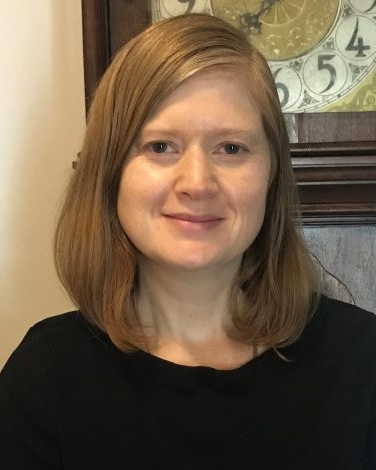
Maureen Stobb is an Associate Professor of Political Science at Georgia Southern University. Her research focuses on the expansion of judicial power relative to the legislature and the executive, particularly in the policy areas of immigration and citizenship. Her research has been published in various outlets including The Journal of Law & Courts, and Justice System Journal.

Banks Miller is an Associate Professor of Political Science at the University of Texas at Dallas. His research focuses on judicial decision making, intellectual property policy, and immigration policy. Recent work has been published in the Journal of Law & Courts and American Politics Research.


Joshua B. Kennedy is an Associate Professor of Political Science at Georgia Southern University. His research of late focuses on political control of the administrative state, and he has also published in the area of unilateral presidential power. His research has appeared in American Politics Research, Research & Politics, and Presidential Studies Quarterly, among other outlets.

Not Just the Nation’s Hostess: First Ladies as Policy Actors

by Mary R. Anderson & Jonathan Lewallen

Popular culture likes to view the First Lady as a symbol of American womanhood, the nation’s hostess, fashion icon, and mom-in-chief. Yet, modern First Ladies often develop their own policy priorities and programs, and the Office of the First Lady is integral to modern presidential administrations. In this article we make the case for studying First Ladies as policy actors by examining the audiences to which First Ladies speak, the roles they adopt in doing so, including an explicit policy role, and the degree of substantive policy content in their public speeches and remarks. 

We use archived First Lady public speeches and remarks from 1993-2022 covering First Ladies Clinton, Laura Bush, Obama, Trump, and Biden to illustrate that First Ladies actively adopt policy roles across their speeches and other appearances; speak to policy-focused audiences like policy summits, interest groups, and government personnel and often discuss substantive policy issues in these appearances.

First Ladies adopt roles beyond the ceremonial role established by Martha Washington. She also plays the roles of policy advocate and party supporter and leader.  We depart from other scholars in our view that these roles are not “either-or” but rather “both-and,” the First Lady can be both engaging in a ceremonial role AND a policy role. For example, when the First Lady gives a commencement speech, she is acting in a ceremonial role. She may also discuss policy in that speech, in which case she is acting in a policy role, thus she is assuming both roles simultaneously, ceremonial and policy. Our analysis of First Lady roles demonstrates that the combination of Policy + Ceremonial roles is the most common configuration in our data. While First Ladies adopt the Ceremonial role more often than the others, the Policy role is a large part of the First Lady’s activities, about 72% of the data involve a Policy role in some way. 

Image Description

We argue that First Ladies are significant policy actors and that they discuss policy when they are addressing various audiences. Our data supports this characterization because we see First Ladies often addressing policy relevant audiences in their activities. Our analysis shows that First Ladies talk to three “clusters” of groups.  Excluding the broad “other” category, First Ladies have spoken most often to national interest groups (14.4%) and at policy events (14%).

Image Description

Figure 1: Percentage of First Lady Speeches and Remarks Delivered to Different Audiences

Finally, we find that First Ladies address substantive policy content frequently. We find that First Ladies address substantive policy content in about 63% of their speeches; when we dive more deeply into those observations where the First Lady adopted a Policy role, they addressed substantive policy issues about 90% of the time.  The presence of substantive policy content varies across First Ladies’ audiences as shown in the figure below.  First Ladies since 1993 mentioned some substantive policy issue in about 91% of their remarks to party supporters and 90% to policy events. 

Image Description

Figure 2: Speeches and Remarks with Substantive Policy Mentions by Audience

In this article, we challenge the traditional view of the First Lady as a largely ceremonial public figure and behind-the-scenes presidential advisor. Using her public speeches and remarks over a 30-year period we find that First Ladies consistently discuss policy issues across their different audiences and adopt the Policy role in more than three-quarters of their speeches in statements. Over time the role of the First Lady has evolved, their unique position permits them to play a role in policy that might not be obvious at first glance. They are particularly well-situated and well-resourced to engage in the policy process as executive branch actors and thus should be studied more often for their engagement in policymaking. 

You can read the original article in Policy Studies Journal at

Anderson, Mary and Jonathan Lewallen. 2024. “ Not Just the Nation’s Hostess: First Ladies As Policy Actors.” Policy Studies Journal 00(0): 1–19. https://doi.org/10.1111/psj.12558.

About the Authors

Mary Anderson is the brodsky chair for Constitutional Democracy and Culture and professor of Political Science at Salve Regina University in Newport, RI. She studies women and politics and civic participation.


Jonathan Lewallen is an associate professor of political science at the University of Tampa. His research focuses on agenda setting and the policy process and how issues and institutions evolve together over time. Dr. Lewallen’s book Committees and the Decline of Lawmaking in Congress was published in 2020 by the University of Michigan Press.

What lessons do professionals learn about government from implementing policy?

by Patricia Strach

A professional on a recent Substance Abuse and Mental Health Services Administration (SAMHSA) webinar that we participated in noted that stigma doesn’t just affect people who use drugs (the clients), it also affects the professionals providing services to them. We weren’t surprised. In our interviews, focus groups, and participant observation of roughly 200 professionals, we heard the same frustration, which was backed up with examples of lower salaries, less respect, and few opportunities to use professional discretion.

While researchers have shown that clients or even community members learn lessons about how government works from their direct or indirect interactions, we don’t know what effect policies have on another invested group: professional implementors. Yet professionals in substance-use disorder services—including general healthcare, drug treatment, and harm reduction (such as syringe exchange) programs—are very aware that they have a different experience from professionals working with other clients.

Substance-use disorder services, then, offer a window into how policies designed for marginalized and negatively constructed populations affect the advantaged, policy professionals administering them with broader implications for the true effects of public policy.

In our research, we find that policy implementors learn by proxy: they witness a government that does not care about people who use drugs; they experience a government that is not committed to providing positive care services to their clients and does not value the professionals who work with them; and in witnessing and experiencing together, they learn that the disadvantaged status of people who use drugs affects the benefits and burdens on the professionals who administer them too.

One treatment provider summed up the effect of extensive and proscriptive rules that punish clients at the same time they remove clinical discretion from well-qualified providers as having “less to do …with whether or not they believe the patient. It’s really how much they respect the opinion or the information provided by the clinician. So I think that stigma follows not only the clients and patients that we see, but I think they don’t always believe us.”

These lessons shape implementors’ views of government. They believe government does not care and has chosen not to take meaningful action in ways that are at odds with what their advantaged status—as counselors, nurses, doctors, managers, and executives in health systems—might suggest. They do not see government as supportive, or politics as winnable. Instead, their status as professionals allows them to compare their experience to other professionals’ and their clients’ experience with other clients’, and they recognize the unfairness in how government treats clients and professionals.

Our article, “Learning by Proxy: How Burdensome Policies Shape Policy Implementors Views of Government,” suggests that policy affects more than clients or community members. It spills over to the professionals who implement them, shaping their experience and perspective of government too. Our research offers lessons for scholars of drug policy, policy feedback, administrative burdens, and social construction of target populations.

You can read the original article in Policy Studies Journal at

Strach, Patricia, Elizabeth Pérez-Chiqués and Katie Zuber. 2024. “ Learning by Proxy: How Burdensome Policies Shape Policy Implementors’ Views of Government.” Policy Studies Journal 00(0): 1–23. https://doi.org/10.1111/psj.12554.

About the Author

Patricia Strach, PhD is Professor, Departments of Political Science and Public Administration & Policy, University at Albany, State University of New York (SUNY) and a fellow at the Rockefeller Institute of Government, SUNY. With Katie Zuber and Elizabeth Pérez-Chiqués, she examines the opioid epidemic in local communities, engaging people on the frontlines including judges, lawyers, sheriffs, service providers, elected officials, community activists, and people who use drugs and their families. She is the author most recently of The Politics of Trash: How Governments Used Corruption to Clean Cities, 1890–1929 (Cornell 2023) as well as articles published in the Journal of Public Administration Research and Theory, Policy Studies Journal, and the Journal of Health Politics, Policy, and Law. She has presented her findings to federal and state policymakers and has appeared on panels across New York State. Strach received the Outstanding Public Engagement in Health Policy Award from the American Political Science Association’s Section on Health Politics and Policy in 2020 and was a Robert Wood Johnson Scholar in Health Policy Research at Harvard (2008-2010).

Potholes, 311 reports, and a theory of heterogeneous resident demand for city services

by Scott J. Cook, Samantha Zuhlke, & Robin Saywitz

An important criterion for evaluating the effectiveness of local governments is how – and whether – they respond to the needs of their residents. Sometimes, local governments proactively provide basic services to meet their residents’ needs. Other times, residents make their needs known to government officials by requesting these services. Importantly, not all residents are equally likely to request services from government when government fails to address a need. In this study, we examine which areas are more likely to produce requests for services from government when faced with a common service need: potholes.

We use 311 reports to measure resident demand for specific kinds of services – in our case, pothole repair. Many localities in the U.S. have adopted 311 systems as a way for residents to request government services. For practitioners, 311 systems are a valuable means of connecting with residents. For researchers, 311 reports are a valuable source of data, providing information on what service was requested, when and where the request was made, and how the locality responded to the request. We study potholes because it is easy to measure whether potholes have been serviced, local governments have nearly full autonomy to repair potholes, and residents are widely in favor of reducing potholes. Ultimately, we wanted to understand whether and to what extent requests for pothole repairs varied according to the racial/ethnic and socioeconomic makeup of a city neighborhood, anticipating that requests for services made via 311 systems may follow patterns seen in other forms of political participation.

We apply a three-part general model for understanding how local governments provide public services, which breaks down according to need for services, demand for services, and service provision. Need reflects what residents require, demand represents the expression of need by residents to government, and service provision is the action that the government takes to meet the need and/or demand for services. In our study, we focus on how need (the presence of potholes) translates into demand (a 311 request about a pothole placed by a resident).

Image Description

Figure 1. General model for local service provision

Our dataset includes 311 reports on potholes in Houston, Texas from 2016 to 2020. Houston is a useful case since it has a long-running 311 system and an economically and demographically diverse population. Potholes were a salient policy priority in Houston during this period. We secured data on the number of potholes proactively filled by the City of Houston in a FOIA request, which we use as a proxy for pothole presence within a census tract. To evaluate area demand, we utilize the number of 311 reports in each census tract. We measure a census tract’s socioeconomic status using a single variable constructed from several measures, including the poverty rate, median household income, and the percentage of residents who are high school and college graduates. We measure race as the percentage of Black, Hispanic, and Asian residents in a tract.

Image Description

Figure 2. Total 311 reports about potholes in Houston, TX from 2016 to 2020

We find that tracts with higher percentages of Black and Hispanic residents correlated with higher numbers of potholes. Lower socioeconomic status was also associated with more potholes. Despite being more likely to have potholes, we find that those same areas had fewer 311 reports. Instead, tracts with fewer Black and Hispanic residents, as well as those of higher socioeconomic status, were more likely to file 311 reports. Taken together, these results reveal that those areas of Houston with the most need for pothole remediation are least likely to demand it.

Our findings serve as a note of caution to local governments about the potential danger of overreliance on self-reporting systems like 311 to allocate public services. The case of potholes in Houston demonstrates that demand for services does not always align with need. Consequently, 311 systems have the potential to exacerbate existing inequalities along lines of race and socioeconomic status if public administrators assume that individuals are equally likely to engage with these systems. We advise local governments to a) find ways to encourage greater 311 reporting more broadly, and b) proactively provide services, anticipating that some residents will be less likely to request services to meet unmet needs.

You can read the original article in Policy Studies Journal at

Cook, Scott J., Samantha Zuhlke and Robin Saywitz. 2024. “ Potholes, 311 Reports, and a Theory of Heterogeneous Resident Demand For City Services.” Policy Studies Journal 52 (3): 647–669. https://doi.org/10.1111/psj.12540.

About the Authors

Scott J. Cook is an associate professor in the Department of Political Science at the Bush School of Government and Public Service at Texas A&M University. The core aim of his research was to improve our ability to effectively learn about political processes from otherwise imperfect data. Examples of this work have been published in the American Journal of Political Science, the American Political Science Review, and the Annals of Applied Statistics.

Samantha Zuhlke is an assistant professor in the School of Planning and Public Affairs at the University of Iowa. Her research examines how individuals relate to government and nonprofit organizations, particularly in the wake of government failure. Her work has been published by Cambridge University Press and the Journal of Public Administration Research and Theory. She previously worked at the National Geographic Society.

Robin Rose Saywitz is an Assistant Professor in the Department of Political Science at Saint Louis University. Her research falls along three, often overlapping lines: environmental policy, political institutions and performance, and the drivers of human capital decisions in the bureaucracy.

Nascent policy subsystems in polycentric governance networks: The case of sea-level rise governance in the San Francisco Bay Area

by Tara Pozzi, Elise Zufall, Kyra Gmoser-Daskalakis, & Francesca Vantaggiato

The biggest environmental policy challenges of our time cut across policy sectors and levels of governance. The wide scope of these issues requires collaboration across sectoral, geographical, and administrative boundaries. Recent literature utilizing the Advocacy Coalition Framework (ACF) has explored the behavior of nascent subsystems, which emerge in response to novel policy challenges and feature developing coalitions. 

However, we still lack an empirical approach to identify and analyze the structural characteristics of these nascent (i.e., emergent) subsystems and assess their implications for theoretical and subsystem development. How do we recognize a nascent policy subsystem when we see one, and what are the drivers of its coalitional structure?

This study builds and expands upon Ingold et al.’s (2017) study of nascent fracking policy subsystems in the United Kingdom and Switzerland, which found that network structure was better explained by actors’ secondary policy beliefs and former collaborative relationships than by actors’ deep core beliefs. We examine the case of the governance of sea-level rise (SLR) adaptation in the San Francisco Bay Area (SF Bay Area), utilizing a 2018 online survey to identify whether its governance system is nascent, whether actors’ policy core beliefs (specific to the subsystem) form discernible advocacy coalitions, and whether those beliefs inform network partner selection.

Image Description

Employing community detection methods and a Bayesian model for statistical analysis of networks (the Bayesian Exponential Random Graph Model, or BERGM) to test for core policy belief homophily between actors, we found that the network does not divide into fully fledged coalitions (illustrated in Figure 1), and that belief homophily is a driver of network structure (Figure 2), suggesting that coalitions are emerging. Moreover, we determined that emerging coalitions dovetail existing policy divides in the SF Bay Area around environmental protection and environmental justice goals.

Image Description

Taken together, these results suggest that coalition formation in the nascent subsystem of SLR in the SF Bay Area is associated with actors’ beliefs imported from pre-existing, related subsystems. At present, communities do not display the adversarial coalitional structure consistent with mature subsystems; instead, overlapping membership by actors in communities creates a core-periphery structure consistent with a collaborative policy subsystem.

Our analysis has important implications for theory, methods, and practice. It shows that nascent subsystems addressing new collective action problems such as SLR derive at least part of their emerging structure from existing coalitions. However, most policy actors in our network display heterogeneous policy core beliefs which do not clearly refer to either pre-existing environmental protection or environmental justice coalitions. This underscores the role that learning plays in coalition formation, particularly when actors face new issues and need to gather information to form their positions. Thus, while pre-existing coalitions shape collaborative ties in the current network structure, they need not prevent the development of entirely new coalitions in the future. Additionally, our empirical approach for recognizing a nascent policy subsystem, parsing out its structural characteristics, and understanding the drivers of its structure can be replicated in other emerging policy subsystem studies.

The implications of this analysis for practice are twofold: for one, understanding the structure of nascent policy subsystems can alert policymakers to the likely trade-offs to be faced in decision-making; and secondly, tracking subsystem development can ensure policymakers include affected interests in the governance process.

You can read the original article in Policy Studies Journal at

Pozzi, Tara, Elise Zufall, Kyra Gmoser-Daskalakis and Francesca Vantaggiato. 2024. “ Nascent Policy Subsystems in Polycentric Governance Networks: The Case of Sea-level Rise Governance in the San Francisco Bay Area.” Policy Studies Journal 52 (3): 561–581. https://doi.org/10.1111/psj.12549.

About the Authors

Tara Pozzi is a PhD candidate in the Graduate Group in Ecology at the University of California, Davis and a Delta Science Fellow. Her research focuses on how governance networks influence effective climate adaptation policy and planning decision-making. Prior to UC Davis, she completed her M.S. in Human-Environment Systems from Boise State University and her B.S. in Civil Engineering from Santa Clara University.  

Website: https://tarapozzi.github.io/ 
LinkedIn: https://www.linkedin.com/in/tara-pozzi-74587856/ 

Elise Zufall is a PhD candidate in the Geography Graduate Group at the University of California, Davis. Zufall studies the role of actor relationships, beliefs, and knowledge in environmental resource management and decision-making. Zufall received her M.S. and B.S. in Earth Systems from Stanford University.  

Kyra Gmoser-Daskalakis is a PhD candidate in the Graduate Group in Ecology at the University of California, Davis. She studies collaborative environmental governance, with a particular focus on the implementation of multi-benefit green infrastructure. She holds a B.S. in Environmental Economics and Policy from UC Berkeley and a Master of Urban and Regional Planning from UCLA.

LinkedIn: https://www.linkedin.com/in/kyra-gmoser-daskalakis-939375b3
X (Twitter): @kyraskyegd

Francesca Pia Vantaggiato is Senior Lecturer in Public Policy at the Department of Political Economy at King’s College London (UK). Her research focuses on how policy-makers and stakeholders use collaborative relationships to tackle change and uncertainty. Her work has been published in journals such as the Journal of Public Administration Research and Theory, Policy Studies Journal and Global Environmental Change. Prior to King’s College London, Vantaggiato was a postdoctoral researcher in the Department of Environmental Science & Policy at the University of California, Davis.

Website: https://francescavantaggiato.github.io/ 
Bsky: https://bsky.app/profile/fpvantaggiato.bsky.social 

The Politics of Problems versus Solutions: Policymaking and Grandstanding in Congressional Hearings

by Jonathan Lewallen, Ju Yeon Park, & Sean M. Theriault

Many journalists, legislators, academics, and other commentators have lamented the recent state of U.S. policymaking and a seemingly increased emphasis on “message politics” and grandstanding at the expense of “serious” legislating.

Taking positions is an important part of political representation and grandstanding often gets traced to electoral motivations and incentives. Our new article, “The Politics of Problems versus Solutions: Policymaking and Grandstanding in Congressional Hearings,” finds another source: a focus on the problem space.

Many aspects of decision-making depend on whether we are focused on the problem space or the solution space. Simplifying problems involves using heuristics to narrow our attention on different potential focusing events and indicators. Navigating the solution space involves both consulting experts and making analogies to similar-enough alternatives adopted for other issues or in other governing jurisdictions.

We find evidence that the different focus on problems and solutions doesn’t just influence the kinds of information we pay attention to; it also influences how policymakers engage in deliberation and creates different political dynamics.

We compared Professor Park’s “Grandstanding Score,” which measures individual legislators’ intensity of sending political messages, across three types of U.S. congressional committee hearings: those focused only on the problem space, those focused on implementation of existing policies, and those focused on proposed alternatives.

Our analysis shows that hearings focused on the problem space have average grandstanding scores about 0.65 points higher than solution-focused hearings, and 1.41 points higher than implementation-focused hearings. 

We also find variation in grandstanding by policy topic using the Policy Agendas Project major topic codes. Specifically, hearings on issues like social welfare, law and crime, education, civil rights, macroeconomics, international affairs, and the environment tend to have significantly higher grandstanding scores. Hearings on technology and agriculture, on the other hand, tend to have significantly lower grandstanding scores.

Our research adds valuable insights to the ongoing discussion of legislative dysfunction in the United States, highlighting how the focus on problem politics at the expense of solution-driven deliberation has affected congressional behavior over time.

While our results are potentially good news for policymakers focused on implementing existing policy, they also present a few challenges to advocates looking to reduce messaging politics in Congress and encourage substantive policymaking. Grandstanding derives at least in part from both a focus on policy problems and the specific problems receiving attention; to some extent, grandstanding is baked into both the policy agenda and Congress’s responsibilities as a representative institution. Rather than trying to reduce grandstanding behavior, then, perhaps we need recommendations for encouraging the kinds of activities that counterbalance grandstanding.

You can read the original article in Policy Studies Journal at

Lewallen, Jonathan, Ju Yeon Park and Sean M. Theriault 2024. “ The Politics of Problems Versus Solutions: Policymaking and Grandstanding in Congressional Hearings.” Policy Studies Journal 52 (3): 515–531. https://doi.org/10.1111/psj.12526.

About the Authors

Jonathan Lewallen is an associate professor of political science at the University of Tampa. His research focuses on agenda setting and the policy process and how issues and institutions evolve together over time. Dr. Lewallen’s book Committees and the Decline of Lawmaking in Congress was published in 2020 by the University of Michigan Press.

Ju Yeon (Julia) Park is an Assistant Professor at the Department of Political Science, The Ohio State University and a faculty affiliate of the Center for Effective Lawmaking. Her research focuses on the public speeches and legislative behavior of members of U.S. Congress, and their impact on legislative processes and elections.

Sean M. Theriault is a University Distinguished Teaching Professor in the Government Department at the University of Texas at Austin.


The Dynamics of Issue Attention in Policy Process Scholarship

by E. J. Fagan, Alexander Furnas, Chris Koski, Herschel Thomas, Samuel Workman, & Corinne Connor

The Policy Studies Journal (PSJ) is the premier destination for scholars who apply and advance theories of the public policy process. As such, the work published in the journal reflects important trends and priorities in the policy community. In our article, we examine the agenda of PSJ over the last three decades in an effort to understand the evolving focus of the discipline and contribute to the emerging “Science of Science” literature. To do this, we analyze over 1,300 abstracts from PSJ articles, using the Comparative Agendas Project (CAP) codebook to systematically categorize the policy topics covered.

One of the key insights from our analysis is the broad range of policy topics covered in PSJ. With the exception of a major focus on environmental policy, attention is roughly divided among a variety of different topics. While the substantive range of the scholarship in PSJ is encouraging, we do identify a recent decline in topic diversity and a lack of attention on areas like foreign policy.

Figure 1. Subfigure (a) shows the distribution of paper across policy topics from our coding of abstract text. Subfigure (b) shows the normalized Shannon’s H of the topic codings for papers published in PSJ over time. We exclude the “No Substantive Topic” category from the calculation of Shannon’s H so the measure reflects the diversity of PSJ papers across substantive policy topics. The years 1986–1990 are excluded from this plot because there are no coded papers due to the lack of available abstracts in OpenAlex.

We also examine the theoretical frameworks that have shaped policy process research within the PSJ. Notably, Punctuated Equilibrium Theory (PET) emerged as a dominant framework, appearing more frequently in the journal than other influential theories like the Advocacy Coalition Framework (ACF) and the Institutional Analysis and Development (IAD) Framework. We attribute PET’s extensive presence in the journal to the theory’s broad applicability across various policy domains. Additionally, we find that theories of the policy process tend to specialize in specific areas, such as ACF’s focus on environmental and energy policy.

In terms of the policy stages addressed in PSJ articles, our findings indicate a strong emphasis on the implementation and evaluation stages of the policy cycle. This is particularly interesting given that one might expect PET’s focus on agenda-setting and lawmaking to lead to greater attention to these stages. Instead, the journal’s content has increasingly shifted from stage-based analysis to a more theory-driven approach.

Figure 2. Subfigure (a) shows the distribution of PSJ papers across policy theories identified using keywords in the abstract. Subfigure (b) shows the stage of the policymaking cycle papers addressed and identified using keywords in the abstract.

Another important aspect of our study is the impact of PSJ articles on both academic research and policy-making. We find that articles addressing general policy processes or theoretical questions tend to receive more academic citations, while those focused on specific policy areas, such as education, are more likely to be cited in policy documents. This distinction highlights the dual role that the journal plays in both advancing theoretical understanding and informing practical policy decisions.

Figure 3. Subfigure (a) plots the share of PSJ papers within each topic compared to the share of CRS reports on each policy topic for 1997–2019. Subfigure (b) plots the share of PSJ papers received by papers within each topic compared to the share of think tank reports from four prominent think tanks on each policy topic for 2007–2017.

Finally, we compare the journal’s focus with the priorities of other policy experts, including those from the Congressional Research Service (CRS) and various think tanks. Our analysis reveals significant discrepancies in the attention given to certain issues. For instance, while PSJ articles emphasize environmental policy, CRS reports are more likely to focus on defense and government operations. This divergence suggests that policy process scholars sometimes prioritize different issues than those that dominate the agendas of policymakers and other experts.

Through this study, we aim to shed light on the dynamics of issue attention within the field of policy process scholarship. By doing so, we hope to contribute to a deeper understanding of how scholarly priorities evolve and how they align—or sometimes fail to align—with the broader needs of society.

You can read the original article in Policy Studies Journal at

Fagan, E. J., Alexander Furnas, Chris Koski, Herschel Thomas, Samuel Workman and Corinne Connor. 2024. “ The Dynamics of Issue Attention in Policy Process Scholarship.” Policy Studies Journal 52 (3): 481–492. https://doi.org/10.1111/psj.12548.

About the Authors

E.J. Fagan is an Assistant Professor of Political Science at the University of Illinois Chicago. He studies agenda setting, think tanks, political parties and policymaking in the U.S. Congress.


Alexander C. Furnas Ph.D. (Zander) is a Research Assistant Professor at the Center for Science of Science and Innovation at the Kellogg School of Management, Northwestern University, and Faculty Associate at the Institute for Policy Research and the Ryan Center on Complexity. He has a PhD in political science from the University of Michigan. He researches the political economy of information, with a focus on the production, dissemination and uptake of science and expertise in the policymaking process. His work has been published in American Political Science Review, American Journal of Political Science, Policy Studies Journal, Proceedings of the National Academy of Sciences, and Legislative Studies Quarterly, among others.

Chris Koski joined the Reed College faculty in Fall 2011 after four years as an assistant professor at James Madison University (2007–2011). His research interests include many aspects of the policy process, with a particular focus on agenda-setting, policy design, and implementation. Theoretically, much of his work is situated in punctuated equilibrium theory (PET) and the social construction framework (SCF). Substantively, the bulk of Chris’ research is focused on environmental policy, most recently the politics of climate change – mitigation, adaptation, and geoengineering. He has also published work on homeland security policy and the politics of state budgeting.

Herschel F. Thomas is an Associate Professor of Public Affairs in the LBJ School of Public Affairs at the University of Texas at Austin. He is a faculty fellow of the RGK Center for Philanthropy and Community Service and faculty affiliate of the Policy Agendas Project. His research examines US national institutions and policy processes, with an emphasis on the role of civil society in shaping public policy decision-making and outcomes. His work focuses on interest group politics, public health, and agenda-setting, and is published in journals such as the American Journal of Public Health, Policy Studies Journal, Public Administration, Political Research Quarterly, and Risk, Hazards & Crisis in Public Policy, among others. He is co-author with Timothy LaPira of Revolving Door Lobbying.

Samuel Workman is Professor of political science and Director of the Institute for Policy Research and Public Affairs at West Virginia University. His area of expertise is constructing large data infrastructures to answer fundamental questions about public policy across time and space. His previous work has addressed public policy, regulation, and how governments generate and use information. His work emphasizes text-as-data, machine learning, and statistical modeling, especially classification. His work appears in the top public policy and public administration journals, including Policy Studies Journal, Journal of Public Administration Research and Theory, and Policy and Politics. He is the author of The Dynamics of Bureaucracy (Cambridge, 2015), Punctuated Equilibrium Theory: A Policy Theory of Politics (Cambridge, Forthcoming), and Co-Editor of Methods of the Policy Process (Routledge, 2022).

Corinne Connor is a Program Analyst for The Heinz Endowments in Pittsburgh, PA. She is a former affiliate of the Institute for Policy Research and Public Affairs at West Virginia University and received her MA in Political Science from WVU in May 2023.


Whose Water Crisis? How Policy Responses to Acute Environmental Change Widen Inequality

by Olivia David & Sara Hughes

People experience environmental and climate change in different, uneven ways, shaped largely by how governments respond to these changes. Policy responses to acute environmental events like droughts, floods, and wildfires are important for mitigating environmental and social harm, but can also reveal structural biases and entrenched power dynamics. Such events therefore offer opportunities to evaluate the mechanisms by which policy decisions affect existing socioeconomic inequality, and relatedly, how policy choices may either contribute to or stifle environmental justice.

In our paper, we address these questions by examining policy responses to severe drought events in California, USA (2012-2016) and the Western Cape Province, South Africa (2015-2018). Both regions received significant public and media attention for their respective water crises and the policies that determined how populations experienced and perceived them. The regions share other common features that make drought policy responses particularly consequential including high contributions to their respective national GDPs through agricultural production, and high socioeconomic inequality.

In our examination of these drought events, we ask what constitutes a “water crisis” – who experiences “crisis” and how – and how policy responses mediate those experiences. Some of our key findings are:

  • Californians living in cities largely felt distanced from the effects of drought, while rural populations reliant on domestic wells felt acute impacts. The state’s policy decisions around drastically reducing water deliveries for agriculture contributed to these disparate impacts, as agricultural users shifted to withdrawing more groundwater – producing scarcity and water quality issues for the communities normally reliant on that same resource.
  • California’s poorest communities were forced to spend additional money on bottled water in addition to paying for chronically toxic tap water, deepening water unaffordability conditions.  
  • In Cape Town – the Western Cape’s only large city, and water crisis epicenter – many wealthy households invested in expensive off-grid water supply infrastructure, such as construction of backyard boreholes and installation of rainwater catchment tanks, enabled by lax policies around licensing for private groundwater extraction.
  • The City of Cape Town’s new water pricing structures intending to incentivize conservation not only targeted high-consumption households, but also impacted many poor households with already-low water use.

Based on our findings, we proposed two main causal mechanisms linking policy response and widened inequality in both cases: “values reinforcement” and “strategic communication.” Put differently, we identified how both governments made policy decisions that 1) reinforced dominant political-economic priority values of their respective contexts – mainly, the agricultural economy in California and the status quo of racialized distribution of wealth and power in the Western Cape, and 2) generated and communicated information that leveraged content, framing, and targeting to instill particular populations with a sense of responsibility for mitigating drought crises.

Identifying these two mechanisms leads us to suggest that in contexts of drought and other severe environmental events anticipated under climate change, governments should pay particular attention to how their policy responses perform “values reinforcement” and “strategic communication,” and the outcomes these responses are designed to pursue. Understanding these mechanisms helps clarify how policy choices shape social outcomes of environmental events and raises questions about how policy design might narrow inequalities. As droughts and other environmental events become increasingly frequent and severe, we hope these insights can guide policymaking toward responding in ways that consider and even advance environmental justice, rather than exacerbating inequalities.

You can read the original article in Policy Studies Journal at

David, Olivia and Sara Hughes. 2024. “Whose Water Crisis? How Policy Responses to Acute Environmental Change Widen Inequality.” Policy Studies Journal 52 (2): 425–450. https://doi.org/10.1111/psj.12524.

About the Authors

Olivia David is a doctoral student at the School for Environment and Sustainability at the University of Michigan. Her current research focuses on the politics of water policy and infrastructures, and activism around water injustice as a potential lever of policy change.


E-Mail: odavid@umich.edu
Twitter: @Olivia_David_ 
https://orcid.org/0000-0003-0412-9795

Sara Hughes is an associate professor at the School for Environment and Sustainability at the University of Michigan. She studies policy agendas, policy analysis, and governance processes, focusing on decisions about water resources and climate change mitigation and adaptation.


E-Mail: shughes@rand.org
Twitter: @Prof_Shughes
https://orcid.org/0000-0002-1282-6235

The Adoption of Culturally Contentious Innovations: The Case of Citizen Oversight of Police

by Mir Usman Ali

The deaths of George Floyd and Broenna Taylor at the hands of police in 2020 brought the issue of police accountability to the forefront of public debate. One reform that has been a long-standing demand of police accountability advocates is Citizen Oversight Agencies (COAs). COAs are institutional arrangements at the local level that provide a platform for non-sworn review complaints about the police. While there is growing scholarly interest in these agencies, little research has examined factors associated with their adoption. In this paper, I use innovation diffusion theory to help fill this gap. 

In particular, I investigate the role of cultural contentiousness, a previously understudied concept. When an innovation is culturally contentious, it challenges an existing institution’s dominant cultural meaning, leading to resistance. I argue that COAs are culturally contentious because they highlight the disconnect between the race- and class-neutral way police are supposed to perform their role in a liberal-capitalist society and the non-neutral way in which they actually perform it. Moreover, I argue that investigative COAs (i.e., COAs that can independently investigate allegations of police misconduct and recommend discipline) are more contentious than non-investigative COAs (which merely review or monitor police investigations of citizen complaints) because the former can be viewed as undermining the professional autonomy of the police.

To identify the factors associated with the adoption and diffusion of COAs at the municipal level in the United States between 1980 and 2016, I assembled a panel data set of all cities with a population greater than 100,000 persons as of 2010. There were 77 municipalities with COAs and 154 municipalities without COAs that met the criteria for inclusion in the study. I used event history modeling (EHM) to estimate the impact of various antecedents on the likelihood of adoption and diffusion of COAs. 

Results indicate that a federal investigation or entering a consent decree, an increase in the number of civil rights nonprofits, or an increase in own-source revenue per capita was associated with the adoption of investigative COAs, while not being associated with non-investigative COAs. These findings underscore the importance of antecedents that reveal contradictions between cultural assumptions and non-neutral material effects of policing.

I also find that antecedents that symbolically obfuscate the above contradiction, or whose meaning is unclear, tend to reduce the likelihood of adoption of COAs overall or increase the likelihood of adoption of non-investigative COAs. For instance, the presence of a Law Enforcement Officers’ Bill of Rights (LEOBOR) law, an increase in the violent crime rate, or an increase in the number of neighboring cities with a COA either increased the likelihood of adopting a non-investigative COA or no COA at all.

In summary, this work highlights the importance of cultural contentiousness in innovation adoption and diffusion. While the results indicate that less culturally contentious change is more common, more contentious change does occur. However, for such change to be institutionalized, it needs to be supported by other levels of government and sustained advocacy efforts for police accountability. 

You can read the original article in Policy Studies Journal at 

Ali, M. U.. 2023. “The adoption of culturally contentious innovations: The case of citizen oversight of police.” Policy Studies Journal, 51, 905–928. https://doi.org/10.1111/psj.12499

About the Author

Mir Usman Ali is an Assistant Professor in the School of Public Policy at the University of Maryland-Baltimore County. His research revolves around building a theory of the conditions under which public managers and organizations can foster social equity-enhancing institutional change. His research has looked at a variety of topics such as citizen oversight of police, impact of body-worn cameras, policies intended to curb domestic violence, and pandemic preparedness among local health departments. He holds a Ph.D. in Public Affairs Indiana University-Bloomington, an M.S. in Statistics from Texas A&M University, College Station and MBA and BBA degrees from the Institute of Business Administration, Karachi. His research has been published in Public Administration Review, Public Performance and Management Review, American Review of Public Administration, and Policy Studies Journal.

Farmed Out: Agricultural Lobbying in a Polarized Congress  

by Clare Brock

Food and Agriculture policy has often been referred to as one of the last bastions of bipartisanship. Policymakers in the space claim that policymaking in this area has historically been special and uniquely cooperative. And yet, recent fights over the Farm Bill and other food and nutrition policy have made clear that food policymaking is no more exempt from bitter partisan battles than any other policy area.

Farmed Out: Agricultural Lobbying in a Polarized Congress considers the relationship between partisan polarization, lobbying, and policy dynamics. The evidence presented in the book shows that partisan polarization has a dual impact on lobbying in that space. On the one hand, partisan polarization has increasingly frustrated lobbyists who hope to see lawmakers move forward on policy change in a timely fashion; one lobbyist explained, “I find the issues that should have been a lighter lift have become a Herculean lift” (Brock 2023, 111). The consequence is that, as the legislative pace slows, lobbyists must persistently work on the same issues over a longer time horizon, exacerbating the already large advantage to business and well-organized and funded interests. This trend is particularly visible among business interests, whose behavior, characteristics, and resources we have a clearer picture of compared to other types of interest groups.

Figure 7.1. Relationship between lobbying reports and firm revenue, by year.

Figure 7.1 (Brock 2023, 113) illustrates the increasingly exaggerated relationship between lobbying reports and resources over time, particularly among business interests. It is clear that access to resource allows firms to engage in politics more aggressively than their less well-resourced counterparts.

Advocacy groups are adapting and finding new (and old) ways to overcome legislative sluggishness, however. Reliance on coalitions and cross-cutting partnerships, also known as “unlikely bedfellows” or “boot-leggers and Baptist” partnerships, are particularly desirable coalitional strategies as they provide “air cover” to politicians and create new pathways to cooperation in a Congress with increasingly slim majorities and challenging dynamics (Brock 2023, 126).

Farmed Out explores both the practical and normative consequences of partisan polarization on lobbying, and specifically, the consequences of these dynamics on policymaking in the food and agricultural subsystem. “Legislators spend more time fighting, flying home, and rallying their bases, and less time on policymaking. Congress has lost expertise and has outsourced brainpower to lobbyists. As lobbying increasingly becomes more skewed toward the ultra-wealthy interest groups and corporations, we risk moving the food system even further from the ideal points of the public” (Brock 2023, 140). In short, partisan polarization has consequences not only for our politics, but also for our diets.

You can find the full book at

Brock, Clare R., Farmed Out: Agricultural Lobbying in a Polarized Congress (New York, 2024; online edn, Oxford Academic, 23 Nov. 2023), https://doi.org/10.1093/oso/9780197683798.001.0001

About the Author

Clare Brock is an Assistant Professor of Political Science at Colorado State University. Her research interests include public policy process, interest groups and advocacy, food politics, and the impact of polarization on policymaking.