
Researchers have traditionally studied target groups as homogenously constructed groups. Thereby, the groups of interest were assigned single social identities, such as, e.g., people in unemployment. However, it can be questioned whether a singular identity approach is appropriate for studying populations of interest, and in turn, designing effective policies. The authors in this article argue that the internal characteristics of at first sight, and from a traditional policy design perspective, homogenous groups are internally highly heterogenous and respond differently to policies based on their overlapping identities. These concerns have prompted the authors to explore the concept of “latent” target groups, or the idea that individuals have multiple competing identities to analyze the extent of subgroup diversity within these target populations.
Theoretical Arguments
The authors establish two primary arguments to guide their investigation of latent target groups in their study:
- Target groups are not homogenous and as a result, their heterogeneity must be considered in policy design.
- Social identities serves as a useful conceptual backdrop for target group diversity by structuring how they are composed of different subgroups and identities.
Methodology
This study applies Latent Class Analysis (LCA) as the primary methodological tool to uncover individual attributes through a person-centered design. An original dataset of 2,042 German adult respondents was used, specifically examining two groups: non-vegetarians and car users. The authors focused on these groups due to the consequences of their behaviors on the environment and contributions to increased carbon emissions. To identify hidden social identities, the demographic, local, and organizational identities of the respondents were measured through LCA. Furthermore, the authors utilized regression modeling to predict policy preferences toward specific types of nutrition and mobility policies within the subgroups.
Key Findings
Non-Vegetarians and Car Users are not Monolithic Identity Groups
The results of the LCA, as shown in Figure 1 demonstrated that four hidden subgroups existed within the broader population of non-vegetarians and car users examined. These latent groups consisted of four classes: Wealthy and status-seeking people of the rural and provincial upper class (Class 1); politically engaged men in metropolitan areas influenced by monetary incentives (Class 2); a disengaged subset of women expressing minimal social or political engagement (Class 3); and socially/politically active citizens (Class 4). These discoveries confirm the authors’ expectations that seemingly cohesive groups are distinctly characterized by various identity groups making up their composition. Unique to non-vegetarians and car users, these groups are clearly not monolithic and instead shaped by various socioeconomic and political experiences.
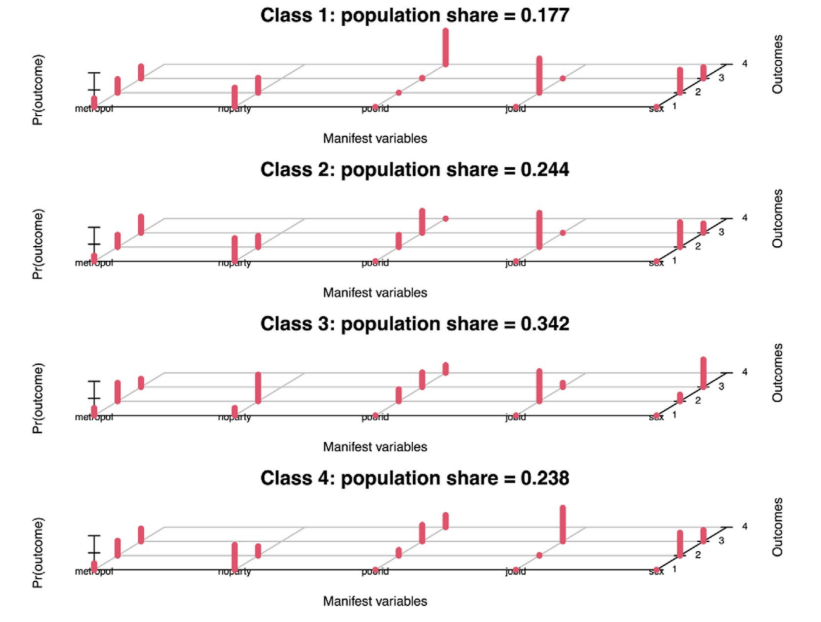
Figure 1. Probability of membership in classes.
Hidden Groups Only Predict Policy Preferences for Car Use
Table 3 shows that the observed latent classes exhibit a higher probability of predicting preferences toward mobility policy. In particular, citizens who are socially and politically active (Class 4) are the most likely subgroup to promote car usage policies. This indicates that underneath the broad socially constructed identity groups, specific subgroup identity cohorts drive support or opposition toward policy preferences. Effectively, this revelation confirms that receptiveness to policy designs is a complex phenomenon heavily influenced by conflicting and salient identity factions.
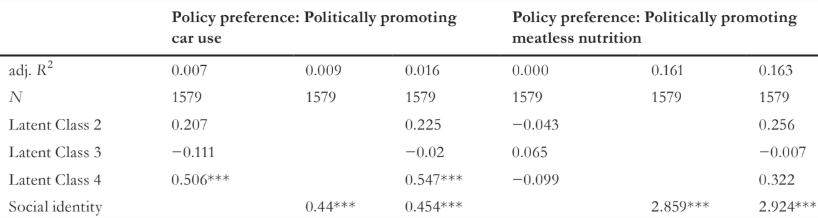
Table 3. Results of logistic regression analyses.
Why It Matters
This article thoughtfully reevaluates how policymakers should approach the design of policy measures and/or programs intended to serve specific target populations. The understanding of identity transcends the traditionally broad social construction of groups into a defined category, as shown in the article. Complex policy issues such as environmental restrictions can spark multiple conflicting identities that create unique policy preferences that differ from others in the demographic segment. Future research directions suggested by the authors include examining how the internal cohesiveness of subgroup identities are affected by policy instruments such as regulations or incentives. By continuing to study latent target groups, policymakers can begin to transition away from “one-size-fits-all” policy approaches and instead pursue tailored design frameworks that align with the behaviors, identities, and values of diverse subgroups.
Read the original article in Policy Studies Journal:
Hornung, Johanna, Nils C. Bandelow, and Madita Olvermann. 2025. “Latent Target Groups—A Methodological Contribution of Social Identities to Policy Design Research.” Policy Studies Journal 53(3): 774–794. https://doi.org/10.1111/psj.70028.
About the Article’s Author(s)

Dr. Johanna Hornung is an assistant professor in Public Policy at the University of Lausanne. She is co-editor-in-chief of the Review of Policy Research (RPR) and the European Policy Analysis (EPA) journal. Her research interests lie in public policy research, particularly health policy, and the integration of psychological perspectives in actor-centered explanations of policy processes.

Dr. Nils C. Bandelow is professor Political Science and Head of the Institute of Comparative Politics and Public Policy (CoPPP) at the TU Braunschweig. He is co-editor-in-chief of the journals Review of Policy Research (RPR) and European Policy Analysis (EPA). He is interested in policy process research, particularly health policy and infrastructure policy, and integrating psychological perspectives in actor-centered explanations of policy processes.

Dr. Madita Olvermann is an Innovation Manager at the Project House of the TU Braunschweig. She earned her PhD at the Chair of Industrial/Organizational and Social Psychology at the TU Braunschweig. She is passionate about interdisciplinary research and focuses on applying individual-level insights from the psychological field to emerging transition pathways.