

How do we determine if democracy is succeeding or failing? Is it people “watching” politics or “doing” politics or both? These are questions that Dr. Andrea Felicetti engages with in his perspective piece, as traditional understandings of civic responsibilities in democracy are reconsidered. According to Felicetti, behaviors once deemed problematic to the health of a democratic society—anonymity, non-participation and spectatorship are now being reconsidered and they might have some benefits for democratic life. In particular, spectatorship, or merely observing political activities, is highlighted in this article as many citizens choose to be bystanders in politics. However, Felicetti encourages us to rethink the role of spectatorship in creating a vibrant democracy, asking the following questions: What forms might positive spectatorship take? In what contexts might we find this? How can we observe them empirically?
How Can Spectatorship Be Positive for Democracy?
Spectatorship has long been criticized as detrimental or burdensome to encouraging engagement with the democratic process—citizens are not engaged or willing to be involved in political activities. That said, Felicetti challenges us to consider that observing politics can be a positive stimulus for political engagement. Citizens can better understand their political environment and the issues being discussed through moments of observatory reflection. At the same time, watching citizens can question information, improving their ability to think critically. Moreover, Felicetti proposes that the learning of political dynamics through spectatorship leads in some cases to eventual collaboration as citizens unite around common interests and form collective identity. In this sense, while many are quick to discount spectatorship as antithetical to democratic engagement, it is actually necessary for building political understanding and action.
Where Does Spectatorship Take Place?
There are several locations where we can witness positive displays of spectatorship take place, according to Felicetti. He illustrates deliberative assemblies, participatory governance, social movements, and the workplace or schools as the common sites of positive spectatorship. These real-world spaces provide opportunities for citizens to present their perspectives and collectively reflect on shared challenges. For example, in the workplace, we do not just work; we are actively observing how shared challenges are managed, thus shaping our sense of democratic responsibility. By empirically examining positive spectatorship in these daily environments, Felicetti believes that researchers can begin to understand how people process their problems together.
Why It Matters
The emphasis on the positive forms of spectatorship in this article ultimately reconceptualizes how political theorists think about current democratic engagement. These activities are necessary for a healthy democratic landscape, challenging traditional arguments that participation alone is a signal of a healthy democracy. Felicetti encourages future researchers to pursue qualitative and quantitative approaches to study positive spectatorship in real-world environments—including social media and digital platforms. By pursuing an empirical-based strategy, we can start to engage with overlooked elements of democratic life beyond participation and learn from a massive segment of the democratic ecosystem.
Read the original article in Policy Studies Journal:
Felicetti, Andrea. 2025. “Toward a New Perspective on Forms and Sites of Democratic Life.” Policy Studies Journal, 53(4): 1098–1107. https://doi.org/10.1111/psj.70021.
About the Article’s Author(s)
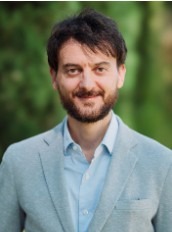
Andrea Felicetti (PhD, Australian National University) is an Associate Professor at the Department of Political Science, Law, and International Studies at the University of Padua. His research interests and teaching activities revolve around democratic theories, public spheres, and governance.

