Disasters Shape Beliefs in Technological Solutions to Environmental Problems: Lessons From a Quasi-Natural Experiment

by Aksel Sundström

While ecomodernist ideas—e.g., the notion that modern technology can solve environmental problems—are widespread among citizens, we know little about their stability. In my article, I explore how ecomodernist beliefs are affected by major catastrophes. Leveraging the happenstance that the Fukushima-Daiichi accident occurred during the fieldwork of a 2011 public opinion survey in Israel, this piece makes several interesting inferences.

Ecomodernism advocates that humanity can reduce its environmental footprint through technological innovation while maintaining economic growth. Ecomodernists often promote technologies like nuclear power and geoengineering as vital tools for rapidly cutting carbon emissions. However, not everyone shares this optimism. Critics argue that a technology-first approach may overlook ecological limits and social risks. This raises an important question: how does techno-optimistism shift when technology fails dramatically?

My study identifies a unique opportunity to investigate attitude shifts surrounding the Fukushima disaster. This event occurred during data collection for the European Social Survey (ESS) in Israel, a survey fieldwork that was unaffected by the events in Japan, creating quasi-natural conditions to experimentally analyze how sudden catastrophes influence ecomodernist beliefs. As seen in figures 1 and 2, both news media and people’s Google search trends in the country suggest that the events were very much present in the public debate.
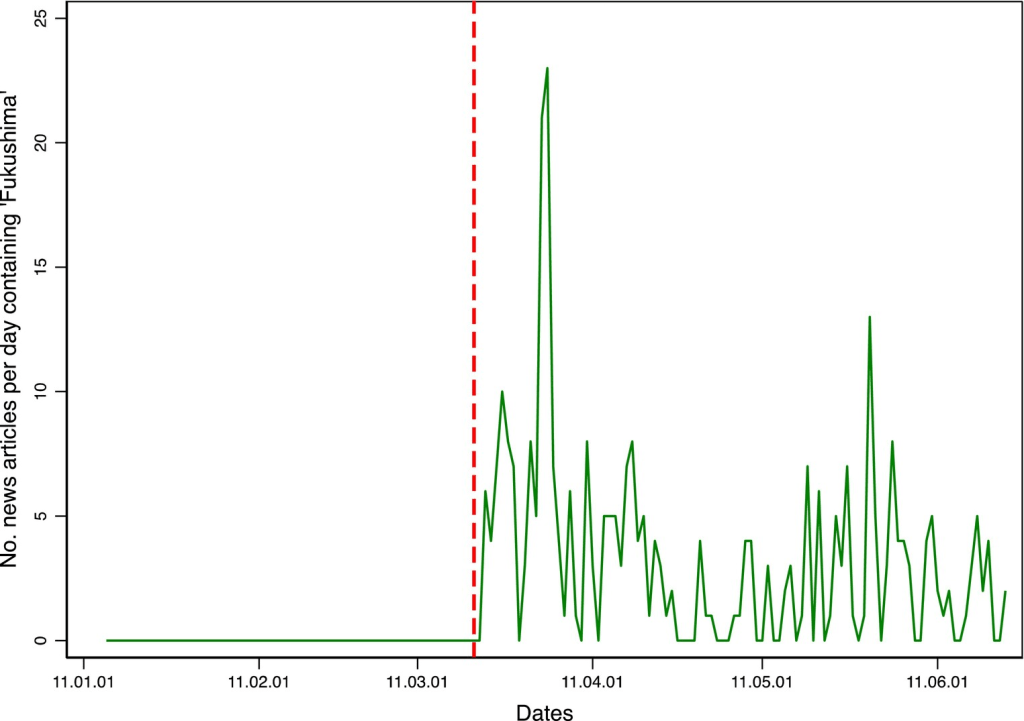
Image Description

Figure 1. Print media news attention.
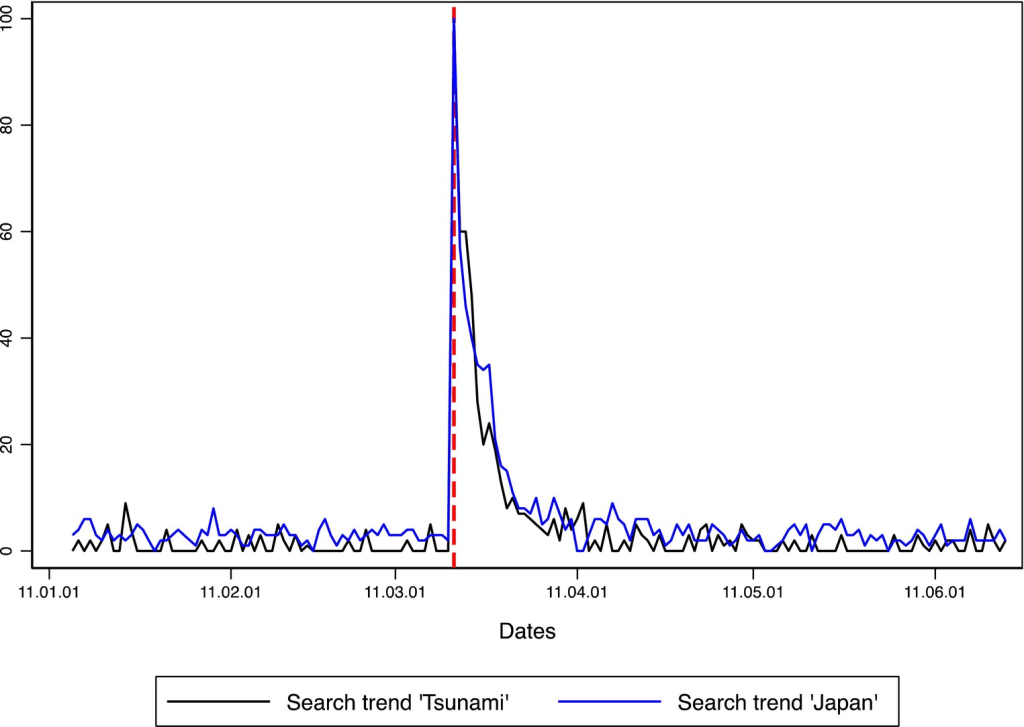
Figure 2. Google search trends.

The ESS survey – rolled out to a nationally representative sample – measured survey participants’ agreement with the statement: “Modern science can be relied upon to solve environmental problems.” The disaster took place in the middle of the fieldwork period. Results reveal that those surveyed after Fukushima were, on average, less likely to agree with this statement than those interviewed before the disaster. The effect was particularly pronounced among respondents with higher education, a group typically more trusting of science and technology. Figure 3 illustrates this interaction, showing how the effect is stronger among those with longer education.
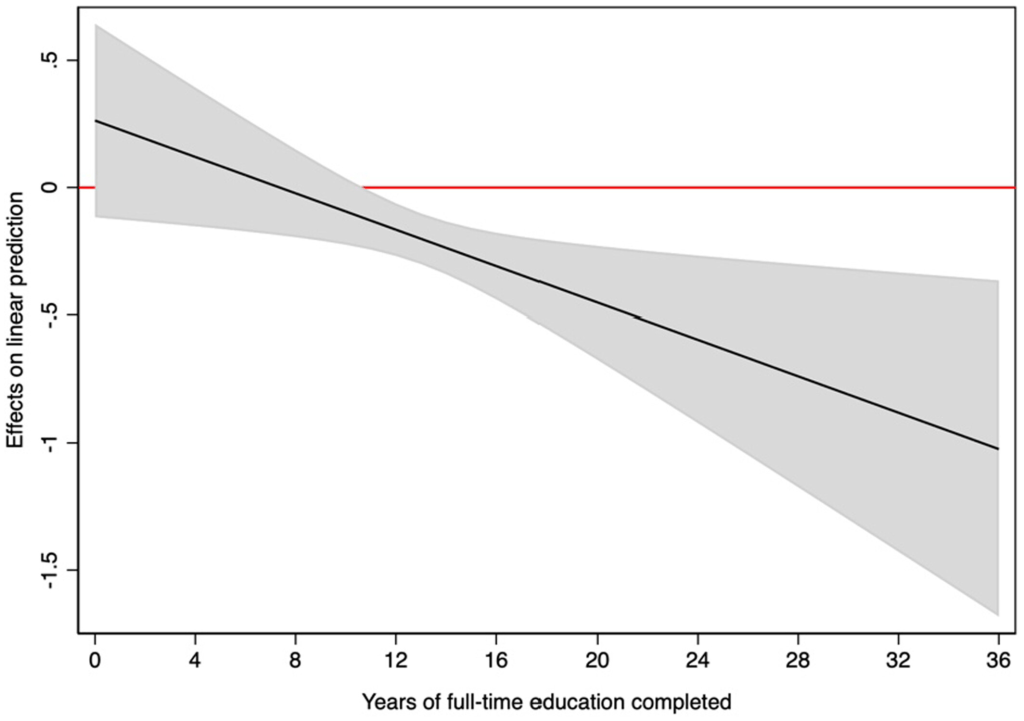
Figure 3. Main effects from Fukushima by respondents’ education years.

The study also corroborates these findings in a survey experiment with participants in two settings: Israel and the United States. In this extended analysis, an information vignette about the risk of nuclear power plant failures (compared to a control group that received no such information) provided similar effects on ecomodernist beliefs, suggesting that these effects are found when replicated with alternative approaches.

In the literature, environmental disasters can be seen as focusing events that draw attention to the risks of technological solutions. Interestingly, several authors have still described people’s beliefs about technological optimism as a “stable trait.” The events at Fukushima-Daiichi exposed vulnerabilities in complex technological systems, prompting heightened awareness of the risks with nuclear power and undermining broader trust in science’s ability to tackle environmental challenges. Hence, ecomodernist attitudes are more malleable than often assumed.

Given that public trust in technology wanes after disasters, it can become harder to rally support for large-scale technological initiatives, such as building new nuclear power plants or advancing geoengineering projects.

Policymakers need to recognize that trust in technological solutions is fragile and sensitive to external shocks. This study highlights that people’s beliefs about technology’s role in solving environmental problems are not static. By better understanding how such attitudes are shaped, we gain further insights in the public support for environmental policies in times of crises.

You can read the original article in Policy Studies Journal at

Sundström, Aksel. 2024. “ Environmental Disasters and Ecomodernist Beliefs: Insights From a Quasi-natural Experiment.” Policy Studies Journal 00(0): 1–31. https://doi.org/10.1111/psj.12562.

About the Author

Aksel Sundström is the PI of the Quality of Government (QoG) Data and an associate professor at the Department of Political Science, University of Gothenburg, Sweden. His research agenda is focused on comparative politics, with an interest in environmental politics, especially in the Global South, and the study of political representation.

Rapid Response and Uncertain Agendas: Senators’ Response to Dobbs

by Corinne Connor & Annelise Russell

How do elected officials signal what matters to them when agenda-setting isn’t just about picking issues, but also deciding how to respond? In our recent paper, we dig into this question by looking at how U.S. senators reacted to the Supreme Court’s 2022 Dobbs v. Jackson Women’s Health Organization decision and the earlier draft opinion leak.

Twitter (or X, if you must) remains a go-to platform for today’s legislators—a direct line to advocates, the media, and political elites. Unlike traditional media, it lets lawmakers respond instantly and unfiltered, making it the perfect stage for showing where they stand. We explored how senators used Twitter during two moments: the shock of the draft opinion leak and the expected court ruling. By examining their “rhetorical agendas”— the issues they highlight and how they frame them online — we uncovered insights into how they communicate their priorities in real time

We tested the following hypotheses:

Time Hypothesis (a): More ideologically extreme senators will be more likely to react more quickly to theleaked court opinion on Twitter.

Time Hypothesis (b): Democratic senators will be more likely to react more quickly to the leaked court opinion on Twitter.

Frame Hypothesis (a): The most ideologically extreme senators will be more likely to frame the Dobbs leak and decision in terms of pro-life or pro-choice alternatives.

Frame Hypothesis (b): Senators with greater electoral security will be more likely to adopt pro-choice or pro-life responses to the leak and/or decision.

Image Description

Using 5,163 tweets from senators’ official Twitter accounts from the week surrounding both events, our analysis revealed clear distinctions in senators’ reactions. We found strong support for the Time Hypotheses regarding the leak. Ideologically extreme members were quicker to respond to the Dobbs leak compared to their more moderate peers. Democrats, as anticipated, were generally more prompt in addressing the leak, reflecting their platform’s commitment to reproductive rights. Interestingly, response timing for the court’s final decision did not follow the same pattern, suggesting that anticipation allowed for more calculated, uniform engagement across ideological lines.

Image Description

The results of our analysis, on the other hand, did not support our Frame Hypotheses. We found that partisanship and extremity of partisanship were significant predictors of whether a senator would adopt a “pro-life” or “pro-choice” position relative to the other issue frames. However, electoral vulnerability and ideological extremity did not seem to be significant predictors of issue framing—with the exception that ideological extremity predicted pro-life/pro-choice frames).

Image Description

Our study aims to understand how lawmakers’ attention and agenda-setting behavior as a response to highly salient events. During the Dobbs leak, uncertainty prompted quicker, more polarized responses. Conversely, the anticipated ruling enabled senators to prepare and standardize their communications, highlighting the difference between reactive and proactive agenda setting. Rapid-response platforms—like Twitter—compel lawmakers to not only choose whether to engage but how quickly and with what narrative. 

This study opens avenues for exploring digital responses to other unexpected events, such as acts of political violence or security crises, and how they compare to anticipated policy announcements. Additionally, further research could investigate whether similar patterns hold in the U.S. House or within other political systems that also use social media for agenda setting. Understanding these dynamics could deepen our grasp of modern policymaking and communication strategies in a digital landscape.

You can read the original article in Policy Studies Journal at

Connor, Corinne and Annelise Russell. 2024. “ Rapid Response and Uncertain Agendas: Senators’ Response to Dobbs.” Policy Studies Journal 52(4): 751–775. https://doi.org/10.1111/psj.12553.

About the Authors

Corinne Connor is a program analyst with The Heinz Endowments.


Annelise Russell is an associate professor at the University of Kentucky.


Staying on the Democratic Script? A Deep Learning Analysis of the Speechmaking of U.S. Presidents

by Amnon Cavari, Akos Mate, & Miklós Sebők

In a representative democracy like the United States, we expect that the policy priorities expressed by politicians on the campaign trail or in stump speeches reflect the same priorities that they pursue while in office. We further expect that politicians would continue their policy commitment in their programmatic messages as well as in their daily activities and speeches. When they do that, we say that they stay on the democratic script.

We test this proposition, focusing on the relationship between the programmatic addresses of US presidents and the daily speeches by comparing the annual State of the Union address (SOU) with subsequent day-to-day speeches, which we refer to as occasional remarks (ORs). Occasional remarks are crucial because they allow the president to show the electorate that they are following through on their promises. They can also serve as testing grounds for new ideas or messages. 

Using the American Presidency Project, we gathered all State of the Union addresses and occasional remarks for every president from Harry Truman to Donald Trump. We then coded the documents using the codebook of the  Comparative Agendas Project, which defines 20 policy categories. Because of the large volume of documents that made up our dataset (16,523 speeches divided into nearly 2 million sentences), we used a large language model to conduct the bulk of our coding, supplemented with some manual coding used to train and refine our language model. 

We used the coded data to test three hypotheses:

  • H1: The policy agenda of the most important programmatic speech (SOU) and of routine remarks (ORs) each year will be positively correlated.
  • H2: The correlation between the policy agenda of the most important programmatic speech (SOU) and that of the routine remarks (ORs) will steadily decline over the course of the year.
  • H3a: Major domestic and foreign events decrease the diversity of the presidents’ routine attention (measured in ORs) relative to that presented in strategic communication (based on SOU).
  • H3b: The effect of domestic and foreign events on the diversity of routine agenda would be conditioned on the diversity of the annual agenda in the SOU.
Image Description

Figure 1. Correlations between speech types by policy topic.

As the above figure illustrates, across the 20 coded policy topics, there’s a strong correlation between the topics that are emphasized in State of the Union addresses and those that subsequently appear in occasional remarks, giving credence to Hypothesis 1. Applying regression analysis, we also found that, as time goes on, the policy topics addressed in occasional remarks diverge from those emphasized in the State of the Union, supporting Hypothesis 2. 

As for Hypothesis 3, we found a positive correlation between the diversity of policy topics referenced in the State of the Union and those referenced in occasional remarks; but, in contrast to our expectation, we do not find that major events (e.g., foreign conflicts, natural disasters, etc.) have a major impact on shifting the focus of presidential remarks. 

Our results show that, generally speaking, U.S. presidents are staying on the democratic script: The policy priorities that they outline in their State of the Union addresses are the same priorities to which they return in subsequent remarks. By comparing State of the Union addresses to occasional remarks, we’ve shown a link between programmatic and occasional communications that may have broader applicability beyond the presidency. We have also demonstrated the value of using large language models for parsing large volumes of policy texts, as our model’s coding displayed a higher accuracy rating than our manual coders, and at a fraction of the time. There are numerous avenues for building upon the insights outlined here, including examining the relationship between speechmaking and public opinion, how different speech types intersect with the policymaking process, and exploring the populations exposed to these speeches and how they respond to the speeches.

You can read the original article in Policy Studies Journal at

Cavari, Amnon, Akos Mate and Miklós Sebők. 2024. “ Staying on the Democratic Script? A Deep Learning Analysis of the Speechmaking of U.S. Presidents.” Policy Studies Journal 52(4): 709–729. https://doi.org/10.1111/psj.12534.

About the Authors

Amnon Cavari is Associate Professor and head of the Institute for Liberty and Responsibility at the Lauder School of Government, Diplomacy and Strategy at Reichman University, Israel. Prof. Cavari’s main research interests are in the interrelationship between actions of elected officials and public opinion in the United States and in Israel. He is the author of The Party Politics of Presidential Rhetoric.
Twitter/X: @ACavari 

Akos Mate is a computational social scientist whose research interests are political economics and quantitative methodology. He is a research fellow at the Centre for Social Sciences, Budapest. He also teaches as visiting faculty at the Central European University, Vienna, and served as a consultant for the IMF’s Independent Evaluation Office.

Twitter/X: @aakos_m

Miklós Sebők is a Senior Research Fellow at the HUN-REN Centre for Social Sciences (CSS), Budapest. He serves as the research co-director of the Artificial Intelligence National Lab at CSS, the principal investigator of the V-SHIFT Momentum research project, and the convenor of the COMPTEXT conference. His main research interest lies at the intersection of policy studies and natural language processing.
Twitter/X: @Miklos_Sebok

Narratives and Expert Information in Agenda-Setting: Experimental Evidence on State Legislator Engagement with Artificial Intelligence Policy

by Daniel S. Schiff & Kaylyn Jackson Schiff

Previous scholarship has investigated how policy entrepreneurs use narratives and expert information to influence policy agendas. In particular, narratives can be powerful tools for communicating policy problems and solutions, while expert information can help clarify complicated subject matters and increase confidence in policy proposals. This raises a question: can policy entrepreneurs effectively use narratives to influence policymakers even in complex, technical policy domains where we might think the technical details might be traditionally most important?

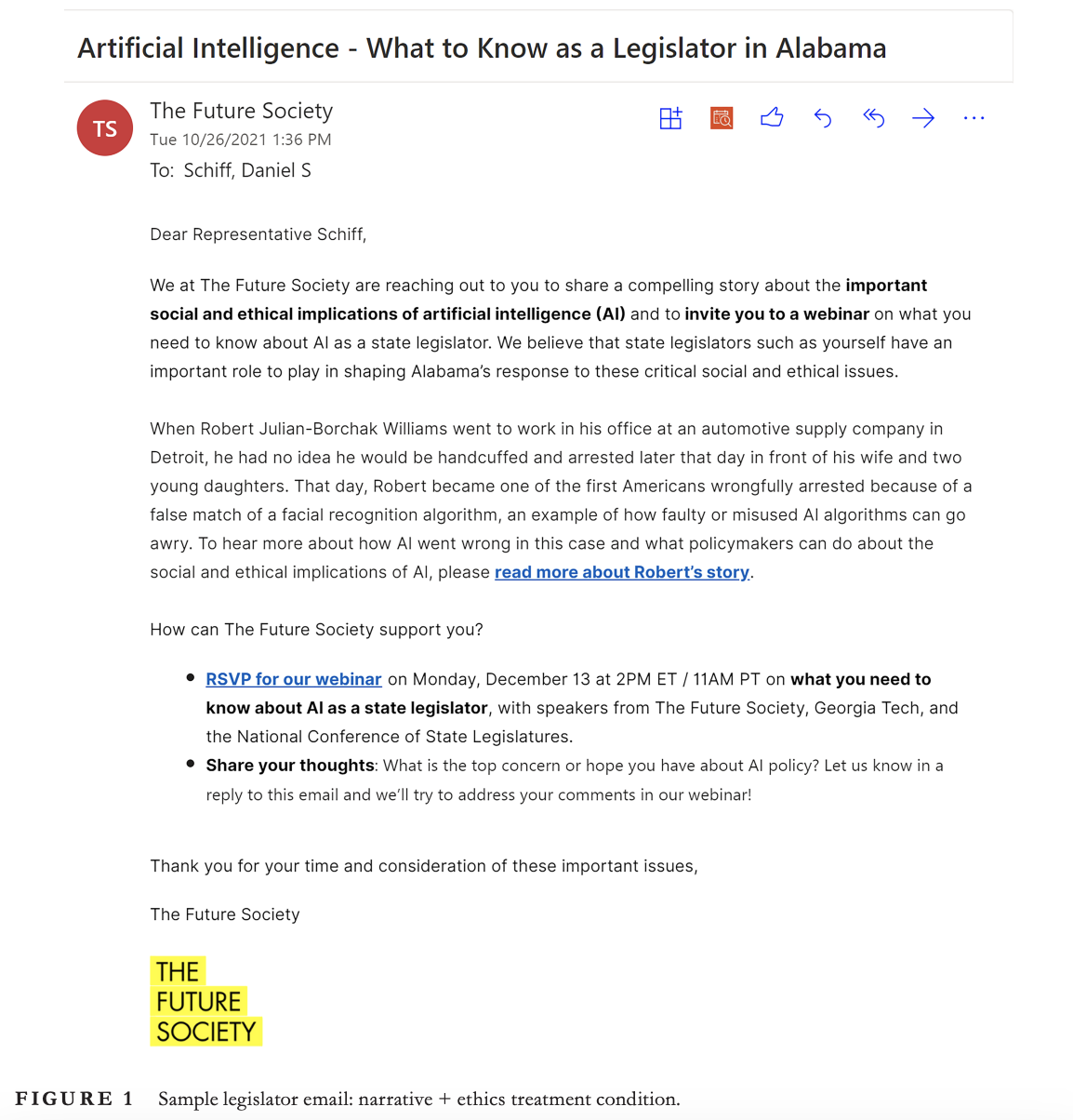
We explore this question in the context of artificial intelligence (AI) policy – an emerging policy domain that is highly technical and multi-faceted, with social, ethical, economic implications. Because the agenda for AI policy is still in the process of development, it presents a ripe case for understanding agenda setting and policy influence efforts. In partnership with a leading AI think tank, The Future Society (TFS), we conducted a field experiment on state legislators across the United States. Emails about AI policy were sent to 7,355 legislative offices. Legislators were randomly assigned to receive an email containing either a narrative strategy, an expertise strategy, or generic, neutral information. We also considered two ways of issue framing: ethical and economic/competition (see Figure 1). 

Legislators were presented with either a fact sheet or story, and invited to register for and attend a webinar about AI for state legislators, which we hosted in December 2021. For example, legislators (or their staffers) might read an email message about an individual falsely arrested due to facial recognition, or between a geopolitical contest between the US and China.

We measured link clicks and webinar registration and attendance as proxies for policymaker engagement. Using these data on engagement with the emails, we tested the following hypotheses:

  • Policy Entrepreneur Effectiveness Hypothesis: The provision of narratives or expertise by policy entrepreneurs will increase policymaker attention to and engagement with the policy issue at hand.
  • Dominance of Narratives Hypothesis: The provision of narratives will induce greater policymaker engagement than the provision of expertise.
  • Dominance of Expertise Hypothesis: The provision of expertise will induce greater policymaker engagement than the provision of narratives.
  • Strategies by Issue Framing Hypothesis: Policymakers will respond with greater engagement to narratives when they are provided issue frames emphasizing the ethical and social dimensions of AI as compared to issue frames emphasizing the economic and technological competitiveness dimensions of AI.
  • Prior Experience Hypothesis: Compared to legislators in states with greater prior experience in AI policymaking, legislators in states with less experience with AI will respond with greater engagement to the expertise treatment.

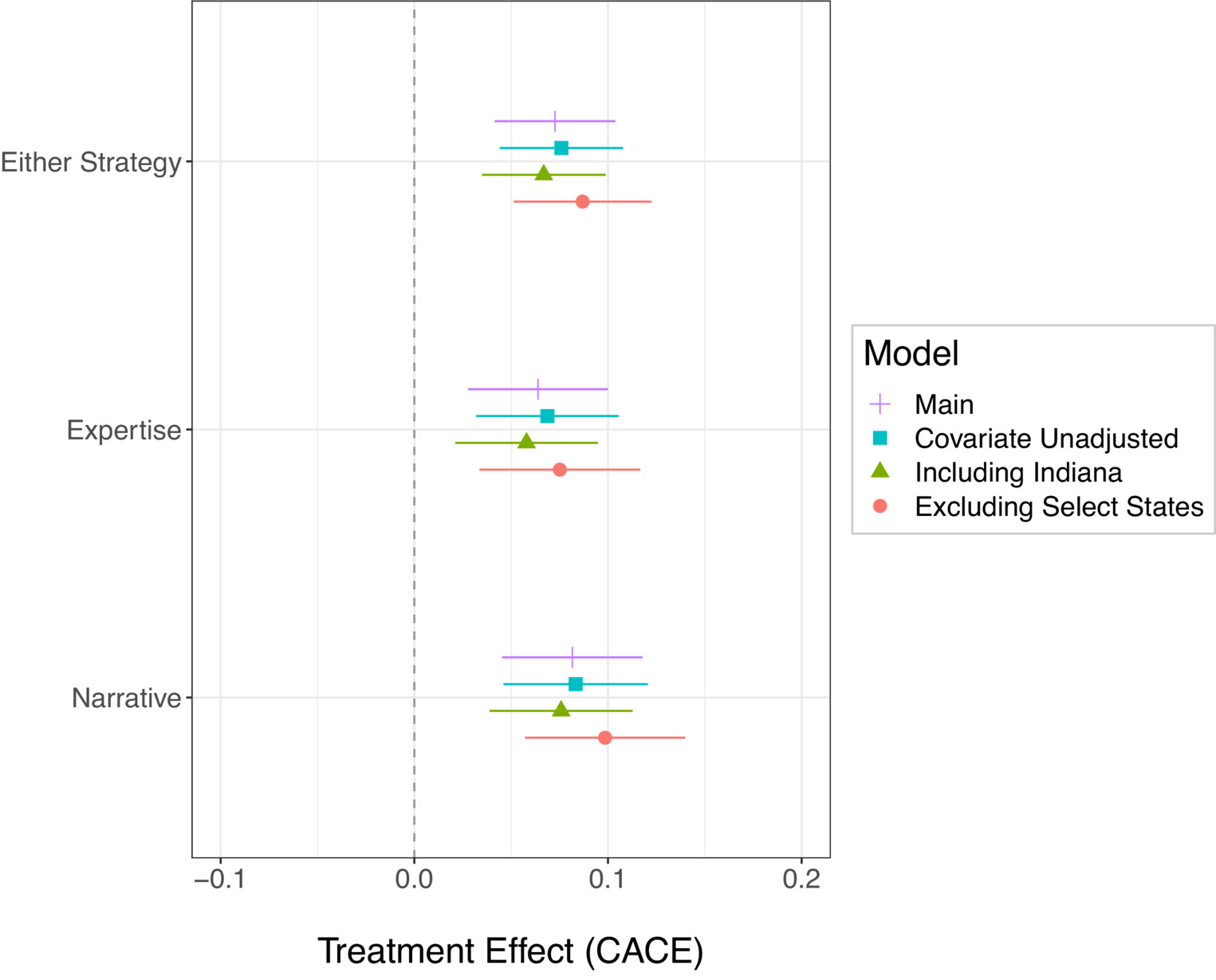
Consistent with the Policy Entrepreneur Effectiveness Hypothesis, we found that narrative strategies and expert information increased engagement with the emails (see Figure 3). Interestingly, comparing the narrative and expertise treatments, we found no statistically significant differences in their effects on engagement, suggesting that narratives are as effective as expert information even for this complex policy domain. 

Figure 3. Both expert information and narratives engaged state legislators as compared to a more generic ‘control’ message, with increased engagement of 30 or more percentage points.

Contrary to our expectations, framing the issue to emphasize ethical or economic dimensions of AI also did not affect engagement, suggesting that the use of strategies like narratives can be effective even when AI policy is framed in very different ways. We had hypothesized that narratives might be especially effective when an ethics-focused policy frame of AI is promoted, but it appears narratives are just as effective when geopolitical and strategic dimensions of AI policy are emphasized. 

Finally, legislators with no prior experience with AI policy were more likely to engage with the emails than legislators who had considered or passed AI policy in the past, and state legislatures with higher capacity (e.g., more staff, longer sessions) were far more likely to the email messages, an important note for those seeking to reach out to policymakers..

Our findings show that narratives can influence policymakers as much as expertise, even in complicated policy domains like AI. It is worth noting that our data was collected in 2021 before the introduction of large language models (LLMs), like OpenAI’s ChatGPT, which gained unprecedented public attention. This development has surely influenced the salience of AI policy. We suggest that future research should consider this development. Nevertheless, our work makes important contributions by extending the NPF to new contexts and investigating narratives using field experiments, a novel research approach in the field.

You can read the original article in Policy Studies Journal at

Schiff, Daniel S. and Kaylyn Jackson Schiff. 2023. “ Narratives and Expert Information in Agenda-setting: Experimental Evidence on State Legislator Engagement With Artificial Intelligence Policy.” Policy Studies Journal 51(4): 817–842. https://doi.org/10.1111/psj.12511.

About the Authors

Dr. Daniel Schiff is an Assistant Professor of Technology Policy at Purdue University’s Department of Political Science and the Co-Director of GRAIL, the Governance and Responsible AI Lab. He studies the formal and informal governance of AI through policy and industry, as well as AI’s social and ethical implications in domains like education, manufacturing, finance, and criminal justice.

Follow him on X/Twitter: @Dan_Schiff (@purduepolsci and @Purdue)

Kaylyn Jackson Schiff is an Assistant Professor in the Department of Political Science at Purdue University and Co-Director of the Governance and Responsible AI Lab (GRAIL). Her research addresses the impacts of emerging technologies on government and society. She studies how technological developments are changing citizen-government contact, and she explores public opinion on artificial intelligence in government.

Follow her on X/Twitter: @kaylynjackson

The Public-Facing Policy Agenda of State Legislatures: The Communication of Public Policy via Twitter

by David A.M. Peterson, Wallapak Tavanapong, Lei Qi, Adisak Sukul, & Mohammed Khaleel

The Policy Agenda Project (PAP) has been an incredible resource for scholars of public policy. By coding a variety of data on national institutions, the media, and public opinion, the PAP has allowed scholars to test foundational questions about the policymaking process, and the Comparative Agendas Project (CAP) has extended this approach to 22 democracies, allowing for cross-national comparisons. However, to date, little work has investigated the policy agendas of subnational units. In our article, we utilize agenda-setting research methods to analyze what we call the public-facing agendas of state legislatures across the United States. This is not the actual agenda of what the legislatures are doing, but what they legislators chose to communicate to the public.  

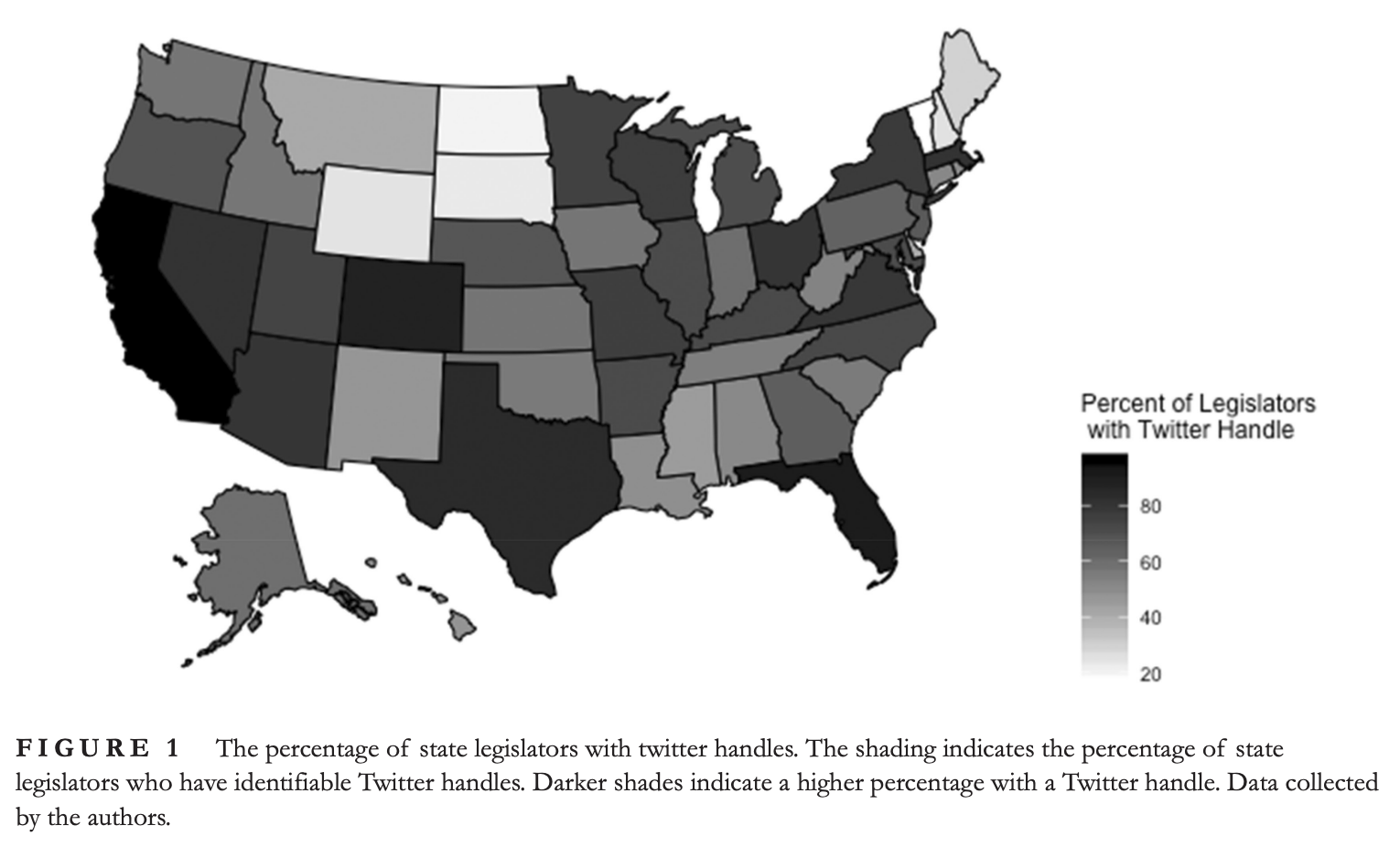
For our analysis, we looked at the tweets of state legislators during the year 2017. We chose to collect our data this way because tweets can help measure the public-facing policy agendas of legislatures when considered in aggregate, and because of its prominent use among state legislators (see Figure 1).

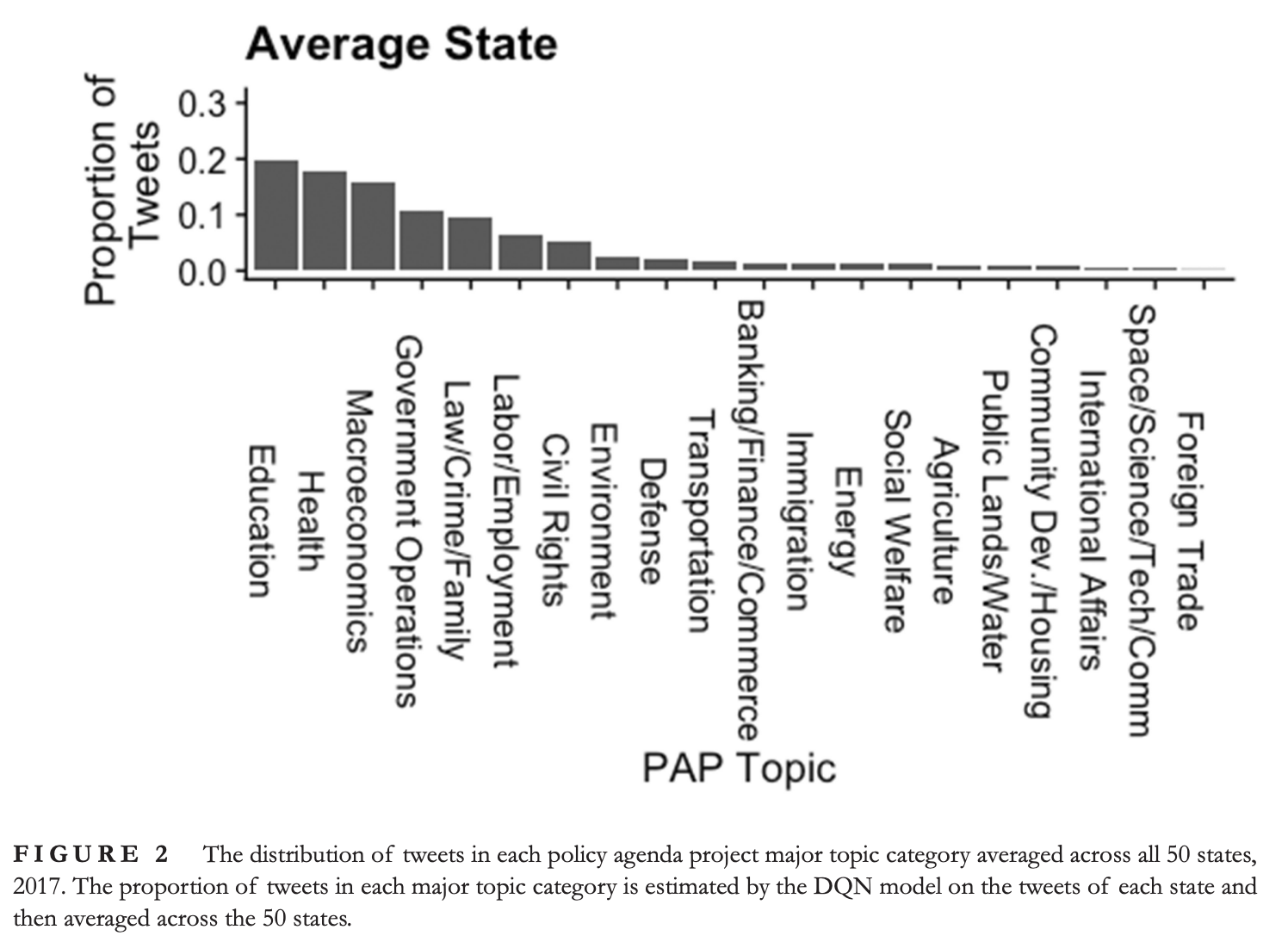
We used machine learning tools that combed through Twitter and calculated the proportion of state legislators’ tweets that fell within certain policy topic areas (as determined by the PAP). Unsurprisingly, we found that the top three policy topics among state legislatures were education, health, and macroeconomics (see Figure 2).

We also investigated how and why individual state legislatures deviated from one another. We theorize that state policy agenda heterogeneity could be related to three factors: institutional capacity, politics, and population pressures. Institutional capacity refers to the level of professionalism and innovativeness of the state legislature. The politics of a state legislature measure the partisan makeup of the body and the constituency. Population pressures can be things like the wealth of a state, racial diversity, or the size of the population.

Our results showed that there was little variation in policy agendas among states, especially for the top three policy topics (education, health, and macroeconomics). When variation did occur, it was correlated with institutional and political differences. The degree of professionalism of the legislature was the strongest predictor of how much legislatures paid attention to topics like macroeconomics, agriculture, energy, transportation, social welfare, housing, and public lands. The party control of a legislature also predicts attention for several categories. 

Our work makes important steps toward a stronger understanding of state-level policymaking. It also demonstrates that PAP research can be extended to state governments. We hope that we have laid the groundwork for future research to investigate state policy agendas in different years and national environments. 

You can read the original article in Policy Studies Journal at

Peterson, David A. M., Tavanapong, Wallapak, Qi, Lei, Sukul, Adisak, and Khaleel, Mohammed. 2023. The public-facing policy agenda of state legislatures: The communication of public policy via twitter. Policy Studies Journal 51: 551–571. https://doi.org/10.1111/psj.12485

About the Authors

David A. M. Peterson is the Lucken Professor of Political Science at Iowa State University. 


Wallapak Tavanapong is a Professor of Computer Science and Director of Computational Media Lab at Iowa State University, USA. She is also a co-founder and a Chief Technology Officer of EndoMetric Corporation which offers cutting-edge computer-assisted technology for improving patient care for endoscopy. Prof. Tavanapong received a BS degree in Computer Science from Thammasat University, Thailand, in 1992 and an MS and a Ph.D. in Computer Science from the University of Central Florida in 1995 and 1999, respectively.

Lei Qi received his Ph.D. in Computer Science from Iowa State University.


Adisak Sukul is an Associate Teaching Professor at Department of Computer Science, Iowa State University, specializing in data science and machine learning with a strong focus on AI. As a Google Cloud Faculty Expert, he integrates cutting-edge cloud technologies into academic settings, promoting practical, impactful education. His expertise in big data analytics, online learning, and applied machine learning enables him to develop and offer a range of workshops and bootcamps in Data Science, ML, and AI. Adisak’s commitment to blending academic knowledge with industry skills underpins his innovative approach to teaching and technology application.

Mo Khaleel holds a Ph.D. degree in computer science from Iowa State University, where his research has focused on explainable AI and understanding confusion in deep neural networks. With 16 published papers in reputable journals and conferences, Mo has established himself as a pioneer in the field. Currently serving as a Senior Machine Learning Engineer at MathWorks, Mo leads a team of 5 software engineers and is responsible for overseeing the AI-Assisted coding feature. With previous experience at Meta and Kingland Systems, Mo brings a wealth of industry knowledge to his current role, driving innovation and advancing the frontier of machine learning and natural language processing technologies.

The Executive Lawmaking Agenda: Political Parties, Prime Ministers, and Policy Change in Australia

by Andrew Gibbons & Rhonda Evans

Governments can pursue their public policy objectives through various means. What do they seek to accomplish through the lawmaking process? The executive’s role in the legislative process varies widely across political systems. In Westminster systems, like Australia’s, institutional rules allow executives to dominate the legislative agenda, though governments do face constraints, such as the need to balance competing interests, contend with bureaucratic processes, and attend to unforeseen events. 

Drawing from the Comparative Agendas Project (CAP) and analyzing a data set of government bills in Australia, our research offers a new perspective on agenda-setting in Westminster systems, shedding light on the distinct agenda space we call the executive lawmaking agenda.

We addressed four research questions:

RQ1: What policy areas comprise the executive lawmaking agenda?

RQ2: How stable is the executive lawmaking agenda?

RQ3: Do the major political parties pursue different lawmaking agendas when in government? 

RQ4: Does a change in prime minister affect which issues receive executive lawmaking attention? 

Our study utilized an original dataset of 3,982 bills introduced into the Australian Federal Parliament between 2000 and 2017, focusing on government bills introduced by ministers. We coded each bill based on its policy content using the Australian Policy Agendas Codebook (APAP), measuring policy attention by counting the number of bills devoted to specific policy areas. We assessed agenda stability by using Sigelman and Buell’s measure of issue convergence, which calculates the degree of overlap in legislative attention distribution between different years. 

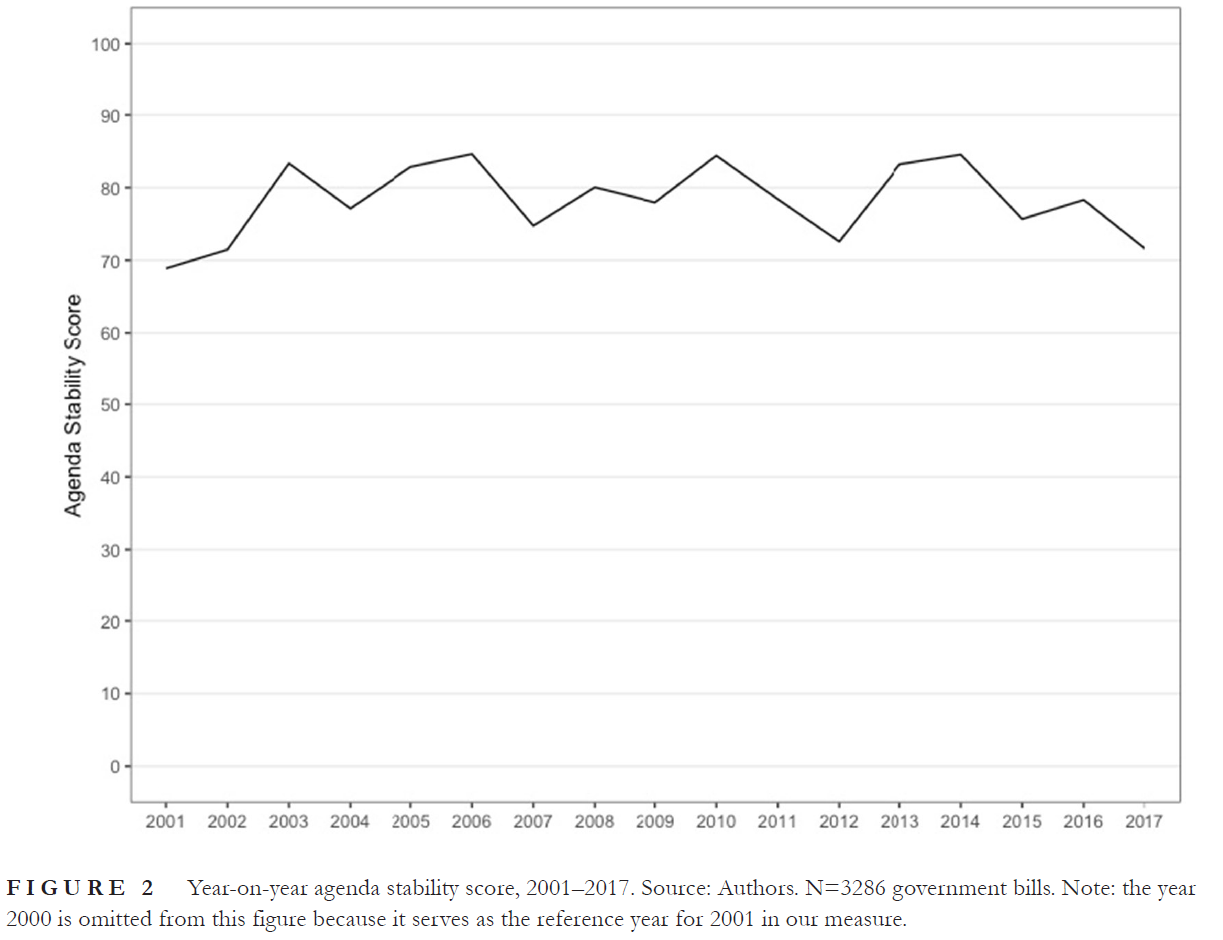
The results, illustrated in Figure 1, show that government operations and macroeconomics were the two largest policy areas on the executive lawmaking agenda, accounting for nearly 10% and over 8% of the agenda, respectively. Health, banking, and labor policy rounded out the top five policy areas, collectively making up over 40% of the entire executive lawmaking agenda. On the other hand, issues related to civil rights, minority concerns, civil liberties, housing, and community development, and cultural matters received limited attention. We also found a high degree of stability in the executive lawmaking agenda over time, with around 78% of the agenda overlapping from one year to the next.

Our analysis suggests that this stability persists even after power is shifted between political parties, as indicated in Figure 2. We also find that a change in prime minister is statistically related to a change in policy attention, but more work needs to be done to understand why. These findings seem to align with existing CAP research.

Further research needs to be done on executive policy agendas. Though we primarily looked at legislation, it is not the only kind of policy. Many executives have the ability to enact laws outside of the typical legislative process. Future research should focus on executive power in different stages of the policy process, non-legislative executive policy agendas, and examining alternative agenda spaces to deepen our understanding of executive lawmaking power.

You can read the original article in Policy Studies Journal at

Gibbons, A., and Evans, R.. 2023. “The executive lawmaking agenda: Political parties, prime ministers, and policy change in Australia”. Policy Studies Journal, 51, 307–325. https://doi.org/10.1111/psj.12503

About the Authors

Dr. Andrew Gibbons holds a PhD in political science from the University of Melbourne. His published research focuses on political communication and public policy, including policy responses to mis/disinformation, policy agendas, and the communication of policy ideas. 

Dr Rhonda Evans is an Associate Professor of Instruction in the Department of Government and Director of the Edward A. Clark Center for Australian and New Zealand Studies at the University of Texas at Austin. She holds a J.D. and a Ph.D. in Government and studies agenda-setting politics, focusing on the Australian Human Rights Commission and Federal Parliament of Australia, as well as judicial politics in Australia and New Zealand. She is co-author of Legislating Equality: The Politics of Antidiscrimination Policy In Europe with Oxford University Press. 
Find her on LinkedIn: https://www.linkedin.com/in/rhonda-evans-305aa4105/