
by Roshaun Colvin & Joshua M. Jansa
Name, Image, and Likeness (NIL) policies have rapidly spread across the United States and are dramatically changing the landscape of college sports. NIL enables student-athletes to earn compensation and secure offers and sponsorships while pursuing their education. State lawmakers hope NIL policies will attract premiere student athletes and make their states’ university athletic programs successful (see Figure 1 below).
The spread of NIL policies allows us to examine mechanisms at work in the policy diffusion process and to consider a new dimension of competition between states related to protecting or enhancing states’ reputations rather than directly accruing economic resources. To improve theory and measurement of competition as a policy diffusion mechanism, we ask: how does national athletic competition influence a state’s decision to adopt NIL policies?
To answer this, we observed the adoption of NIL across all 50 states within 39 months. This data can be used to model the diffusion of NIL through directed dyad event history analysis, a common method in policy diffusion research that allows for the study of how interstate dynamics and internal determinants influence policy adoption.

We consider that states may engage in different forms of competition. States engage in offensive competition by setting policies with the aim of maintaining their reputations to gain an advantage over other states. In order to measure the internal determinants of a state’s athletic reputation, and therefore its susceptibility to engage in offensive competition, we use the number, value, and success of the state’s Division 1 Football Bowl Subdivision (FBS) programs. States may also engage in defensive competition, adopting policies to keep up with other states by reacting to what rival states are doing to build their reputations. We measure the interstate dynamics driving athletics competition, and therefore the likelihood of defensive competitive behavior using measures of sport-, conference-, and league-wide competition.
The results indicate that athletic competition best explains a state’s decision to adopt NIL. Particularly, states appear more likely to adopt NIL based on their national competitors’ actions and to preserve their status as premiere football programs. However, there is not compelling evidence that conference competition is a motivating force driving NIL adoptions. Rather, it appears that the states with the highest reputed football programs responded to national competition rather than competition within their conference. Other interstate dynamics, such as geographic contiguity or having the same party in power, do not appear to consistently spur the spread of NIL throughout states, suggesting NIL may be a policy in which a new dimension of competition better explains its diffusion than previous tendencies for states to consistently mimic other states.
The spread of NIL provides an excellent opportunity to understand diffusion mechanisms, specifically the limits of the competition mechanism. Furthermore, it provides the opportunity to generate new ways to operationalize competition for empirical analysis. In the case of NIL policy, states adjusted their status as major destinations for college athletes by hurrying to adopt NIL policy prior to other states adopting NIL policy.
You can read the original article in Policy Studies Journal at
Colvin, Roshaun and Joshua M. Jansa. 2024. “Athletic Competition Between the States: The Rapid Spread of Name, Image, Likeness Laws and Why It Matters For Understanding Policy Diffusion.” Policy Studies Journal 52 (2): 451–468. https://doi.org/10.1111/psj.12522.
About the Authors
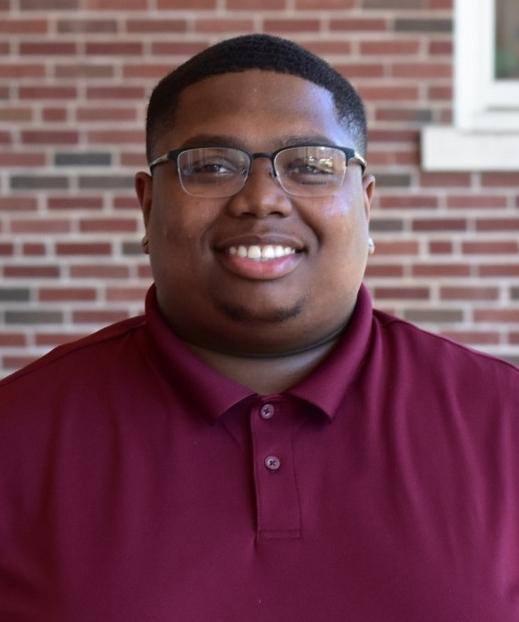
Roshaun Colvin is a graduate student at University of Florida and received his Master’s in Political Science at Oklahoma State University.

Joshua M. Jansa is an Associate Professor of Political Science at Oklahoma State University. His research focuses on policy diffusion, state politics, political and economic inequality, and civic education.
 Policy Studies Journal Blog