Disasters Shape Beliefs in Technological Solutions to Environmental Problems: Lessons From a Quasi-Natural Experiment

by Aksel Sundström

While ecomodernist ideas—e.g., the notion that modern technology can solve environmental problems—are widespread among citizens, we know little about their stability. In my article, I explore how ecomodernist beliefs are affected by major catastrophes. Leveraging the happenstance that the Fukushima-Daiichi accident occurred during the fieldwork of a 2011 public opinion survey in Israel, this piece makes several interesting inferences.

Ecomodernism advocates that humanity can reduce its environmental footprint through technological innovation while maintaining economic growth. Ecomodernists often promote technologies like nuclear power and geoengineering as vital tools for rapidly cutting carbon emissions. However, not everyone shares this optimism. Critics argue that a technology-first approach may overlook ecological limits and social risks. This raises an important question: how does techno-optimistism shift when technology fails dramatically?

My study identifies a unique opportunity to investigate attitude shifts surrounding the Fukushima disaster. This event occurred during data collection for the European Social Survey (ESS) in Israel, a survey fieldwork that was unaffected by the events in Japan, creating quasi-natural conditions to experimentally analyze how sudden catastrophes influence ecomodernist beliefs. As seen in figures 1 and 2, both news media and people’s Google search trends in the country suggest that the events were very much present in the public debate.
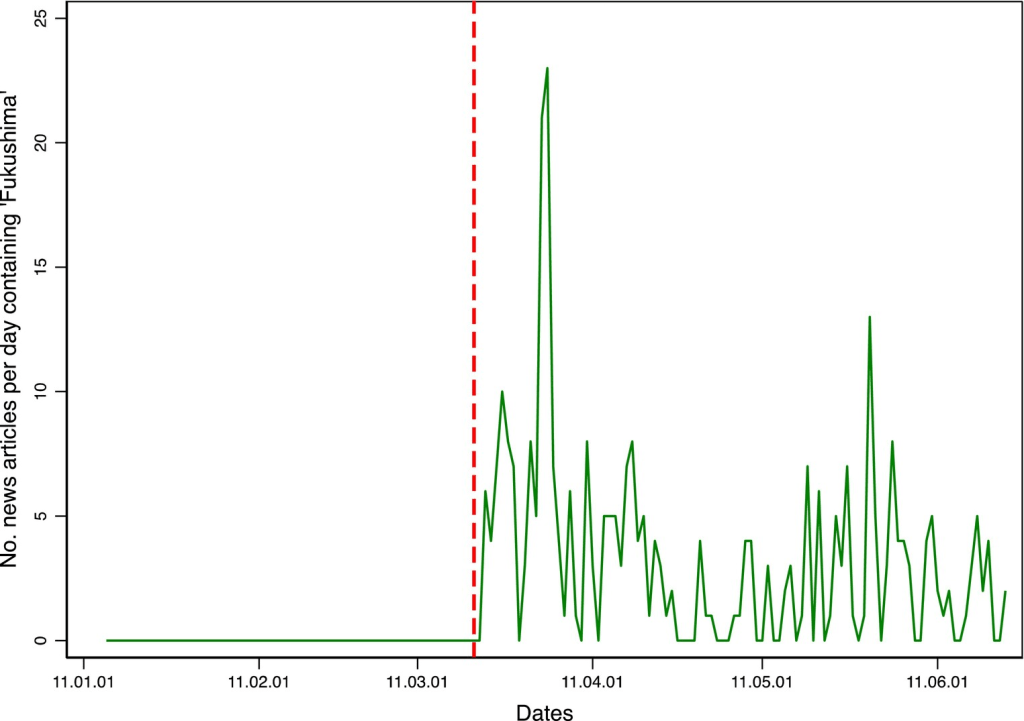
Image Description

Figure 1. Print media news attention.
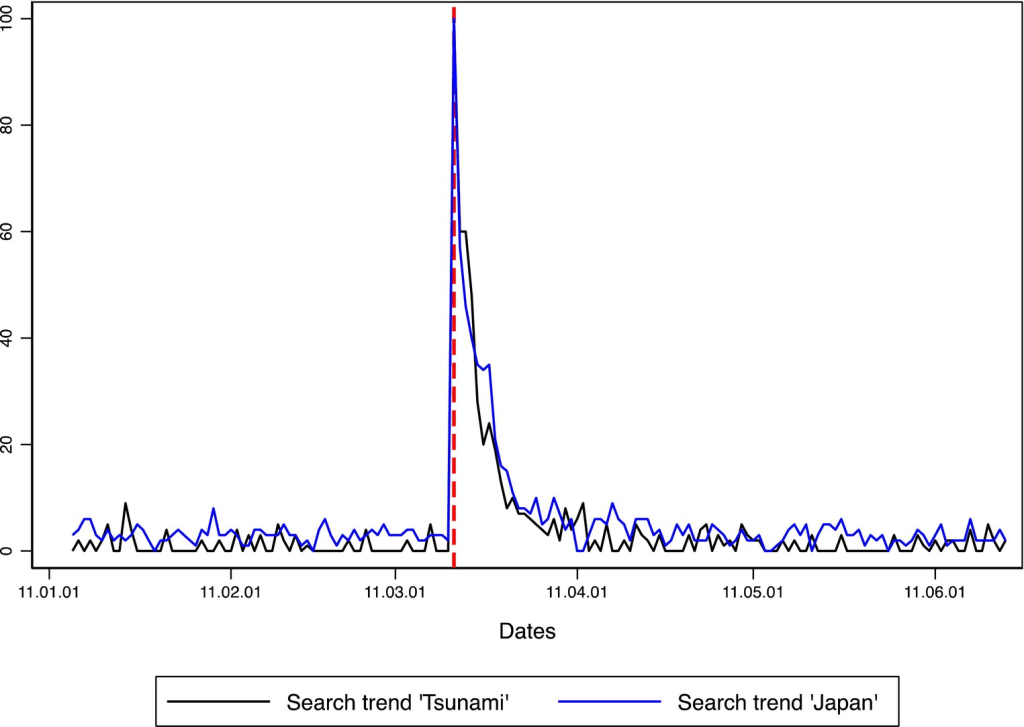
Figure 2. Google search trends.

The ESS survey – rolled out to a nationally representative sample – measured survey participants’ agreement with the statement: “Modern science can be relied upon to solve environmental problems.” The disaster took place in the middle of the fieldwork period. Results reveal that those surveyed after Fukushima were, on average, less likely to agree with this statement than those interviewed before the disaster. The effect was particularly pronounced among respondents with higher education, a group typically more trusting of science and technology. Figure 3 illustrates this interaction, showing how the effect is stronger among those with longer education.
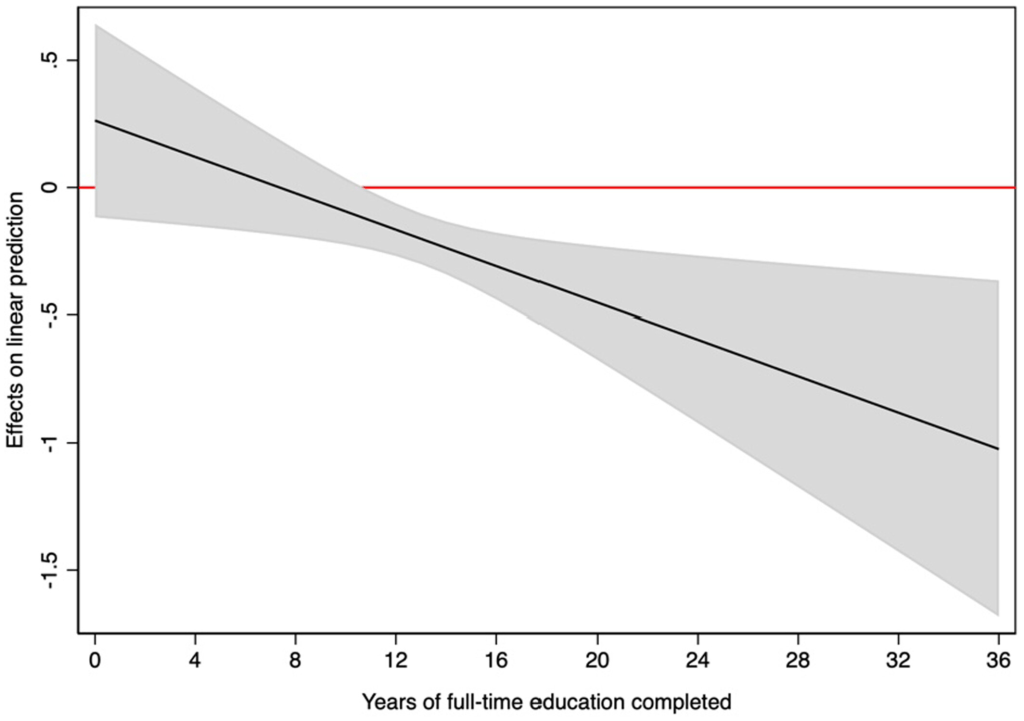
Figure 3. Main effects from Fukushima by respondents’ education years.

The study also corroborates these findings in a survey experiment with participants in two settings: Israel and the United States. In this extended analysis, an information vignette about the risk of nuclear power plant failures (compared to a control group that received no such information) provided similar effects on ecomodernist beliefs, suggesting that these effects are found when replicated with alternative approaches.

In the literature, environmental disasters can be seen as focusing events that draw attention to the risks of technological solutions. Interestingly, several authors have still described people’s beliefs about technological optimism as a “stable trait.” The events at Fukushima-Daiichi exposed vulnerabilities in complex technological systems, prompting heightened awareness of the risks with nuclear power and undermining broader trust in science’s ability to tackle environmental challenges. Hence, ecomodernist attitudes are more malleable than often assumed.

Given that public trust in technology wanes after disasters, it can become harder to rally support for large-scale technological initiatives, such as building new nuclear power plants or advancing geoengineering projects.

Policymakers need to recognize that trust in technological solutions is fragile and sensitive to external shocks. This study highlights that people’s beliefs about technology’s role in solving environmental problems are not static. By better understanding how such attitudes are shaped, we gain further insights in the public support for environmental policies in times of crises.

You can read the original article in Policy Studies Journal at

Sundström, Aksel. 2024. “ Environmental Disasters and Ecomodernist Beliefs: Insights From a Quasi-natural Experiment.” Policy Studies Journal 00(0): 1–31. https://doi.org/10.1111/psj.12562.

About the Author

Aksel Sundström is the PI of the Quality of Government (QoG) Data and an associate professor at the Department of Political Science, University of Gothenburg, Sweden. His research agenda is focused on comparative politics, with an interest in environmental politics, especially in the Global South, and the study of political representation.

Advocacy Coalitions, Beliefs, and Learning: An Analysis of Stability, Change, and Reinforcement

by Christopher Weible, Kristin L. Oloffson, & Tanya Heikkila 

The Advocacy Coalition Framework (ACF) is one of the primary approaches for studying advocacy coalitions, belief systems, and policy learning. While hundreds of empirical studies have confirmed the framework’s major expectations, research is limited by a lack of longitudinal studies, comparisons between panel and non-panel data, and multiple measures of policy-oriented learning in the same study. To fill these gaps, we examine the characteristics of advocacy coalitions in the ever-evolving landscape of energy policy. Three questions guide the exploration: 

  1. What defines the characteristics of advocacy coalitions in the setting of shale oil and gas development, and to what extent do these coalitions exhibit stability over time? 
  2. To what degree do members within advocacy coalitions undergo changes in their beliefs, and how does this impact their sustained alignment within the same coalition? 
  3. What are the prevalent trends regarding advocacy coalition members self-reporting belief changes or expressing a willingness to shift their positions?

In 2013, 2015, and 2017, we conducted surveys of policy actors involved in shale oil and gas extraction in Colorado. The survey participants comprised individuals actively involved or knowledgeable about the pertinent policy issues, including industry stakeholders, government officials, non-profit and community group representatives, consultants, academics, and reporters. Respondents were identified through a purposive sampling approach, utilizing evidence from media reports, online sources, public hearings, testimonies, and recommendations. The survey included measures of policy core beliefs, such as positions on oil and gas development, problem perceptions, coordination, and interactions with other policy actors. 

To analyze the data, we used K-Means Clustering, a method that identifies distinct groups within a dataset. The K-Means Clustering method categorized respondents into two coalitions based on minimizing distances within each cluster.

As illustrated in Figure 2, while beliefs remained relatively constant, specific indicators signaled some movement, reflecting shifts in the policy subsystem’s circumstances. For instance, concerns over public nuisances rose during a period of increased drilling activity, only to subside when drilling declined due to falling oil prices. The coalitional characteristics remained relatively stable across the three time periods, confirming patterns typical for environmental policy issues.

Figure 2. Frequency of belief change for respondents by panels

This analytical approach provides valuable insights into the dynamics of advocacy coalitions, shedding light on their composition and stability over time in the context of shale oil and gas development policy. One key contribution lies in the identification and characterization of two distinct advocacy coalitions, namely the anti-oil and gas coalition primarily comprising environmental and citizen group representatives, and the pro-oil and gas coalition dominated by industry stakeholders. The stability of these coalitions over the five-year period underscores the enduring nature of these groupings. The research also delves into the nuanced realm of belief change and policy learning among coalition members. The findings provide crucial insights into the tendencies of coalition members to either reinforce their existing beliefs or undergo shifts in response to evolving circumstances, contributing to the broader discourse on policy learning. 

You can read the original article in Policy Studies Journal at

Weible, C. M., Olofsson, K. L. and Heikkila, T. 2023. “Advocacy coalitions, beliefs, and learning: An analysis of stability, change, and reinforcement.” Policy Studies Journal 51: 209–229. https://doi.org/10.1111/psj.12458

About the Authors

Chris Weible is a professor at the University of Colorado Denver School of Public Affairs. His research and teaching center on policy process theories and methods, democracy, and environmental policy. He is the Co-Founder and Co-Director of the Center for Policy and Democracy (CPD) and Co-Editor of Policy & Politics. He teaches courses in environmental politics, public policy and democracy, policy analysis, and research methods and design. Recent and current research includes studying policy conflicts in energy issues (e.g., siting energy infrastructure and oil and gas development), the role of emotions in public discourse, the institutional configurations of public policies, politics involving marginalized communities, and patterns and explanations of advocacy coalitions, learning, and policy change. He has published over a hundred articles and book chapters and has been awarded millions of dollars in external funding. His edited volumes include “Theories of the Policy Process,” “Methods of the Policy Process,” and “Policy Debates in Hydraulic Fracturing.” He regularly engages and enjoys collaborating with students and communities in research projects. Professor Weible earned his Ph.D. in Ecology from the University of California Davis and a Master of Public Administration and a Bachelor of Science in Mathematics and Statistics from the University of Washington. He has an Honorary Doctor of Philosophy and a Visiting Professor position at Luleå University of Technology (LTU), Sweden. Before coming to CU Denver, Professor Weible was an Assistant Professor at the Georgia Institute of Technology. He is a returned Peace Corps Volunteer.

Dr. Kristin L. Olofsson’s research focuses on public policy, institutional design, and stakeholder participation. She specializes in policy process scholarship through the lens of environmental and energy justice to focus on the dynamics of policy coalitions and networks of policy actors. Dr. Olofsson explores differentiation in institutional settings to better understand how the people involved in the policy process shape policy outcomes. Her research questions how decisions are made in contentious politics, using both quantitative and qualitative methods.

Professor Tanya Heikkila’s research and teaching focus on policy processes and environmental governance. She is particularly interested in how conflict and collaboration arise in policy processes, and what types of institutions support collaboration, learning, and conflict resolution. Some of her recent research has explored these issues in the context of interstate watersheds, large-scale ecosystem restoration programs, and unconventional oil and gas development. Prof. Heikkila has published numerous articles and books on these topics and has participated in several interdisciplinary research and education projects. She enjoys collaborating with faculty and students, especially through the Center for Policy and Democracy (CPD) at CU Denver, which she co-directs. She also serves as a member of the Delta Independent Science Board for the state of California. Prior to coming to CU Denver, Prof. Heikkila was a post-doctoral fellow at Indiana University’s Workshop in Political Theory and Policy Analysis and an Assistant Professor at Columbia University’s School of International and Public Affairs. A native of Oregon, she received her BA from the University of Oregon and then learned to appreciate desert life while completing her MPA and PhD at the University of Arizona.

Linking Issues for Long-Term Governance Success

by Dana A. Dolan

Governments frequently grapple with a perpetual cycle of reacting to immediate crises, leaving little room for proactive, long-term policy development. The concept of long-term governance, characterized by policies promising future benefits but incurring short-term costs, often faces challenges in securing priority amid more pressing issues. 

Nonetheless, the importance of long-term governance cannot be understated, given its historical successes and its relevance in addressing contemporary global challenges. For instance, the establishment of America’s National Park System was a clear investment in preserving nature for future generations. Today, nations worldwide confront a mounting array of long-term challenges, including climate change, biodiversity loss, immigration reform, and extreme economic inequality.

Lessons from Australian Climate Adaptation Policy

In a 2021 Policy Studies Journal article, I examined the process leading to Australia’s 2007 Water Act, one of the world’s earliest national climate adaptation policies, for insights into achieving long-term governance goals. The case presented several theoretical puzzles: why did Australian Prime Minister John Howard, a known climate science skeptic, champion this policy? Why did the conservative Howard Government support a policy that aimed to redirect water resources from lucrative agriculture to environmental conservation, contrary to its usual priorities? Why did the proposal garner public and political support during a severe decade-long drought, when all water users fiercely protected their allocations?

I applied Kingdon’s Multiple Streams Framework, analyzing the evolution of problem, policy, and political streams, and the process of coupling these streams to favor policy change over the status quo. After analyzing each of the three streams in depth, this study delved deeper into the coupling process. Its unique insight highlighted the interplay among “partial couplings” (illustrated in Figure 1 below) that connected pairs of streams for multiple policy issues. 

Figure 1. Alternative Approaches to Coupling All Three Streams.

In the Australian case, climate change rose on the policy agenda and became law under the 2007 Water Act, despite not all three streams being ready for coupling. This departure from basic expectations was explained by the policy entrepreneurial strategy known as issue linking. This strategy rhetorically connected the three streams of problems, policies, and politics through partial couplings involving three related issues: climate change (a valid problem with public demand but no viable policy solution), water management (a salient problem with a feasible solution but lacking political will), and adaptive governance (an accepted solution with political backing but no salient problem).

This configuration of multiple partial couplings allowed proponents of policy change to construct a convincing argument for legislative action. For a recent explanation of the MSF theory behind the coupling process, refer to Dolan and Blum’s work (2023/in press)

Issue Linking through Multiple Partial Couplings  

Issue linking emerges as a pivotal strategy for overcoming the challenges of long-term policymaking, where problems are recognized, viable policy solutions exist, but political will is lacking. However, not every combination of issues proves effective. Linked issues only succeed when the combination connects all pairs of streams through multiple partial couplings. In essence, issue linking serves as a guiding principle for policymakers navigating the complexities of long-term governance, where decisions today can shape a better and more sustainable tomorrow.

You can read the original article in Policy Studies Journal at

Dolan, Dana A. 2021. “Multiple Partial Couplings in the Multiple Streams Framework: The Case of Extreme Weather and Climate Change Adaptation.” Policy Studies Journal 49(1): 164–89. https://onlinelibrary.wiley.com/doi/abs/10.1111/psj.12341#

Other References

Dolan, Dana A., and Sonja Blum. 2023/in press. “The Beating Heart of the MSF: Coupling as a Process.” In The Modern Guide to the Multiple Streams Framework, eds. Nikolaos Zahariadis, Nicole Herweg, Reimut Zohlnhöfer, and Evangelia Petridou. Edward Elgar.

About the Author

Dana A. Dolan is a policy fellow and adjunct faculty member at George Mason University’s Schar School of Policy and Government. She is also a professorial lecturer in international affairs at The George Washington University’s Elliott School of International Affairs. Her research focuses on long-term governance issues, the politics of policymaking, and refining Kingdon’s Multiple Streams theory of the policy process. Her theory-driven work has been featured in top journals like Policy Studies Journal and Ambio: A Journal of the Human Environment.