
Public policies rarely rely on a single solution. Instead, they often combine multiple tools—like incentives and regulations—to tackle complex problems. The Multiple Streams Framework (MSF) is an effective way to explain how policies get on the agenda and are eventually adopted, but it usually looks at ideas in isolation. This article asks: Do policy ideas within the same stream influence each other, and how does that shape the way policies are designed? To answer this, the authors introduce a new concept called intra-stream interdependence, specifically how policy ideas within the same stream interact and influence each other. The study applies the Multiple Streams Framework to examine interactions within the policy stream and integrates it with policy mix theory. They explore their research questions using electric vehicle (EV) policies in the United States, using advanced methods (i.e., clustering analysis and fuzzy set Qualitative Comparative Analysis) to uncover patterns of how policies are combined and which combinations work best.
Hypotheses
The authors test two hypotheses:
- Similar policy ideas are systematically linked during the policymaking process due to intra-stream interdependence.
- The design of different policy mixes will substantively influence the policy outcomes they achieve.
Methodology
The authors analyze 1,736 EV policy actions at the state and local level, using data from the Department of Energy’s Alternative Fuels Data Center. They used k-means clustering to identify which policy tools (e.g., tax credits, rebates, or pollution regulations) tend to appear together. Then, they examined whether certain combinations of tools were linked to higher policy adoption rates and, subsequently, higher EV market share in different states.
Key Findings
Policy Tools Form Consistent Clusters
Policies do not operate in isolation; rather, Figures 1 and 2 show five distinct groupings of incentives and regulations. For example, tax credits and exemptions tended to appear together in the same policy actions, while grants and loans formed separate clusters. Similarly, regulations aimed at improving air quality and addressing climate change tend to cluster, while EV registration fees and vehicle standards combine in another group. These patterns suggest that policy ideas evolve together, not independently, and therefore supports Hypothesis 1. The authors argue that this finding ultimately challenges the idea that policies compete one by one; rather, policymakers actually design them as packages.
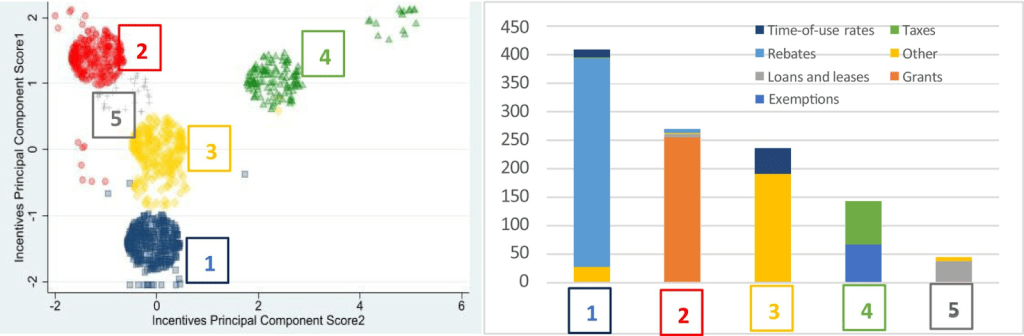
Figure 1. Clusters of incentives and composition of instruments in each cluster.
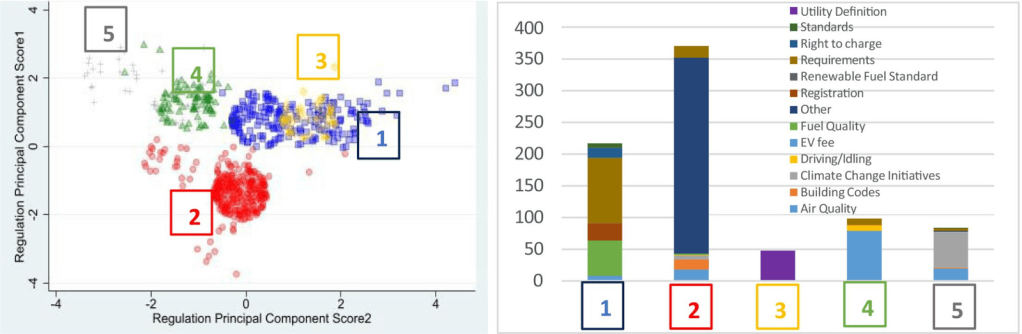
Figure 2. Clusters of regulations and composition of instruments in each cluster.
Pollution Regulations are Key to Success
To examine the relationship between policy mixes and outcomes, the authors use exploratory factor analysis to identify mixes and then deploy a fuzzy set Qualitative Comparative Analysis (fsQCA) to study the outcomes in the EV markets. Table 1 shows that every successful policy mix for higher EV market shares includes regulations targeting air pollution and climate change, often paired with incentives including tax credits and exemptions.. Financial incentives alone do not drive EV adoption; rather, they work best when combined with supportive regulations. This finding supports Hypothesis 2 and highlights an important lesson: effective policy design requires integrated approaches, not single tools. In this case, regulations create a supportive environment while incentives encourage adoption either at the individual or community levels.

Table 1. Outcomes of fsQCA: Policy conditions combinations and outcomes
Why It Matters
This study shows that policy ideas interact and form structured mixes which influence real-world outcomes. By introducing the concept of intra-stream interdependence, the authors expand MSF theory and explain why policy mixes emerge. For policymakers, the takeaway is clear: combining regulations with incentives is essential for promoting EV adoption and more generally for successful environmental action. Future research should explore whether similar dynamics occur in other areas like health or education and examine how these mixes change over time. Furthermore, case studies could look at how advocacy tactics—specifically, the way issues are presented—work together with natural groupings of ideas to shape complex policy packages. Understanding these patterns can help governments design smarter, more effective policies for complex challenges.
Read the original article in Policy Studies Journal:
Soni, Anmol and Evan M. Mistur 2025. “Mixing and Matching: Intra-stream Interdependence in the Multiple Streams Framework and the Adoption of Policy Mixes.” Policy Studies Journal 53(3): 580–603. https://doi.org/10.1111/psj.12582.
About the Article’s Authors
Anmol Soni is an assistant professor in the Department of Public Administration at Louisiana State University. Her research focuses on energy and environmental policy action. Anmol’s recent work examines energy transitions in the global south and policy designs and mixes adopted by sub-national governments to address local sustainability issues.
Evan M. Mistur is an assistant professor in the Department of Public Affairs and Planning at the University of Texas at Arlington. He specializes in public policy, researching a diverse set of topics centered around environmental management, sustainability policy, and policy theory. Evan’s past work includes investigations of policy formation, diffusion, and implementation across both Texas and Georgia.
 Policy Studies Journal Blog