
Last January, the editorial staff of PSJ asked me to think about how the new Trump administration might affect policy process research. This is a huge task full of landmines – not only would I need to write something that engaged a vast policy process literature, but I’d have to do something that political scientists should never do: make predictions. With blind confidence befitting a Full Professor, I said yes.
There is little precedent for the Trump presidency in many ways, not least of which is Trump’s re-election in non-consecutive terms. Trump’s impact on American politics and policy choices of the Republican Party has thus far been significant, even in the years out of power. All that said, the conclusion of my article is that it is unclear that a new Trump administration will change how we study public policy; however, his actions should change what we study. I call out five areas of study we, as a community, could focus on.
Executive Policymaking
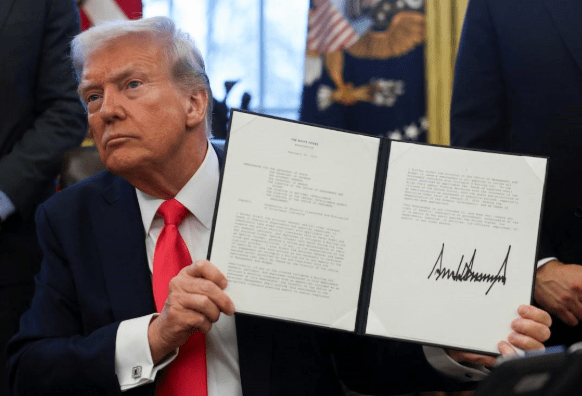
First, Trump’s focus on executive policymaking challenges the very institutional structure upon which much of the American politics and policymaking research relies. Congress somehow has less power than before – some might say it has lost power, but is it fair to say that something is lost if it is given away? Trump is pursuing a constitutional interpretation that envisions an executive with independent, unchecked powers relative to the legislative and judicial branches. Most of the modern policy process research conceives of a foundational American political environment with stable post-World War II institutions. Those are under threat, and American policy scholars would do well to borrow from the comparative politics literature to understanding policymaking during regime change.
The Politics of Mass Repeal

Second, Trump campaigned on and is engaged in the steadfast commitment to a systematic repeal of his four years out of power – part of his Biden erasure campaign which also includes, incredibly, the results of the 2020 election. Policy scholars, particularly feedback scholars, have the tools to consider the politics of this moment. It is difficult to imagine a repeal agenda of this magnitude across so many policy areas. Trump and Congress have scrubbed DEI language from federal publications (including flagging the above picture of the Enola Gay because of the word “gay”), repealed the majority of Biden’s signature legislative achievement – the Inflation Reduction Act, rescinded federal funding for basic science and on and on. Policy scholars might ask questions about the politics of repeal – not just of one or two policies, but the politics of mass policy repeal.
Siege Federalism
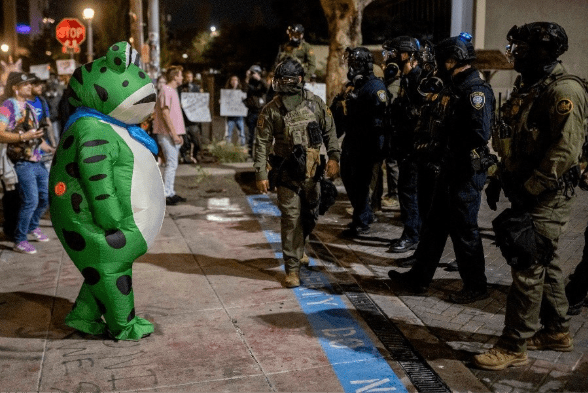
Third, Trump has vigorously asserted the dominance of the federal government over states – when convenient. Trump’s actions can be seen in his attempts to rescind funding to states that fail to comply with his directives, his activation of the national guard in California, Illinois, and Oregon to purportedly affect federal agents, and, currently, coercing states and localities to assist federal immigration and other agents in a large-scale deportation effort. The field of federalism is full of different ways of characterizing different moments of federalism (e.g. “marble cake”, “layer cake”, “variable speed”); I offer “siege federalism” in the article. Looking at images of American cities – currently Minneapolis and before that my home town of Portland (above) – I’m saddened by how accurate that phrase has turned out to be.
Identity Politics and Redistribution
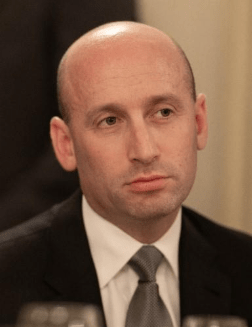
Fourth, Trump campaigned on identity politics, but this isn’t just about reversing DEI policies of the Biden administration. Trump and allies are elevating particular identity groups within the United States, notably, white Americans. Trump’s policymaking on this front is redistributive, which should lead to conflict. Notions of power and deservingness are at the center of these politics and are, in my opinion, extremely volatile at the current moment.
Policymaking in Corrupt Times
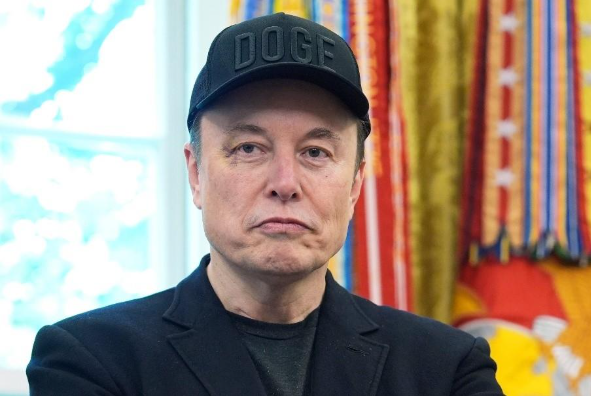
Fifth, and finally, the Trump administration has overtly and directly incorporated business interests (including Trump’s) as part of public policymaking. Members of the private sector have the president’s ear, but have also bent the knee. Prominent corporate leaders, particularly in the technology sector, have formal or informal roles in government. Policy scholars might think more on direct executive lobbying – but, honestly, we need to talk more about corruption in American politics. Is this level of corruption the new normal? If so, how should we build that into our models of the policy process? Comparativists have wisdom here and we should listen to it.
Looking Forward

I could fill another blog post (or article) about what we might think about as a community regarding other government actions that have transpired since I wrote the original article. For example, how does the weaponization of the justice system affect policy process research? Also, policy scholars don’t often think about foreign policy, but Trump (surprisingly) has taken significant actions abroad that have shaken the very foundation of the world order using a unique set of tools including abduction (fugitive apprehension), extortion (deal-making), and murder (kinetic actions). How can we use our process models to explain foreign policy? The Republican president has engaged in significant interventions in the economy down to the individual corporation level. How does Trumpenomics influence the context of policymaking?
An overarching theme of the Trump administration is to inject politics into as many parts of the policymaking process as possible. Policy scholars, myself included tend to engage in more institutional analyses and de-emphasize politics. We are currently in a new reality where it seems like just about everything is political – especially policymaking.
Read the original article in Policy Studies Journal:
Koski, Chris. 2025. “Four More Years! (of Policy Process Research in a Trump Administration).” Policy Studies Journal 53(4): 1088–1097. https://doi.org/10.1111/psj.70025.
About the Article’s Author(s)

Chris Koski is the Daniel B. Greenberg chair of political science and environmental studies at Reed College. His research focuses on the development of theory in punctuated equilibrium theory and the social construction framework. Substantively, his work addresses climate change policy and the politics of state budgeting. His publications have appeared in Policy Studies Journal, Governance, JPART, and he is co-author of Means, Motives, and Opportunities: How Executives and Interest Groups Set Public Policy published by Cambridge University Press.
 Policy Studies Journal Blog