The Role of Policy Narrators During Crisis: A Micro-Level Analysis of the Sourcing, Synthesizing, and Sharing of Policy Narratives in Rural Texas

by Mark C. Hand, Megan Morris, & Varun Rai

Policy researchers have done extensive research to understand the use of narratives in the policy process. We see that policymakers use narratives to set policy agendas, to emphasize issues, to suggest solutions, and much more. But how do policymakers respond to crisis?

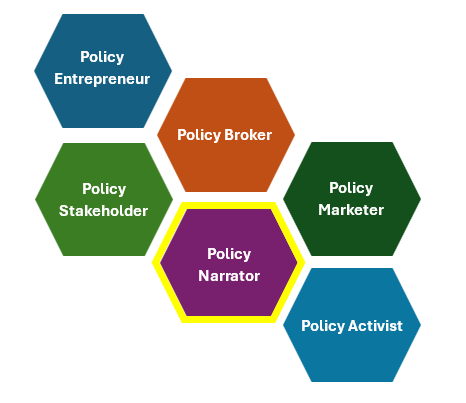
Across numerous theories of the modern policy process, scholars have highlighted the importance of policy actors, or individuals that drive policy change. Scholars have variably defined these actors as policy entrepreneurs, policy stakeholders, policy brokers, and policy activists, with the distinctions across roles often blurry. Seeking a term that can span theories, some scholars have suggested the concept of the policy entrepreneur. While we share the goal of bridging theory, we argue that the fuzziness of this term limits our ability to detangle the diverse functions that policy actors serve.

We suggest a different method: What if we conceptualized a range of policy actors, each who serve distinct roles within each framework?

In our study, we propose a policy actor who can sit at the center of the Narrative Policy Framework (NPF) specifically: the policy narrator. This actor, we argue, plays the unique role of composing narratives that weave political, social, and economic contexts and current events to present a distinct policy problem and call for a particular policy solution. 
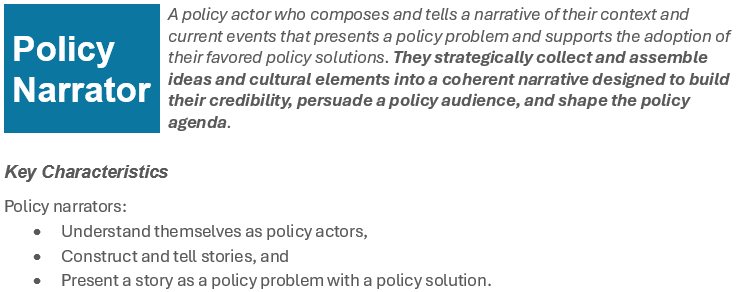
To further conceptualize this actor’s role in the policy creation process, we use comparative case studies of seven oil-producing counties in one region of rural Texas that experienced two distinct crises in 2020: falling oil prices and mass rig closures following the spread of COVID-19.

Building on previous NPF work – as well as from narratology, entrepreneurship scholarship, and diffusion theory – we test four sets of propositions about how policy narrators source, synthesize, and share their policy narratives during times of crises. 

While we make multiple findings on narrative strategies (including surrounding the effectiveness of the devil-angel shift, narrative congruence, and the use of characters), we believe that our most important contribution is defining and situating a specific policy actor within the NPF. 

Our results support the idea that policy narrators create narratives with distinct, identifiable characteristics that can conceptually separate them from other policy actors. We argue that if we continue this honing of the characteristics, function, and strategies of actors across other policy process theories, we can start to build a common language that connects our understandings of how the policy process operates. 
You can read the original article in Policy Studies Journal at

Hand, M. C., Morris, M., and Rai, V.. 2023. “The role of policy narrators during crisis: A micro-level analysis of the sourcing, synthesizing, and sharing of policy narratives in rural Texas.” Policy Studies Journal, 51, 843–868. https://doi.org/10.1111/psj.12501

About the Authors
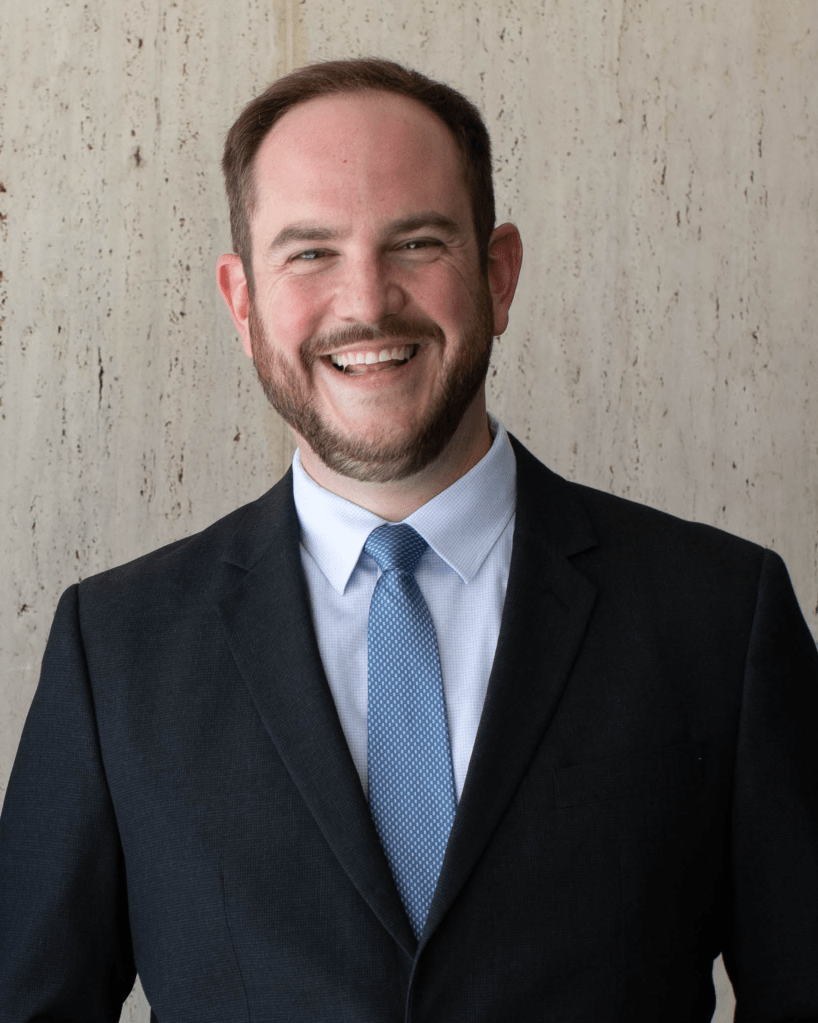
Mark C. Hand is an Assistant Professor in the Political Science department at the University of Texas at Arlington, where he researches employee ownership and workplace democracy, campaigns and elections, and theories of the policymaking process. 


Megan Morris is a Policy Manager at the Abdul Latif Jameel Poverty Action Lab (J-PAL) at MIT. Megan manages the Gender sector and works on issues related to gender equity and women’s and girl’s agency. 
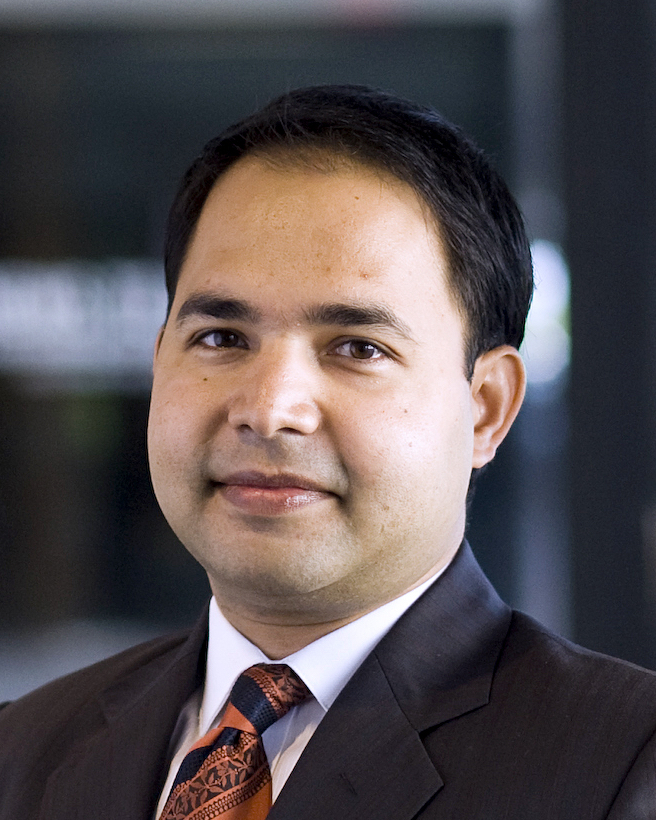


Dr. Varun Rai is the Walt and Elspeth Rostow Professor in the LBJ School of Public Affairs at the University of Texas at Austin, with a joint appointment in Mechanical Engineering. His interdisciplinary research, delving with issues at the interface of energy systems, complex systems, decision science, and public policy, develops policy solutions for a sustainable and resilient energy system. In 2016 he was awarded the David N. Kershaw Award and Prize. He received his Ph.D. and MS in Mechanical Engineering from Stanford University and a bachelor’s degree in Mechanical Engineering from the Indian Institute of Technology (IIT) Kharagpur.

Farmed Out: Agricultural Lobbying in a Polarized Congress  

by Clare Brock

Food and Agriculture policy has often been referred to as one of the last bastions of bipartisanship. Policymakers in the space claim that policymaking in this area has historically been special and uniquely cooperative. And yet, recent fights over the Farm Bill and other food and nutrition policy have made clear that food policymaking is no more exempt from bitter partisan battles than any other policy area.

Farmed Out: Agricultural Lobbying in a Polarized Congress considers the relationship between partisan polarization, lobbying, and policy dynamics. The evidence presented in the book shows that partisan polarization has a dual impact on lobbying in that space. On the one hand, partisan polarization has increasingly frustrated lobbyists who hope to see lawmakers move forward on policy change in a timely fashion; one lobbyist explained, “I find the issues that should have been a lighter lift have become a Herculean lift” (Brock 2023, 111). The consequence is that, as the legislative pace slows, lobbyists must persistently work on the same issues over a longer time horizon, exacerbating the already large advantage to business and well-organized and funded interests. This trend is particularly visible among business interests, whose behavior, characteristics, and resources we have a clearer picture of compared to other types of interest groups.

Figure 7.1. Relationship between lobbying reports and firm revenue, by year.

Figure 7.1 (Brock 2023, 113) illustrates the increasingly exaggerated relationship between lobbying reports and resources over time, particularly among business interests. It is clear that access to resource allows firms to engage in politics more aggressively than their less well-resourced counterparts.

Advocacy groups are adapting and finding new (and old) ways to overcome legislative sluggishness, however. Reliance on coalitions and cross-cutting partnerships, also known as “unlikely bedfellows” or “boot-leggers and Baptist” partnerships, are particularly desirable coalitional strategies as they provide “air cover” to politicians and create new pathways to cooperation in a Congress with increasingly slim majorities and challenging dynamics (Brock 2023, 126).

Farmed Out explores both the practical and normative consequences of partisan polarization on lobbying, and specifically, the consequences of these dynamics on policymaking in the food and agricultural subsystem. “Legislators spend more time fighting, flying home, and rallying their bases, and less time on policymaking. Congress has lost expertise and has outsourced brainpower to lobbyists. As lobbying increasingly becomes more skewed toward the ultra-wealthy interest groups and corporations, we risk moving the food system even further from the ideal points of the public” (Brock 2023, 140). In short, partisan polarization has consequences not only for our politics, but also for our diets.

You can find the full book at

Brock, Clare R., Farmed Out: Agricultural Lobbying in a Polarized Congress (New York, 2024; online edn, Oxford Academic, 23 Nov. 2023), https://doi.org/10.1093/oso/9780197683798.001.0001

About the Author

Clare Brock is an Assistant Professor of Political Science at Colorado State University. Her research interests include public policy process, interest groups and advocacy, food politics, and the impact of polarization on policymaking.


Advocacy Coalitions, Beliefs, and Learning: An Analysis of Stability, Change, and Reinforcement

by Christopher Weible, Kristin L. Oloffson, & Tanya Heikkila 

The Advocacy Coalition Framework (ACF) is one of the primary approaches for studying advocacy coalitions, belief systems, and policy learning. While hundreds of empirical studies have confirmed the framework’s major expectations, research is limited by a lack of longitudinal studies, comparisons between panel and non-panel data, and multiple measures of policy-oriented learning in the same study. To fill these gaps, we examine the characteristics of advocacy coalitions in the ever-evolving landscape of energy policy. Three questions guide the exploration: 

  1. What defines the characteristics of advocacy coalitions in the setting of shale oil and gas development, and to what extent do these coalitions exhibit stability over time? 
  2. To what degree do members within advocacy coalitions undergo changes in their beliefs, and how does this impact their sustained alignment within the same coalition? 
  3. What are the prevalent trends regarding advocacy coalition members self-reporting belief changes or expressing a willingness to shift their positions?

In 2013, 2015, and 2017, we conducted surveys of policy actors involved in shale oil and gas extraction in Colorado. The survey participants comprised individuals actively involved or knowledgeable about the pertinent policy issues, including industry stakeholders, government officials, non-profit and community group representatives, consultants, academics, and reporters. Respondents were identified through a purposive sampling approach, utilizing evidence from media reports, online sources, public hearings, testimonies, and recommendations. The survey included measures of policy core beliefs, such as positions on oil and gas development, problem perceptions, coordination, and interactions with other policy actors. 

To analyze the data, we used K-Means Clustering, a method that identifies distinct groups within a dataset. The K-Means Clustering method categorized respondents into two coalitions based on minimizing distances within each cluster.

As illustrated in Figure 2, while beliefs remained relatively constant, specific indicators signaled some movement, reflecting shifts in the policy subsystem’s circumstances. For instance, concerns over public nuisances rose during a period of increased drilling activity, only to subside when drilling declined due to falling oil prices. The coalitional characteristics remained relatively stable across the three time periods, confirming patterns typical for environmental policy issues.

Figure 2. Frequency of belief change for respondents by panels

This analytical approach provides valuable insights into the dynamics of advocacy coalitions, shedding light on their composition and stability over time in the context of shale oil and gas development policy. One key contribution lies in the identification and characterization of two distinct advocacy coalitions, namely the anti-oil and gas coalition primarily comprising environmental and citizen group representatives, and the pro-oil and gas coalition dominated by industry stakeholders. The stability of these coalitions over the five-year period underscores the enduring nature of these groupings. The research also delves into the nuanced realm of belief change and policy learning among coalition members. The findings provide crucial insights into the tendencies of coalition members to either reinforce their existing beliefs or undergo shifts in response to evolving circumstances, contributing to the broader discourse on policy learning. 

You can read the original article in Policy Studies Journal at

Weible, C. M., Olofsson, K. L. and Heikkila, T. 2023. “Advocacy coalitions, beliefs, and learning: An analysis of stability, change, and reinforcement.” Policy Studies Journal 51: 209–229. https://doi.org/10.1111/psj.12458

About the Authors

Chris Weible is a professor at the University of Colorado Denver School of Public Affairs. His research and teaching center on policy process theories and methods, democracy, and environmental policy. He is the Co-Founder and Co-Director of the Center for Policy and Democracy (CPD) and Co-Editor of Policy & Politics. He teaches courses in environmental politics, public policy and democracy, policy analysis, and research methods and design. Recent and current research includes studying policy conflicts in energy issues (e.g., siting energy infrastructure and oil and gas development), the role of emotions in public discourse, the institutional configurations of public policies, politics involving marginalized communities, and patterns and explanations of advocacy coalitions, learning, and policy change. He has published over a hundred articles and book chapters and has been awarded millions of dollars in external funding. His edited volumes include “Theories of the Policy Process,” “Methods of the Policy Process,” and “Policy Debates in Hydraulic Fracturing.” He regularly engages and enjoys collaborating with students and communities in research projects. Professor Weible earned his Ph.D. in Ecology from the University of California Davis and a Master of Public Administration and a Bachelor of Science in Mathematics and Statistics from the University of Washington. He has an Honorary Doctor of Philosophy and a Visiting Professor position at Luleå University of Technology (LTU), Sweden. Before coming to CU Denver, Professor Weible was an Assistant Professor at the Georgia Institute of Technology. He is a returned Peace Corps Volunteer.

Dr. Kristin L. Olofsson’s research focuses on public policy, institutional design, and stakeholder participation. She specializes in policy process scholarship through the lens of environmental and energy justice to focus on the dynamics of policy coalitions and networks of policy actors. Dr. Olofsson explores differentiation in institutional settings to better understand how the people involved in the policy process shape policy outcomes. Her research questions how decisions are made in contentious politics, using both quantitative and qualitative methods.

Professor Tanya Heikkila’s research and teaching focus on policy processes and environmental governance. She is particularly interested in how conflict and collaboration arise in policy processes, and what types of institutions support collaboration, learning, and conflict resolution. Some of her recent research has explored these issues in the context of interstate watersheds, large-scale ecosystem restoration programs, and unconventional oil and gas development. Prof. Heikkila has published numerous articles and books on these topics and has participated in several interdisciplinary research and education projects. She enjoys collaborating with faculty and students, especially through the Center for Policy and Democracy (CPD) at CU Denver, which she co-directs. She also serves as a member of the Delta Independent Science Board for the state of California. Prior to coming to CU Denver, Prof. Heikkila was a post-doctoral fellow at Indiana University’s Workshop in Political Theory and Policy Analysis and an Assistant Professor at Columbia University’s School of International and Public Affairs. A native of Oregon, she received her BA from the University of Oregon and then learned to appreciate desert life while completing her MPA and PhD at the University of Arizona.