Climate policy support in the UK: An interaction of worldviews and policy types

by Christian Bretter & Felix Schulz

Public support is critical for reaching net-zero goals, yet most research treats climate policies as a single, homogenous category. This approach effectively overlooks how climate policies differ in how much they reflect people’s cultural values and sense of personal freedom. This article therefore asks: Does support for climate policies in the UK depend on the interaction between policy type and cultural worldview? The authors use a UK case study with a representative sample and actual policy proposals to examine how preferences vary by both worldview and the degree of freedom offered by different policy instruments.

Hypotheses

The authors test three sets of hypotheses:

  • Hypothesis 1: Support for different policy types varies across cultural worldview groups.
  • Hypothesis 2a: Communitarian-egalitarians prefer command-and-control policies most, followed by market-based, information-based, and voluntary policies.
  • Hypothesis 2b: Individualist-hierarchists prefer voluntary policies most, followed by information-based, market-based, and command-and-control policies.
  • Hypothesis 3a: Support for command-and-control and market-based policies is strongest among communitarian-egalitarians and weakest among individualist-hierarchists.
  • Hypothesis 3b: Support for information-based and voluntary policies is strongest among individualist-hierarchists and weakest among communitarian-egalitarians.
  • Hypothesis 3c & 3d: Differences between individualist-egalitarians and communitarian-hierarchists follow similar patterns.

Methodology

The authors surveyed 1,911 UK residents using a validated cultural cognition scale to measure worldviews and support for 16 real-world decarbonization proposals grouped into four policy types:

  1. Command-and-control (strict regulations)
  2. Market-based (taxes or incentives)
  3. Information-based (education and awareness)
  4. Voluntary (encouragement without mandates)

Through a two-step statistical analysis, the authors examined whether policy support relates to a policy type—cultural worldview interaction (step 1) and the likelihood of agreeing with a policy type depending on cultural worldview (step 2).

Key Findings

Egalitarians Prefer Information Over Regulation

Figure 1 shows how cultural worldviews interact with policy types. Surprisingly, egalitarian-commutarians, who often favor strong regulation, preferred information-based policies over command-and-control. They also showed high support for voluntary and market-based measures, which indicates a broader openness to diverse policy instruments. This finding challenges the assumption that collectivist groups always want heavy-handed regulation, therefore disproving hypothesis 2a.
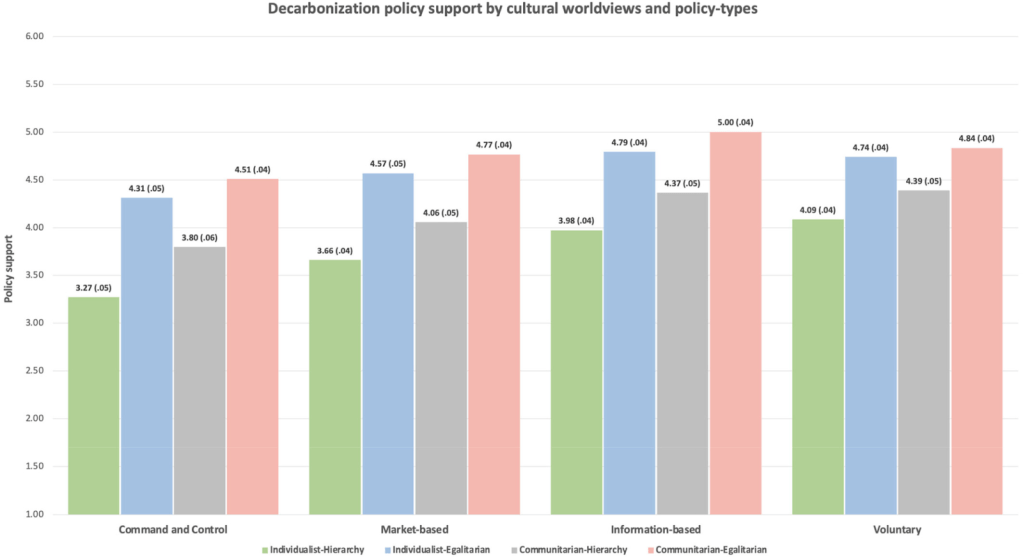
Image Description

Figure 1. Decarbonization policy support by cultural worldviews and policy types. The numbers show the estimated marginal means. Standard errors are shown in parentheses. N = 1911.

Individualists Favor Freedom Over Regulation

On the other hand, Figure 1 also shows that individualist-hierarchists strongly favored voluntary policies and were least supportive of strict regulations. This pattern closely aligns with cultural cognition theory, which suggests that people who value hierarchy and personal autonomy prefer policies that minimize government coercion. The finding underscores the role of individual freedom as a key determinant of climate policy preferences, thereby supporting hypothesis 2b. It also highlights the significant challenges of implementing stringent decarbonization policies among groups that value autonomy and market-driven solutions.

Why It Matters

This case study reveals that climate policy support is not just about being “for” or “against” climate action; rather, it is about whether policies align with deeper values around freedom and authority. The authors build on cultural cognition theory scholarship by providing actionable guidance for policymakers: that one-size-fits-all policy strategies do not work. Voluntary and informational measures may resonate better with some groups, while others accept market-based tools. The authors call on scholars to test these patterns in other countries, explore how mixed-policy packages influence support, and examine the role of trust and political polarization over time.

Read the original article in Policy Studies Journal:

Bretter, Christian and Felix Schulz. 2025. “Climate Policy Support in the UK: An Interaction of Worldviews and Policy Types.” Policy Studies Journal 53(2): 388–413. https://doi.org/10.1111/psj.12570.

About the Authors

Christian Bretter is a research fellow in environmental psychology at the Net-Zero Observatory at the University of Queensland. By integrating psychology and environmental behavior research, he is interested in why and when individuals are behaving or thinking in environmentally (un)friendly ways and in designing and testing interventions that create positive behavior change.

Felix Schulz is an interdisciplinary researcher at Lund University Centre for Sustainability Studies. His research draws from labor economics, sociology of work and social psychology to understand individuals and institutions’ perceptions of climate change and just transition policies.

Policy design and policy feedback in welfare retrenchment: A survey experiment in China

by Alex Jingwei He, Ling Zhu, and Jiwei Qian

Beyond conveying information about policy instruments, established government programs shape beliefs and expectations about policy benefits and burdens, as well as how individuals will be affected by existing policies. Social groups can then react to the information embedded in the design of policies, which, in turn, may strengthen or weaken them. The case study reported in this article explores how policy designs condition citizens’ behavioral and attitudinal responses to welfare retrenchment reforms in China. This article expands on recent policy feedback and comparative public policy literature by exploring how various policy designs, combined with individual proximity to reform, produce mixed responses. The article is guided by three hypotheses:

  1. Policy design that preserves individuals’ material self-interest will reduce opposition to welfare retrenchment reform.
  2. Policy design that improves the well-being of all in society will reduce opposition to welfare retrenchment reform.
  3. Individuals proximate to welfare retrenchment reform will exhibit stronger opposition than those with less policy proximity.

In 2020, the Chinese government engaged in a public consultation program regarding a proposed reform of the social health insurance system, which sought to reduce resources in individuals’ medical savings accounts. The authors conducted a survey experiment to gauge citizens’ responses to the proposed reforms and their hypothetical behavioral responses should the reforms go into effect. The survey participants were working and retired adults with social health insurance coverage and permanent residential status in Guangdong Province. Respondents were identified through a mature pre-existing sample and contacted via an online survey. The experiment measured socioeconomic characteristics and opposition to the healthcare reform before and after randomly receiving one of two policy design scenarios:

  1. Treatment Group 1 – Benefit-All Design: Reform will increase benefit generosity for both outpatient and inpatient care for social health insurance enrollees.
  2. Treatment Group 2 – Benefit-Family Design: Reform will allow individuals to use medical savings accounts to cover the healthcare expenses of their immediate family members.

The authors used a 1-4 Likert scale to measure opposition to the retrenchment reform. They measured demographic characteristics using a set of ordinal variables. They developed logistic regression models comparing group means with their corresponding 95% confidence intervals.

Figure 1 compares the mean opposition scores between groups before and after receiving the treatment message. Before treatment, the baseline preferences of the two groups were statistically similar. While both treatment messages reduced opposition, Treatment Group 2 (Benefit-Family Design) became more supportive of the reform compared to Treatment Group 1 (Benefit-All Design). At the same time, participants with higher educational attainment, poor health status, and large families were statistically more inclined to oppose the reform across both groups. These findings suggest that citizens prioritized preserving their material self-interest over supporting societal well-being. The authors therefore argue that sharing information on how a policy design allocates or reallocates resources garners meaningful attitudinal shifts. Therefore, this analysis supports hypotheses 1 and 2.

Figure 1. Comparing mean opposition scores before and after treatment. Vertical bars in the figure are the 95% confidence intervals.

Figure 2 compared whether the reduction of opposition to the reform varied by individuals’ proximity, specifically the frequency of medical savings account utilization. Based on the results, participants in Treatment Group 2 (Benefit-Family Design) who used their accounts at least once in the last 12 months showed significantly higher support for the reform compared to those in Treatment Group 1 (Benefit-All Design). Furthermore, individuals in Treatment Group 2 (Benefit-Family Design) who used their accounts more frequently (8-10 times) reported significantly higher opposition. These findings suggest that opposition to the reform increases as the frequency of utilization increases, which supports hypothesis 3.

Figure 2. Comparing mean opposition scores before and after treatment. Vertical bars in the figure are the 95% confidence intervals.

This article explores the significance of bridging policy design and feedback theories to better understand public response to the allocation and redistribution of material resources. While existing literature focuses on mass public opinion and participation behavior after policy adoption, this case study challenges scholars to examine citizens’ prospective assessments before policy changes as well. The authors suggest that future research should assess short-term feedback effects and long-term changes in those initial responses throughout the policy process. Unlike previous research, the findings reveal different sources of heterogeneous feedback effects other than partisanship, which vary by specific policy designs and individual experiences.

Read the original article in Policy Studies Journal:

He, Alex Jingwei, Ling Zhu and Jiwei Qian. 2025. “Policy Design and Policy Feedback in Welfare Retrenchment: A Survey Experiment in China.” Policy Studies Journal 53(2): 307–327. https://doi.org/10.1111/psj.12569.

About the Authors

Alex Jingwei is Associate Professor in the Division of Public Policy at the Hong Kong University of Science and Technology and Acting Director of the Institute for Public Policy at The Hong Kong University of Science and Technology (HKUST), where he also serves as the Co-Director of the Master of Public Policy (MPP) Program. He specializes in policy process theories, health policy and governance, and social welfare reforms. He received his PhD degree in Public Policy from the Lee Kuan Yew School of Public Policy, National University of Singapore.

Ling Zhu is Professor of Political Science at the University of Houston. Her research interests include public management, health disparities, social equity in health care access, as well as the management of local health care networks. She received her Ph.D in Political Science at Texas A&M University and joined the faculty at University of Houston.

Jiwei Qian is Senior Research Fellow at the East Asian Institute, National University of Singapore. He currently serves as the secretary of the East Asian Social Policy Research Network (EASP). His research interests lie in health economics, political economy, and development economics. He obtained his B.Sc. in computer science from Fudan University, China and Ph.D. degree in Economics from the National University of Singapore.

The Dark Side of Policy Learning: When Learning Leads to Value Destruction

by Bishoy L. Zaki

Understanding why policy actors do what they do and how their actions influence the public have always been fundamental questions in not only public policy but also public administration and governance scholarship. To address these questions, scholars rely on various approaches. Those approaches for example include viewing policymaking and governance to be outcomes of belief updates, power struggles, crisis induced shocks, political opportunity structures, and/or the rules and traditions by which public institutions operate, among others. These different approaches provide important insights into the world of policymaking and governance, albeit of course, within certain contexts and under particular conditions.

Among these different approaches, policy learning stands out as one of the most omnipresent and fundamental. Simply put, in this approach, we analyze, dissect, and even predict why policy actors do what they do by tracing how, when, and why they learn about policy and governance problems. The potency of the policy learning lens owes to several reasons, chief of which is that it allows us to peek into the kernel of policy actors’ behavior. This is rooted in the “Homo discentis” view of the individual, which sees people as “learning beings” who are constantly collecting information and knowledge within the context of rapidly changing environments. So, in a policy learning process, individual and collective policy actors pursue and process information and knowledge about emerging problems, in an attempt to develop understandings of potential viable solutions. This is while reconciling this information and knowledge with existing cognitive and institutional structures, and biases within various contexts. This renders policy learning – at heart – a problem solving activity. Hence,  the idea of learning is normatively appealing, where all policy actors like to proclaim that their decisions are based on learning the ‘right lessons.’

Accordingly, policy learning is often hailed as a tool for helping policymakers make better policy decisions, ultimately creating value for the general public. But is this always the case? For years, existing research has done an outstanding job using a policy learning lens to analyze why and how policies change or do not change, and how it contributes to improvements in policy making and governance. However, scholarship only occasionally alludes to the unintended negative consequences of learning gone wrong. I therefore ask, is the story of learning always one of success, improvement, and glory?

My recent article explores the often-overlooked dark side of policy learning, demonstrating how learning failures can systematically lead to value destruction rather than value creation. Despite its normative appeal and origins, this article highlights that learning is not inherently positive. In fact, when misdirected, learning can also contribute to the erosion democratic values, weaken trust in institutions, and distort policy outcomes. To illustrate this, I conceptualized two main categories of learning failures that contribute to value destruction:

  1. Misdirected Learning Design Failures (non-intentional and cybernetic): These occur when policymakers genuinely attempt to solve problems but make errors in designing and undertaking the learning process. This is often facilitated by factors such as ambiguity and uncertainty underlying policy problems, or the influence of crisis shocks. 
  2. Normative Failures (intentional and deontological): These happen when policymakers intentionally manipulate learning processes for political or self-serving goals, such as justifying unpopular policies, limiting public participation, or consolidating power.

In building a conceptual framework that links policy learning to value destruction, I demonstrate how these failures negatively impact both public values (i.e., norms and principles guiding policymaking and governance) (e.g., democratic participation, accountability, transparency) and public value (i.e., added value that citizens experience and receive through public products and services) (e.g., the effectiveness, and efficiency of public offerings).

Figure 1. From policy learning governance to value destruction.

First, let’s begin by looking at Misdirected Learning Design Failures. When policymakers must address complex and/or rapidly changing issues, they may rely on poorly designed learning processes–which could eventually cause the misidentification of solutions or the development of ineffective, or even harmful, policies. For example, during the COVID-19 pandemic, the constraints of uncertainty and urgency often caused governments to undertake non-optimal learning, for example by mis-defining the policy problem at hand, excluding key stakeholders to be involved in the learning process, or misidentifying the optimal experts to learn from. These poor learning choices ultimately contributed to the loss of lives and livelihoods around the world. 

Second, in Normative failures, we see for example when policy actors attempt to deliberately limit learning to a particular group of actors that are known to legitimize predetermined political agendas, or engage in political learning to sidestep democratic decision-making norms, or exclude certain demographics from government services. These failures tend to take place when malintended policy actors strategically leverage ambiguity, complexity, and urgency to steer learning towards self-serving outcomes. 

My article ultimately challenges the assumption that learning always leads to better policies. By exposing the risks of learning failures, and theorizing failure types, it highlights the potential pitfalls of learning within the policymaking process and calls for stronger safeguards to prevent them. This is rooted in the idea that policy learning itself is a deliberately designed and governed process, where policy actors engineer how learning occurs, thus influencing its outcomes.

This serves as a crucial reminder that learning is inherently positive, and that without careful deliberate design and accountability, policy learning can just as easily contribute to value destruction as it can to value creation. To build on these theoretical developments, future research is encouraged to explore how different forms of governance (e.g., democratic vs. authoritarian) shape policy learning failures. It can also consider the increasing role of polycentricity and decentralization, and how learning therein contributes to value destruction at the subnational, national, and transnational levels.

Read the original article in Policy Studies Journal:

Zaki, Bishoy L. 2024. “ Hello Darkness My Old Friend: How Policy Learning Can Contribute to Value Destruction.” Policy Studies Journal 52(4): 907–924. https://doi.org/10.1111/psj.12566.

About the Author

Bishoy Louis Zaki is a professor of public policy and Administration at the department of Public Governance and Management at Ghent University, Belgium. His research and teaching focus on policy process theory with a focus on policy learning, and public management. He has several publications in leading international public administration and public policy journals including Public Administration ReviewPolicy & SocietyPublic Policy and Administration, the Journal of European Public PolicyPolicy & PoliticsPolicy Design and Practice among others. He is also an editor at International Review of Public Policy journal, and a co-chair of the permanent study group on policy design and evaluation at the European Group for Public Administration (EGPA). Bishoy has over 14 years of experience in consulting, strategy, and policy where he served in different roles with several governments and international organizations worldwide. As a practitioner, Bishoy has overseen the design, implementation, and monitoring of large-scale international strategic capacity development, planning, and knowledge transfer initiatives.

How does a focusing event shape public opinion? Natural experimental evidence from the Orlando mass shooting

by Youlang Zhang & Xinsheng Liu

Scholars of the policy process posit that focusing events often shift public attention, policy preferences, and reshape the policy agenda. The scholarship, however, has failed to fully explain how focusing events influence public opinion. Our paper aims to remedy this by analyzing the impact of one of the deadliest mass shootings in U.S. history—the 2016 Orlando nightclub attack—on public attention and attitudes toward terrorism, national security, and specific policies.

Policy process theories often assume that “focusing events” (i.e., sudden, dramatic, widely publicized incidents) can jolt public attention and lead to changes in policy preferences. Yet, empirical studies have produced mixed results. We argue that the literature falls short for two major reasons: (1) prior research neglects to properly consider the different components of the public’s reaction to focusing events and uses inconsistent dependent variables; (2) the research often relies on data collected over time without carefully considering confounders.

Figure 1. An analytic framework for public responses to a focusing event.

To address this, we propose a new framework that aims to distinguish between changes in attention to the generic policy issue (e.g., terrorism broadly), attention to sub-issues (e.g., airplane safety), support for a general policy action (e.g., antiterrorism investment), and support for specific policy actions (e.g., gun control). Using this framework, we assert the following hypotheses:

  • H1: The Orlando mass shooting increases overall attention to the generic terrorism and security issue (i.e., “splash effect).
  • H2: The less relevant a specific terrorism issue is, the smaller the positive impact of the Orlando mass shooting on public attention to it (i.e., “limited ripple effect”).
  • H3: The less relevant a specific terrorism issue is, the smaller the positive impact of the Orlando mass shooting on public support for increased government investment in preventing terrorism decreases (i.e., “limited ripple effect”).
  • H4: The Orlando mass shooting has a negligible impact on public support for specific preventive government actions (e.g., gun control or immigration restrictions) (i.e., “deep water null effect”).

To test these predictions, we used a natural experimental design. A public opinion survey funded by Texas A&M University was fortuitously being conducted when the Orlando attack occurred on June 12, 2016. This allowed us to compare responses from 416 participants surveyed before the attack with 284 surveyed after. Our analysis provided support for all four of our hypotheses, providing empirical evidence of the “splash effect,” “limited ripple effect,” and “deep-water null effect.” Put plainly, this focusing event increased attention to the general issue of terrorism and heightened support for a general policy action (i.e., increased government counterterrorism spending), but it did not alter concerns for other terror-related acts that were less relevant to the Orlando shooting.

 Figure 2. The effect of the Orlando mass shooting on respondents’ concerns about specific terrorism issues.

Our study reveals that while focusing events can heighten public concern and support for broad policy responses, they rarely shift entrenched views on controversial solutions. This “deep water null effect” has major implications: even horrific events may not translate into support for specific reforms, especially in a polarized political climate.

Read the original article in Policy Studies Journal:

Zhang, Youlang and Xinsheng Liu. 2025. “ How Does a Focusing Event Shape Public Opinion? Natural Experimental Evidence From the Orlando Mass Shooting.” Policy Studies Journal 53(2): 463-479. https://doi.org/10.1111/psj.12543.

About the Authors

Youlang Zhang is a Professor in the School of Public Administration and Policy and a Research Scientist at the Capital Development and Governance Institute, Renmin University of China. He is also a Research Fellow with the Institute for Science, Technology and Public Policy, the Bush School of Government and Public Service, Texas A&M University. His research interests include policy process, citizen-state interaction, and government management. 

Xinsheng Liu is a Senior Research Scholar and Research Scientist of the Institute for Science, Technology and Public Policy, Bush School of Government and Public Service, Texas A&M University. His research interests include public policy process, policy agenda, public opinion and participation, and comparative public management and governance.

Disasters Shape Beliefs in Technological Solutions to Environmental Problems: Lessons From a Quasi-Natural Experiment

by Aksel Sundström

While ecomodernist ideas—e.g., the notion that modern technology can solve environmental problems—are widespread among citizens, we know little about their stability. In my article, I explore how ecomodernist beliefs are affected by major catastrophes. Leveraging the happenstance that the Fukushima-Daiichi accident occurred during the fieldwork of a 2011 public opinion survey in Israel, this piece makes several interesting inferences.

Ecomodernism advocates that humanity can reduce its environmental footprint through technological innovation while maintaining economic growth. Ecomodernists often promote technologies like nuclear power and geoengineering as vital tools for rapidly cutting carbon emissions. However, not everyone shares this optimism. Critics argue that a technology-first approach may overlook ecological limits and social risks. This raises an important question: how does techno-optimistism shift when technology fails dramatically?

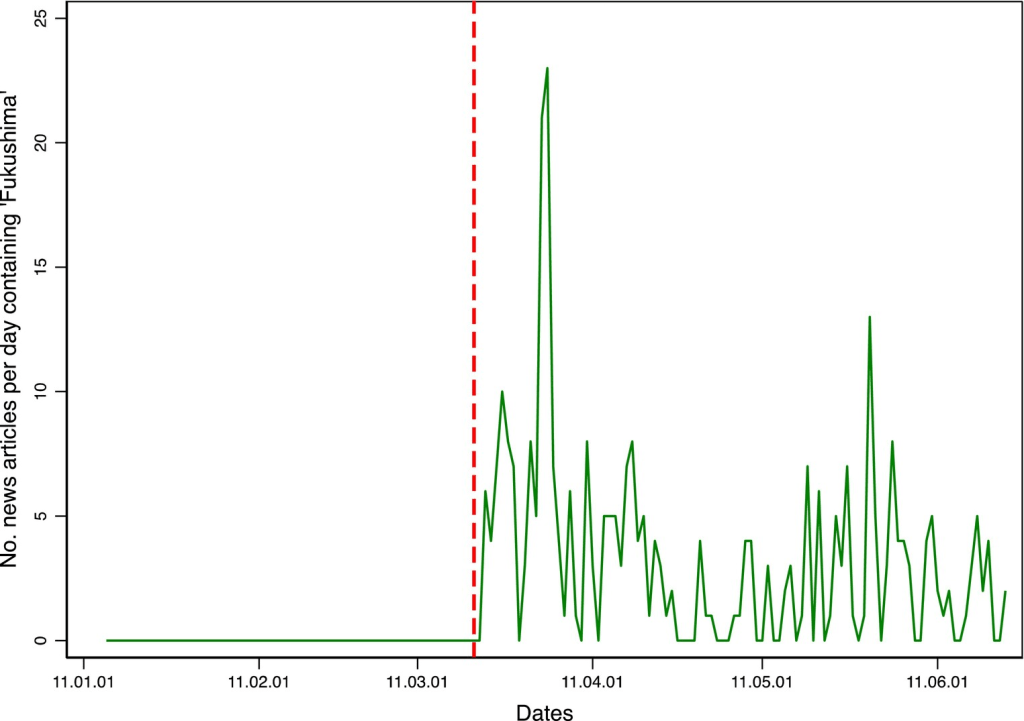
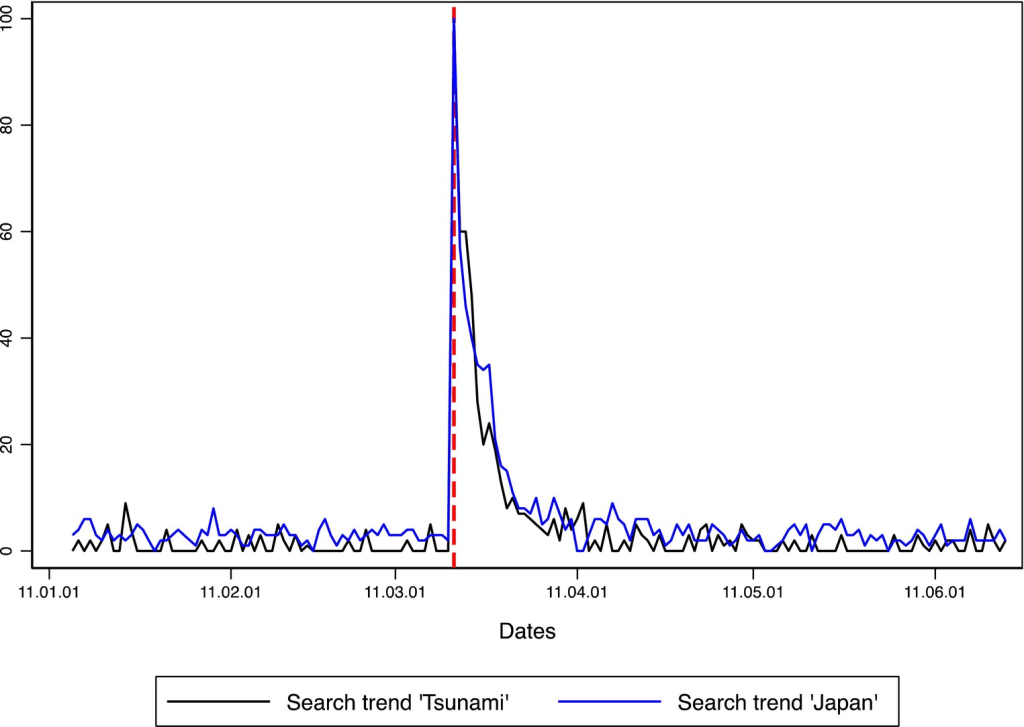
My study identifies a unique opportunity to investigate attitude shifts surrounding the Fukushima disaster. This event occurred during data collection for the European Social Survey (ESS) in Israel, a survey fieldwork that was unaffected by the events in Japan, creating quasi-natural conditions to experimentally analyze how sudden catastrophes influence ecomodernist beliefs. As seen in figures 1 and 2, both news media and people’s Google search trends in the country suggest that the events were very much present in the public debate.

Image Description

Figure 1. Print media news attention.

Figure 2. Google search trends.

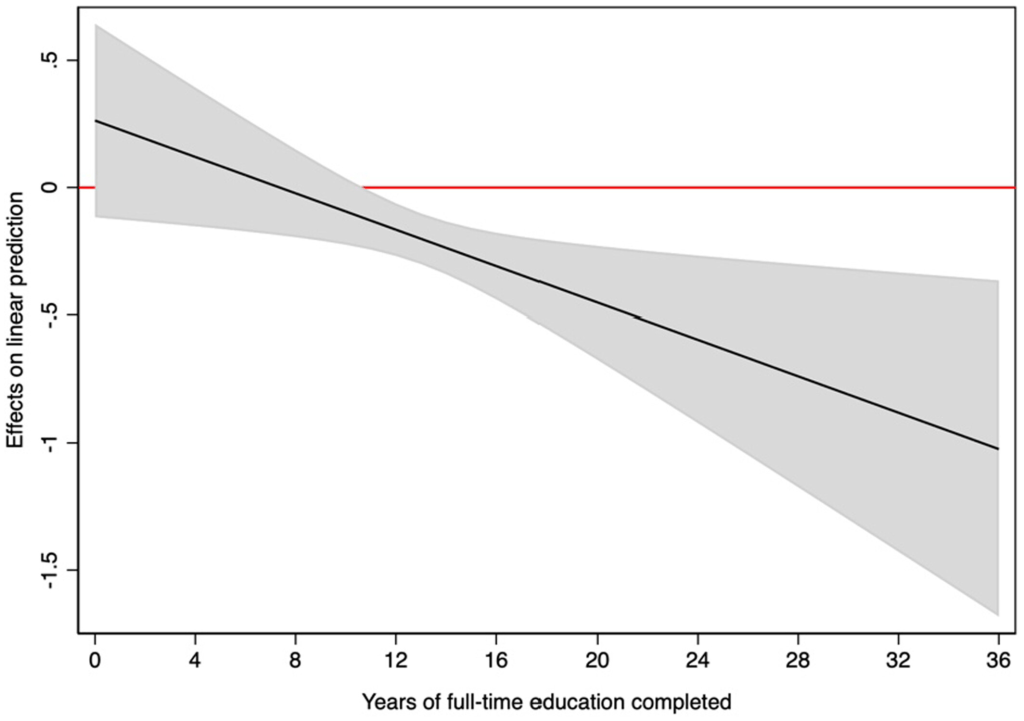
The ESS survey – rolled out to a nationally representative sample – measured survey participants’ agreement with the statement: “Modern science can be relied upon to solve environmental problems.” The disaster took place in the middle of the fieldwork period. Results reveal that those surveyed after Fukushima were, on average, less likely to agree with this statement than those interviewed before the disaster. The effect was particularly pronounced among respondents with higher education, a group typically more trusting of science and technology. Figure 3 illustrates this interaction, showing how the effect is stronger among those with longer education.

Figure 3. Main effects from Fukushima by respondents’ education years.

The study also corroborates these findings in a survey experiment with participants in two settings: Israel and the United States. In this extended analysis, an information vignette about the risk of nuclear power plant failures (compared to a control group that received no such information) provided similar effects on ecomodernist beliefs, suggesting that these effects are found when replicated with alternative approaches.

In the literature, environmental disasters can be seen as focusing events that draw attention to the risks of technological solutions. Interestingly, several authors have still described people’s beliefs about technological optimism as a “stable trait.” The events at Fukushima-Daiichi exposed vulnerabilities in complex technological systems, prompting heightened awareness of the risks with nuclear power and undermining broader trust in science’s ability to tackle environmental challenges. Hence, ecomodernist attitudes are more malleable than often assumed.

Given that public trust in technology wanes after disasters, it can become harder to rally support for large-scale technological initiatives, such as building new nuclear power plants or advancing geoengineering projects.

Policymakers need to recognize that trust in technological solutions is fragile and sensitive to external shocks. This study highlights that people’s beliefs about technology’s role in solving environmental problems are not static. By better understanding how such attitudes are shaped, we gain further insights in the public support for environmental policies in times of crises.

You can read the original article in Policy Studies Journal at

Sundström, Aksel. 2024. “ Environmental Disasters and Ecomodernist Beliefs: Insights From a Quasi-natural Experiment.” Policy Studies Journal 00(0): 1–31. https://doi.org/10.1111/psj.12562.

About the Author

Aksel Sundström is the PI of the Quality of Government (QoG) Data and an associate professor at the Department of Political Science, University of Gothenburg, Sweden. His research agenda is focused on comparative politics, with an interest in environmental politics, especially in the Global South, and the study of political representation.