
Social movements rely on narratives to frame their struggles and mobilise support. How they craft these narratives is especially intriguing in electoral autocracies, where political competition exists to a degree but democratic freedoms are curtailed. Our article (Celebi & Yilmaz, 2025) builds on the Narrative Policy Framework (NPF) by analyzing the policy process within an electoral autocratic context, specifically how the Turkish pension movement generated support through policy narratives on social media.
The Turkish pension movement (“those stuck in the pension age barrier,” or emeklilikte yaşa takılanlar (EYT) in Turkish) emerged in the mid-2010s in response to a 1999 reform that reinstated a pension age requirement, prompting some citizens who began working before the change to campaign against the rule being retroactively applied to them. Despite initial government resistance, the campaign ultimately led to the requirement’s removal in 2023 for those who had their first jobs before the 1999 reform.
One of our hypotheses was that when the government resisted removing the pension age for this group, the movement would broaden its constituency through strategic narrative framing. Figure 1 below shows that the movement tended to use narrative strategies emphasizing diffused benefits and costs. By adopting this approach, the movement extended victimhood onto a wider constituency than it actually represents. We argue that this strategy served to not only broaden the movement’s base but also to expand the scope of the conflict itself. Furthermore, it reiterates the movement’s strategic engagement with electoral competition.

Figure 1. Number of narrative strategies used involving specific characters.
Second, the temporal analysis of narrative strategy shown in Figure 2 below shows that the movement alternated between using concentrated costs and diffused benefits strategies. When the likelihood of a positive government response was low, the movement adopted a concentrated costs strategy directed at the government. Conversely, when a positive government response seemed more likely, the movement shifted to a diffused benefits strategy to advance its goals.
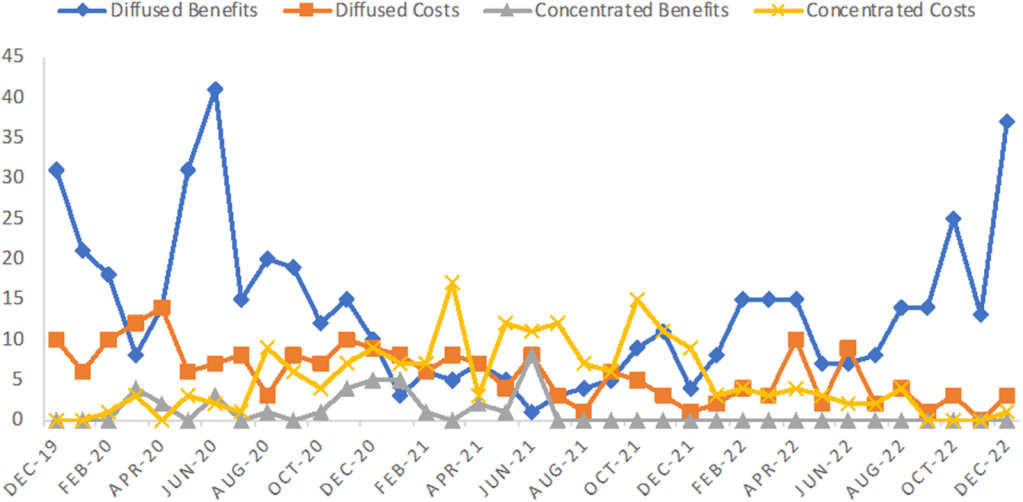
Figure 2. Trends in narrative strategies.
Our article explores the ways in which non-government actors can create and leverage impactful policy narratives in electoral autocratic contexts. When narratives highlight injustice, resonate with shared values of the population at large, and leave room for political manoeuvre, they can reshape policy debates even in regimes where the odds are stacked against citizens and social movements.
This paper builds on earlier NPF research, which remains limited in contexts beyond liberal democracies; research on social movements within these contexts is even more scarce. However, alternative policy narratives still hold power in electoral autocracies. We maintain the importance of applying the NPF to electoral autocratic contexts, highlighting three new research areas: (1) testing similar narrative strategies in other electoral autocracies and policy domains, (2) examining narratives in closed autocracies without elections, and (3) comparing the narrative content and strategies of single-issue movements with multi-issue organizations.
Read the original article in Policy Studies Journal:
Celebi, Elifcan and Volkan Yilmaz. 2025. “Narrative Power in Electoral Autocracies: The Policy Narrative Behind the Success of a Pension Movement.” Policy Studies Journal 53(2): 328–348. https://doi.org/10.1111/psj.70014.
About the Article’s Authors

Elifcan Celebi is an Assistant Professor at University College Dublin’s School of Politics and International Relations. She holds a PhD degree in Political Science from the Max Planck Institute for the Study of Societies and the University of Cologne. Her research primarily focuses on comparative politics and public policy in electoral autocracies with a particular emphasis on care, labour and digitalisation.

Volkan Yilmaz is a Lecturer in Social Policy at Ulster University, Belfast, within the School of Applied Social and Policy Sciences. He holds a PhD in Politics from the University of Leeds. He is one of the Editors-in-Chief for the Journal of Social Policy. He serves as the Coordinator of the Sociology of Social Policy and Social Welfare Research Network (RN26) of the European Sociological Association. His areas of expertise include the politics of social policy and welfare and public policy analysis with a special emphasis on health and social protection.
 Policy Studies Journal Blog