Disasters Shape Beliefs in Technological Solutions to Environmental Problems: Lessons From a Quasi-Natural Experiment

by Aksel Sundström

While ecomodernist ideas—e.g., the notion that modern technology can solve environmental problems—are widespread among citizens, we know little about their stability. In my article, I explore how ecomodernist beliefs are affected by major catastrophes. Leveraging the happenstance that the Fukushima-Daiichi accident occurred during the fieldwork of a 2011 public opinion survey in Israel, this piece makes several interesting inferences.

Ecomodernism advocates that humanity can reduce its environmental footprint through technological innovation while maintaining economic growth. Ecomodernists often promote technologies like nuclear power and geoengineering as vital tools for rapidly cutting carbon emissions. However, not everyone shares this optimism. Critics argue that a technology-first approach may overlook ecological limits and social risks. This raises an important question: how does techno-optimistism shift when technology fails dramatically?

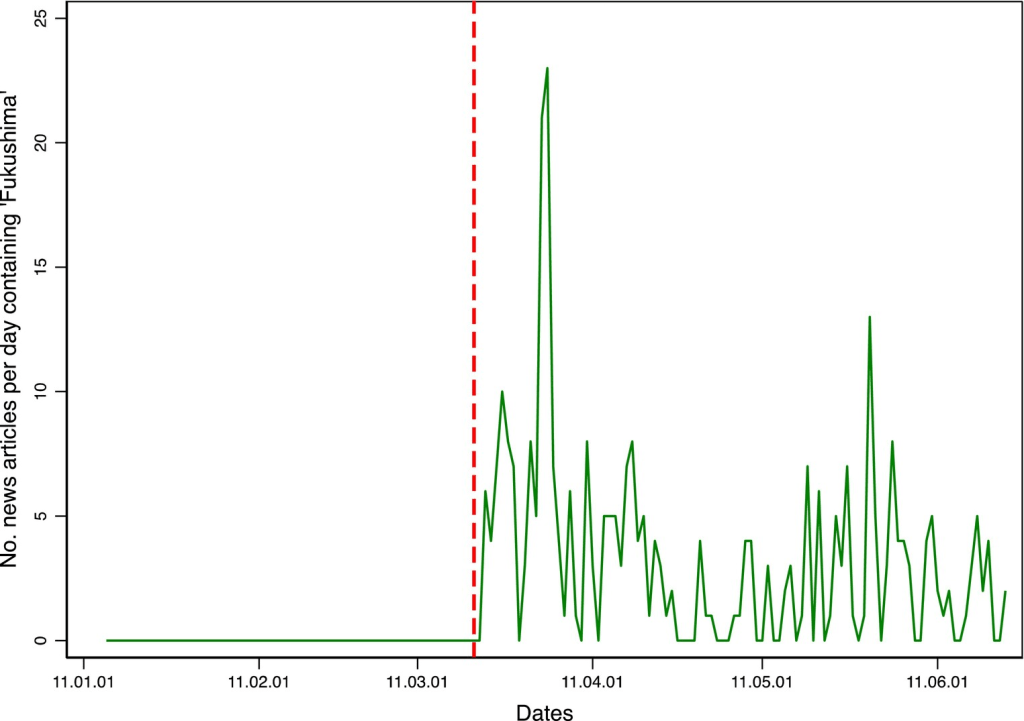
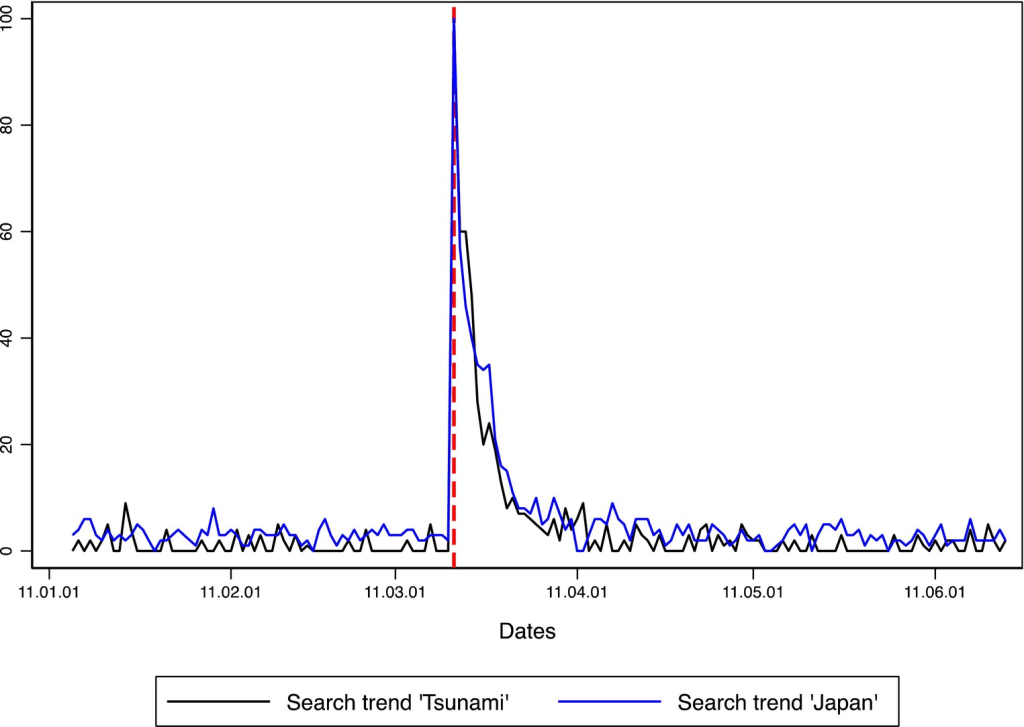
My study identifies a unique opportunity to investigate attitude shifts surrounding the Fukushima disaster. This event occurred during data collection for the European Social Survey (ESS) in Israel, a survey fieldwork that was unaffected by the events in Japan, creating quasi-natural conditions to experimentally analyze how sudden catastrophes influence ecomodernist beliefs. As seen in figures 1 and 2, both news media and people’s Google search trends in the country suggest that the events were very much present in the public debate.

Image Description

Figure 1. Print media news attention.

Figure 2. Google search trends.

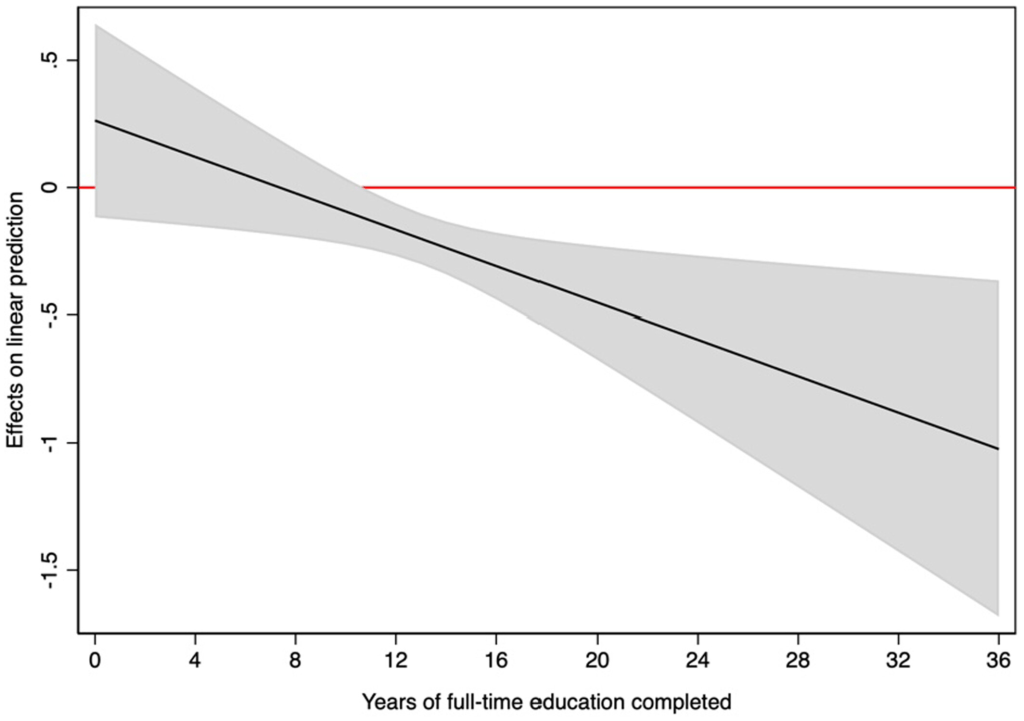
The ESS survey – rolled out to a nationally representative sample – measured survey participants’ agreement with the statement: “Modern science can be relied upon to solve environmental problems.” The disaster took place in the middle of the fieldwork period. Results reveal that those surveyed after Fukushima were, on average, less likely to agree with this statement than those interviewed before the disaster. The effect was particularly pronounced among respondents with higher education, a group typically more trusting of science and technology. Figure 3 illustrates this interaction, showing how the effect is stronger among those with longer education.

Figure 3. Main effects from Fukushima by respondents’ education years.

The study also corroborates these findings in a survey experiment with participants in two settings: Israel and the United States. In this extended analysis, an information vignette about the risk of nuclear power plant failures (compared to a control group that received no such information) provided similar effects on ecomodernist beliefs, suggesting that these effects are found when replicated with alternative approaches.

In the literature, environmental disasters can be seen as focusing events that draw attention to the risks of technological solutions. Interestingly, several authors have still described people’s beliefs about technological optimism as a “stable trait.” The events at Fukushima-Daiichi exposed vulnerabilities in complex technological systems, prompting heightened awareness of the risks with nuclear power and undermining broader trust in science’s ability to tackle environmental challenges. Hence, ecomodernist attitudes are more malleable than often assumed.

Given that public trust in technology wanes after disasters, it can become harder to rally support for large-scale technological initiatives, such as building new nuclear power plants or advancing geoengineering projects.

Policymakers need to recognize that trust in technological solutions is fragile and sensitive to external shocks. This study highlights that people’s beliefs about technology’s role in solving environmental problems are not static. By better understanding how such attitudes are shaped, we gain further insights in the public support for environmental policies in times of crises.

You can read the original article in Policy Studies Journal at

Sundström, Aksel. 2024. “ Environmental Disasters and Ecomodernist Beliefs: Insights From a Quasi-natural Experiment.” Policy Studies Journal 00(0): 1–31. https://doi.org/10.1111/psj.12562.

About the Author

Aksel Sundström is the PI of the Quality of Government (QoG) Data and an associate professor at the Department of Political Science, University of Gothenburg, Sweden. His research agenda is focused on comparative politics, with an interest in environmental politics, especially in the Global South, and the study of political representation.

Rapid Response and Uncertain Agendas: Senators’ Response to Dobbs

by Corinne Connor & Annelise Russell

How do elected officials signal what matters to them when agenda-setting isn’t just about picking issues, but also deciding how to respond? In our recent paper, we dig into this question by looking at how U.S. senators reacted to the Supreme Court’s 2022 Dobbs v. Jackson Women’s Health Organization decision and the earlier draft opinion leak.

Twitter (or X, if you must) remains a go-to platform for today’s legislators—a direct line to advocates, the media, and political elites. Unlike traditional media, it lets lawmakers respond instantly and unfiltered, making it the perfect stage for showing where they stand. We explored how senators used Twitter during two moments: the shock of the draft opinion leak and the expected court ruling. By examining their “rhetorical agendas”— the issues they highlight and how they frame them online — we uncovered insights into how they communicate their priorities in real time

We tested the following hypotheses:

Time Hypothesis (a): More ideologically extreme senators will be more likely to react more quickly to theleaked court opinion on Twitter.

Time Hypothesis (b): Democratic senators will be more likely to react more quickly to the leaked court opinion on Twitter.

Frame Hypothesis (a): The most ideologically extreme senators will be more likely to frame the Dobbs leak and decision in terms of pro-life or pro-choice alternatives.

Frame Hypothesis (b): Senators with greater electoral security will be more likely to adopt pro-choice or pro-life responses to the leak and/or decision.

Image Description

Using 5,163 tweets from senators’ official Twitter accounts from the week surrounding both events, our analysis revealed clear distinctions in senators’ reactions. We found strong support for the Time Hypotheses regarding the leak. Ideologically extreme members were quicker to respond to the Dobbs leak compared to their more moderate peers. Democrats, as anticipated, were generally more prompt in addressing the leak, reflecting their platform’s commitment to reproductive rights. Interestingly, response timing for the court’s final decision did not follow the same pattern, suggesting that anticipation allowed for more calculated, uniform engagement across ideological lines.

Image Description

The results of our analysis, on the other hand, did not support our Frame Hypotheses. We found that partisanship and extremity of partisanship were significant predictors of whether a senator would adopt a “pro-life” or “pro-choice” position relative to the other issue frames. However, electoral vulnerability and ideological extremity did not seem to be significant predictors of issue framing—with the exception that ideological extremity predicted pro-life/pro-choice frames).

Image Description

Our study aims to understand how lawmakers’ attention and agenda-setting behavior as a response to highly salient events. During the Dobbs leak, uncertainty prompted quicker, more polarized responses. Conversely, the anticipated ruling enabled senators to prepare and standardize their communications, highlighting the difference between reactive and proactive agenda setting. Rapid-response platforms—like Twitter—compel lawmakers to not only choose whether to engage but how quickly and with what narrative. 

This study opens avenues for exploring digital responses to other unexpected events, such as acts of political violence or security crises, and how they compare to anticipated policy announcements. Additionally, further research could investigate whether similar patterns hold in the U.S. House or within other political systems that also use social media for agenda setting. Understanding these dynamics could deepen our grasp of modern policymaking and communication strategies in a digital landscape.

You can read the original article in Policy Studies Journal at

Connor, Corinne and Annelise Russell. 2024. “ Rapid Response and Uncertain Agendas: Senators’ Response to Dobbs.” Policy Studies Journal 52(4): 751–775. https://doi.org/10.1111/psj.12553.

About the Authors

Corinne Connor is a program analyst with The Heinz Endowments.


Annelise Russell is an associate professor at the University of Kentucky.


Staying on the Democratic Script? A Deep Learning Analysis of the Speechmaking of U.S. Presidents

by Amnon Cavari, Akos Mate, & Miklós Sebők

In a representative democracy like the United States, we expect that the policy priorities expressed by politicians on the campaign trail or in stump speeches reflect the same priorities that they pursue while in office. We further expect that politicians would continue their policy commitment in their programmatic messages as well as in their daily activities and speeches. When they do that, we say that they stay on the democratic script.

We test this proposition, focusing on the relationship between the programmatic addresses of US presidents and the daily speeches by comparing the annual State of the Union address (SOU) with subsequent day-to-day speeches, which we refer to as occasional remarks (ORs). Occasional remarks are crucial because they allow the president to show the electorate that they are following through on their promises. They can also serve as testing grounds for new ideas or messages. 

Using the American Presidency Project, we gathered all State of the Union addresses and occasional remarks for every president from Harry Truman to Donald Trump. We then coded the documents using the codebook of the  Comparative Agendas Project, which defines 20 policy categories. Because of the large volume of documents that made up our dataset (16,523 speeches divided into nearly 2 million sentences), we used a large language model to conduct the bulk of our coding, supplemented with some manual coding used to train and refine our language model. 

We used the coded data to test three hypotheses:

  • H1: The policy agenda of the most important programmatic speech (SOU) and of routine remarks (ORs) each year will be positively correlated.
  • H2: The correlation between the policy agenda of the most important programmatic speech (SOU) and that of the routine remarks (ORs) will steadily decline over the course of the year.
  • H3a: Major domestic and foreign events decrease the diversity of the presidents’ routine attention (measured in ORs) relative to that presented in strategic communication (based on SOU).
  • H3b: The effect of domestic and foreign events on the diversity of routine agenda would be conditioned on the diversity of the annual agenda in the SOU.
Image Description

Figure 1. Correlations between speech types by policy topic.

As the above figure illustrates, across the 20 coded policy topics, there’s a strong correlation between the topics that are emphasized in State of the Union addresses and those that subsequently appear in occasional remarks, giving credence to Hypothesis 1. Applying regression analysis, we also found that, as time goes on, the policy topics addressed in occasional remarks diverge from those emphasized in the State of the Union, supporting Hypothesis 2. 

As for Hypothesis 3, we found a positive correlation between the diversity of policy topics referenced in the State of the Union and those referenced in occasional remarks; but, in contrast to our expectation, we do not find that major events (e.g., foreign conflicts, natural disasters, etc.) have a major impact on shifting the focus of presidential remarks. 

Our results show that, generally speaking, U.S. presidents are staying on the democratic script: The policy priorities that they outline in their State of the Union addresses are the same priorities to which they return in subsequent remarks. By comparing State of the Union addresses to occasional remarks, we’ve shown a link between programmatic and occasional communications that may have broader applicability beyond the presidency. We have also demonstrated the value of using large language models for parsing large volumes of policy texts, as our model’s coding displayed a higher accuracy rating than our manual coders, and at a fraction of the time. There are numerous avenues for building upon the insights outlined here, including examining the relationship between speechmaking and public opinion, how different speech types intersect with the policymaking process, and exploring the populations exposed to these speeches and how they respond to the speeches.

You can read the original article in Policy Studies Journal at

Cavari, Amnon, Akos Mate and Miklós Sebők. 2024. “ Staying on the Democratic Script? A Deep Learning Analysis of the Speechmaking of U.S. Presidents.” Policy Studies Journal 52(4): 709–729. https://doi.org/10.1111/psj.12534.

About the Authors

Amnon Cavari is Associate Professor and head of the Institute for Liberty and Responsibility at the Lauder School of Government, Diplomacy and Strategy at Reichman University, Israel. Prof. Cavari’s main research interests are in the interrelationship between actions of elected officials and public opinion in the United States and in Israel. He is the author of The Party Politics of Presidential Rhetoric.
Twitter/X: @ACavari 

Akos Mate is a computational social scientist whose research interests are political economics and quantitative methodology. He is a research fellow at the Centre for Social Sciences, Budapest. He also teaches as visiting faculty at the Central European University, Vienna, and served as a consultant for the IMF’s Independent Evaluation Office.

Twitter/X: @aakos_m

Miklós Sebők is a Senior Research Fellow at the HUN-REN Centre for Social Sciences (CSS), Budapest. He serves as the research co-director of the Artificial Intelligence National Lab at CSS, the principal investigator of the V-SHIFT Momentum research project, and the convenor of the COMPTEXT conference. His main research interest lies at the intersection of policy studies and natural language processing.
Twitter/X: @Miklos_Sebok

Not Just the Nation’s Hostess: First Ladies as Policy Actors

by Mary R. Anderson & Jonathan Lewallen

Popular culture likes to view the First Lady as a symbol of American womanhood, the nation’s hostess, fashion icon, and mom-in-chief. Yet, modern First Ladies often develop their own policy priorities and programs, and the Office of the First Lady is integral to modern presidential administrations. In this article we make the case for studying First Ladies as policy actors by examining the audiences to which First Ladies speak, the roles they adopt in doing so, including an explicit policy role, and the degree of substantive policy content in their public speeches and remarks. 

We use archived First Lady public speeches and remarks from 1993-2022 covering First Ladies Clinton, Laura Bush, Obama, Trump, and Biden to illustrate that First Ladies actively adopt policy roles across their speeches and other appearances; speak to policy-focused audiences like policy summits, interest groups, and government personnel and often discuss substantive policy issues in these appearances.

First Ladies adopt roles beyond the ceremonial role established by Martha Washington. She also plays the roles of policy advocate and party supporter and leader.  We depart from other scholars in our view that these roles are not “either-or” but rather “both-and,” the First Lady can be both engaging in a ceremonial role AND a policy role. For example, when the First Lady gives a commencement speech, she is acting in a ceremonial role. She may also discuss policy in that speech, in which case she is acting in a policy role, thus she is assuming both roles simultaneously, ceremonial and policy. Our analysis of First Lady roles demonstrates that the combination of Policy + Ceremonial roles is the most common configuration in our data. While First Ladies adopt the Ceremonial role more often than the others, the Policy role is a large part of the First Lady’s activities, about 72% of the data involve a Policy role in some way. 

Image Description

We argue that First Ladies are significant policy actors and that they discuss policy when they are addressing various audiences. Our data supports this characterization because we see First Ladies often addressing policy relevant audiences in their activities. Our analysis shows that First Ladies talk to three “clusters” of groups.  Excluding the broad “other” category, First Ladies have spoken most often to national interest groups (14.4%) and at policy events (14%).

Image Description

Figure 1: Percentage of First Lady Speeches and Remarks Delivered to Different Audiences

Finally, we find that First Ladies address substantive policy content frequently. We find that First Ladies address substantive policy content in about 63% of their speeches; when we dive more deeply into those observations where the First Lady adopted a Policy role, they addressed substantive policy issues about 90% of the time.  The presence of substantive policy content varies across First Ladies’ audiences as shown in the figure below.  First Ladies since 1993 mentioned some substantive policy issue in about 91% of their remarks to party supporters and 90% to policy events. 

Image Description

Figure 2: Speeches and Remarks with Substantive Policy Mentions by Audience

In this article, we challenge the traditional view of the First Lady as a largely ceremonial public figure and behind-the-scenes presidential advisor. Using her public speeches and remarks over a 30-year period we find that First Ladies consistently discuss policy issues across their different audiences and adopt the Policy role in more than three-quarters of their speeches in statements. Over time the role of the First Lady has evolved, their unique position permits them to play a role in policy that might not be obvious at first glance. They are particularly well-situated and well-resourced to engage in the policy process as executive branch actors and thus should be studied more often for their engagement in policymaking. 

You can read the original article in Policy Studies Journal at

Anderson, Mary and Jonathan Lewallen. 2024. “ Not Just the Nation’s Hostess: First Ladies As Policy Actors.” Policy Studies Journal 00(0): 1–19. https://doi.org/10.1111/psj.12558.

About the Authors

Mary Anderson is the brodsky chair for Constitutional Democracy and Culture and professor of Political Science at Salve Regina University in Newport, RI. She studies women and politics and civic participation.


Jonathan Lewallen is an associate professor of political science at the University of Tampa. His research focuses on agenda setting and the policy process and how issues and institutions evolve together over time. Dr. Lewallen’s book Committees and the Decline of Lawmaking in Congress was published in 2020 by the University of Michigan Press.

An Emotional Perspective on the Multiple Streams Framework

by Moshe Maor

Policy process theories can be powerful tools for understanding complex policy processes—when they properly account for the emotional context. My latest conceptual research aims to do precisely this with regard to Kingdon’s Multiple Streams Framework (MSF), which emerged in 1984 as an approach for studying how policies are formulated and adopted, particularly by examining how problems, policies, and politics align to produce policy change. This conceptual piece demonstrates how integrating emotions can deepen our understanding of the emotional factors that drive policy decisions. Emotions refer here to “reactions to signals about the significance that circumstances hold for an individual’s goals and well-being” (Gadarian & Brader 2023, 192). 

In its original design, the MSF includes the concept of “public mood,” but this is limited to a fleeting, often generalized state of public sentiment. This perspective overlooks more intense, targeted emotional reactions that can significantly impact each stream within the framework. My study sharpens this view by incorporating specific emotional triggers and conditions, introducing new concepts such as emotional agenda (policy) windows, emotional decision windows, and emotional policy entrepreneurs. These elements shed light on how positive and negative emotions, discrete emotions (e.g., anger, hope), and bundles of emotions can create moments when policy change becomes particularly likely.

The concept of emotional agenda (policy) windows describes moments when heightened public emotions make issues seem urgent, creating prime opportunities for policy advocates. This is often observed during crises, where fear or outrage pushes a problem into the spotlight. Similarly, an emotional decision window refers to the period when public and policymaker emotions align, opening an opportunity for adopting new policies.

Another key player in this framework is the emotional policy entrepreneur. Whereas some policy entrepreneurs ignore emotions, emotional policy entrepreneurs employ emotions in addition to ‘salami tactics’ and other strategies in pursuit of their policy goals. Unlike traditional policy entrepreneurs who advocate solutions based on practical needs, emotional policy entrepreneurs use emotional strategies to increase or decrease the intensity of a particular emotion, or to change the type of emotion (e.g., turning anxiety into anger), thereby shifting public opinion and mobilizing support. By leveraging collective emotions, emotional policy entrepreneurs can create emotional needs, control their intensity, and bring them to an end, thereby significantly influencing agenda-setting. This strategy can sometimes achieve rapid policy change, though it may also face challenges in sustaining intense emotions over time.

Through viewing and interpreting the MSF while sharpening its core concepts, my research aims to clarify how emotions interact with each of the MSF’s assumptions (see Table 1) and structural components (e.g., the streams), enhancing the MSF’s capacity to explain agenda-setting and decision-making in emotionally charged contexts. Ultimately, this approach calls for scholars to view policy settings not just as platforms for debate but as spaces deeply affected by emotional dynamics, where policy decisions reflect public sentiments as much as strategic calculations.

This research can help both policymakers and analysts to predict when emotional dynamics might open policy windows and shape the outcomes of political processes—making it a valuable tool in today’s complex, emotionally-loaded policy landscape.

You can read the original article in Policy Studies Journal at

Maor, Moshe. 2024. “ An Emotional Perspective on the Multiple Streams Framework.” Policy Studies Journal 00(0): 1–16. https://doi.org/10.1111/psj.12568.

About the Author

Moshe Maor is a Professor of Political Science at Reichman University and past incumbent of the Wolfson Family Chair in Public Administration at the Hebrew University of Jerusalem. His research interests focus on disproportionate policy response, emotions and public policy, and bureaucratic politics. He has published a few books as well as numerous articles in peer-reviewed journals including Democratization, Disasters, European Journal of Political Research, Governance, International Review of Public Policy, Journal of Environment Policy and planning, Journal of Public Administration Research and Theory, Journal of Public Policy, Journal of Theoretical Politics, Policy Design & Practice, Policy & Politics, Policy &Society, Policy Sciences, Public Administration, and Public Administration Review. His current work revolves around developing the Ladder of Disproportionate Policy (European Policy Analysis, forthcoming)—an objective scale of disproportionate policies based on assessing the gap between the scope of the audience that the policy ostensibly serves and how the policy tools are set and adjusted to serve the actual audience. His book, entitled Policy Over- and Underreactions: Collected Essays, is forthcoming (Feb. 2025) in Edward Elgar.
What lessons do professionals learn about government from implementing policy?

by Patricia Strach

A professional on a recent Substance Abuse and Mental Health Services Administration (SAMHSA) webinar that we participated in noted that stigma doesn’t just affect people who use drugs (the clients), it also affects the professionals providing services to them. We weren’t surprised. In our interviews, focus groups, and participant observation of roughly 200 professionals, we heard the same frustration, which was backed up with examples of lower salaries, less respect, and few opportunities to use professional discretion.

While researchers have shown that clients or even community members learn lessons about how government works from their direct or indirect interactions, we don’t know what effect policies have on another invested group: professional implementors. Yet professionals in substance-use disorder services—including general healthcare, drug treatment, and harm reduction (such as syringe exchange) programs—are very aware that they have a different experience from professionals working with other clients.

Substance-use disorder services, then, offer a window into how policies designed for marginalized and negatively constructed populations affect the advantaged, policy professionals administering them with broader implications for the true effects of public policy.

In our research, we find that policy implementors learn by proxy: they witness a government that does not care about people who use drugs; they experience a government that is not committed to providing positive care services to their clients and does not value the professionals who work with them; and in witnessing and experiencing together, they learn that the disadvantaged status of people who use drugs affects the benefits and burdens on the professionals who administer them too.

One treatment provider summed up the effect of extensive and proscriptive rules that punish clients at the same time they remove clinical discretion from well-qualified providers as having “less to do …with whether or not they believe the patient. It’s really how much they respect the opinion or the information provided by the clinician. So I think that stigma follows not only the clients and patients that we see, but I think they don’t always believe us.”

These lessons shape implementors’ views of government. They believe government does not care and has chosen not to take meaningful action in ways that are at odds with what their advantaged status—as counselors, nurses, doctors, managers, and executives in health systems—might suggest. They do not see government as supportive, or politics as winnable. Instead, their status as professionals allows them to compare their experience to other professionals’ and their clients’ experience with other clients’, and they recognize the unfairness in how government treats clients and professionals.

Our article, “Learning by Proxy: How Burdensome Policies Shape Policy Implementors Views of Government,” suggests that policy affects more than clients or community members. It spills over to the professionals who implement them, shaping their experience and perspective of government too. Our research offers lessons for scholars of drug policy, policy feedback, administrative burdens, and social construction of target populations.

You can read the original article in Policy Studies Journal at

Strach, Patricia, Elizabeth Pérez-Chiqués and Katie Zuber. 2024. “ Learning by Proxy: How Burdensome Policies Shape Policy Implementors’ Views of Government.” Policy Studies Journal 00(0): 1–23. https://doi.org/10.1111/psj.12554.

About the Author

Patricia Strach, PhD is Professor, Departments of Political Science and Public Administration & Policy, University at Albany, State University of New York (SUNY) and a fellow at the Rockefeller Institute of Government, SUNY. With Katie Zuber and Elizabeth Pérez-Chiqués, she examines the opioid epidemic in local communities, engaging people on the frontlines including judges, lawyers, sheriffs, service providers, elected officials, community activists, and people who use drugs and their families. She is the author most recently of The Politics of Trash: How Governments Used Corruption to Clean Cities, 1890–1929 (Cornell 2023) as well as articles published in the Journal of Public Administration Research and Theory, Policy Studies Journal, and the Journal of Health Politics, Policy, and Law. She has presented her findings to federal and state policymakers and has appeared on panels across New York State. Strach received the Outstanding Public Engagement in Health Policy Award from the American Political Science Association’s Section on Health Politics and Policy in 2020 and was a Robert Wood Johnson Scholar in Health Policy Research at Harvard (2008-2010).

The Particular and Diffuse Effects of Negative Interactions on Participation: Evidence From Responses to Police Killings

by Cody A. Drolc & Kelsey Shoub

Negative interactions between the public and government agencies, particularly with law enforcement, have long been thought to reduce political participation and trust in government. However, less attention has been given to how negative events in government-citizen interactions shape civic participation and broader policy feedback. Specifically, little research has examined how government contact, whether personal (e.g., being arrested) or proximal (e.g., a family member is arrested), informs public engagement with local services. To fill this gap, we focus on police killings and their impact on the public’s willingness to engage with local public services. 

Theoretically, we draw on the policy feedback literature, which explores how personal experiences with government and government agents influence political participation and public evaluation of government. This framework suggests that government decisions send community-wide signals about the public’s value in the eye of the state, which in turn leads to disempowerment and reduced willingness to engage. Additionally, negative government actions–even when indirectly experienced–undermine perceptions of government legitimacy and thereby reduce participation. Based on these insights, we hypothesize two potential outcomes: the “Police Particular Hypothesis,” where a local police killing reduces engagement with the police specifically, and the “Diffuse Government Hypothesis,” which posits that such negative events decrease participation with local government services more broadly.

To test these hypotheses, we conducted a two-part study. First, we used observational data from Los Angeles, including 911 emergency calls and 311 non-emergency service requests from 2016 to 2020. We use a generalized difference-in-difference approach with matching to explore the effect of police killings on these two types of public engagement. Second, we conducted a survey experiment where participants were exposed to one of three randomly assigned news clippings, including one about a local police killing, and compared their willingness to engage with local government.

The findings demonstrate strong support for the Diffuse Government Hypothesis. In the weeks following a police killing, the number of 311 service requests dropped significantly, indicating that negative interactions with the police led to broader disengagement from local government services. However, there was no significant change in 911 emergency calls, suggesting that despite the negative events, the public still sees the police as essential for emergency situations. The figure below illustrates such relationships over time. The survey experiment further confirmed these findings, showing that participants exposed to the police killing vignette were less likely to trust and engage with local government. However, it also showed a reduction in the likelihood that someone would reach out to the police, providing some support for the Police Particular Hypothesis and suggesting that we might have observed floor effects in the observational study.

Image Description

This study contributes to our understanding of how negative events in government-citizen interactions affect community participation, expanding on policy feedback theories that traditionally focus on political participation. The findings have important implications for policymakers and public managers, highlighting the potential for spillover effects from negative events, such as police killings, to erode broader government legitimacy and engagement. 

You can read the original article in Policy Studies Journal at

Drolc, Cody A. and Kelsey Shoub. 2024. “ The Particular and Diffuse Effects of Negative Interactions on Participation: Evidence From Responses to Police Killings.” Policy Studies Journal 52 (3): 623–646. https://doi.org/10.1111/psj.12541.

About the Authors

Cody A. Drolc is an Assistant Professor in the Department of Political Science at the University of South Carolina. His research primarily addresses program implementation and oversight in an intergovernmental context, specifically focusing on policies such as Social Security Disability and veteran healthcare. 

Kelsey Shoub is an Assistant Professor in the School of Public Policy at the University of Massachusetts, Amherst. Her research examines two broad questions: How do descriptive identities (e.g., race and gender) of officials and civilians intersect with context to shape outcomes; and How does language relate to policy and perceptions of politics? She has been published in Science Advances, the Journal of Public Administration and Theory, and the American Journal of Political Science, among others.

Potholes, 311 reports, and a theory of heterogeneous resident demand for city services

by Scott J. Cook, Samantha Zuhlke, & Robin Saywitz

An important criterion for evaluating the effectiveness of local governments is how – and whether – they respond to the needs of their residents. Sometimes, local governments proactively provide basic services to meet their residents’ needs. Other times, residents make their needs known to government officials by requesting these services. Importantly, not all residents are equally likely to request services from government when government fails to address a need. In this study, we examine which areas are more likely to produce requests for services from government when faced with a common service need: potholes.

We use 311 reports to measure resident demand for specific kinds of services – in our case, pothole repair. Many localities in the U.S. have adopted 311 systems as a way for residents to request government services. For practitioners, 311 systems are a valuable means of connecting with residents. For researchers, 311 reports are a valuable source of data, providing information on what service was requested, when and where the request was made, and how the locality responded to the request. We study potholes because it is easy to measure whether potholes have been serviced, local governments have nearly full autonomy to repair potholes, and residents are widely in favor of reducing potholes. Ultimately, we wanted to understand whether and to what extent requests for pothole repairs varied according to the racial/ethnic and socioeconomic makeup of a city neighborhood, anticipating that requests for services made via 311 systems may follow patterns seen in other forms of political participation.

We apply a three-part general model for understanding how local governments provide public services, which breaks down according to need for services, demand for services, and service provision. Need reflects what residents require, demand represents the expression of need by residents to government, and service provision is the action that the government takes to meet the need and/or demand for services. In our study, we focus on how need (the presence of potholes) translates into demand (a 311 request about a pothole placed by a resident).

Image Description

Figure 1. General model for local service provision

Our dataset includes 311 reports on potholes in Houston, Texas from 2016 to 2020. Houston is a useful case since it has a long-running 311 system and an economically and demographically diverse population. Potholes were a salient policy priority in Houston during this period. We secured data on the number of potholes proactively filled by the City of Houston in a FOIA request, which we use as a proxy for pothole presence within a census tract. To evaluate area demand, we utilize the number of 311 reports in each census tract. We measure a census tract’s socioeconomic status using a single variable constructed from several measures, including the poverty rate, median household income, and the percentage of residents who are high school and college graduates. We measure race as the percentage of Black, Hispanic, and Asian residents in a tract.

Image Description

Figure 2. Total 311 reports about potholes in Houston, TX from 2016 to 2020

We find that tracts with higher percentages of Black and Hispanic residents correlated with higher numbers of potholes. Lower socioeconomic status was also associated with more potholes. Despite being more likely to have potholes, we find that those same areas had fewer 311 reports. Instead, tracts with fewer Black and Hispanic residents, as well as those of higher socioeconomic status, were more likely to file 311 reports. Taken together, these results reveal that those areas of Houston with the most need for pothole remediation are least likely to demand it.

Our findings serve as a note of caution to local governments about the potential danger of overreliance on self-reporting systems like 311 to allocate public services. The case of potholes in Houston demonstrates that demand for services does not always align with need. Consequently, 311 systems have the potential to exacerbate existing inequalities along lines of race and socioeconomic status if public administrators assume that individuals are equally likely to engage with these systems. We advise local governments to a) find ways to encourage greater 311 reporting more broadly, and b) proactively provide services, anticipating that some residents will be less likely to request services to meet unmet needs.

You can read the original article in Policy Studies Journal at

Cook, Scott J., Samantha Zuhlke and Robin Saywitz. 2024. “ Potholes, 311 Reports, and a Theory of Heterogeneous Resident Demand For City Services.” Policy Studies Journal 52 (3): 647–669. https://doi.org/10.1111/psj.12540.

About the Authors

Scott J. Cook is an associate professor in the Department of Political Science at the Bush School of Government and Public Service at Texas A&M University. The core aim of his research was to improve our ability to effectively learn about political processes from otherwise imperfect data. Examples of this work have been published in the American Journal of Political Science, the American Political Science Review, and the Annals of Applied Statistics.

Samantha Zuhlke is an assistant professor in the School of Planning and Public Affairs at the University of Iowa. Her research examines how individuals relate to government and nonprofit organizations, particularly in the wake of government failure. Her work has been published by Cambridge University Press and the Journal of Public Administration Research and Theory. She previously worked at the National Geographic Society.

Robin Rose Saywitz is an Assistant Professor in the Department of Political Science at Saint Louis University. Her research falls along three, often overlapping lines: environmental policy, political institutions and performance, and the drivers of human capital decisions in the bureaucracy.

Nascent policy subsystems in polycentric governance networks: The case of sea-level rise governance in the San Francisco Bay Area

by Tara Pozzi, Elise Zufall, Kyra Gmoser-Daskalakis, & Francesca Vantaggiato

The biggest environmental policy challenges of our time cut across policy sectors and levels of governance. The wide scope of these issues requires collaboration across sectoral, geographical, and administrative boundaries. Recent literature utilizing the Advocacy Coalition Framework (ACF) has explored the behavior of nascent subsystems, which emerge in response to novel policy challenges and feature developing coalitions. 

However, we still lack an empirical approach to identify and analyze the structural characteristics of these nascent (i.e., emergent) subsystems and assess their implications for theoretical and subsystem development. How do we recognize a nascent policy subsystem when we see one, and what are the drivers of its coalitional structure?

This study builds and expands upon Ingold et al.’s (2017) study of nascent fracking policy subsystems in the United Kingdom and Switzerland, which found that network structure was better explained by actors’ secondary policy beliefs and former collaborative relationships than by actors’ deep core beliefs. We examine the case of the governance of sea-level rise (SLR) adaptation in the San Francisco Bay Area (SF Bay Area), utilizing a 2018 online survey to identify whether its governance system is nascent, whether actors’ policy core beliefs (specific to the subsystem) form discernible advocacy coalitions, and whether those beliefs inform network partner selection.

Image Description

Employing community detection methods and a Bayesian model for statistical analysis of networks (the Bayesian Exponential Random Graph Model, or BERGM) to test for core policy belief homophily between actors, we found that the network does not divide into fully fledged coalitions (illustrated in Figure 1), and that belief homophily is a driver of network structure (Figure 2), suggesting that coalitions are emerging. Moreover, we determined that emerging coalitions dovetail existing policy divides in the SF Bay Area around environmental protection and environmental justice goals.

Image Description

Taken together, these results suggest that coalition formation in the nascent subsystem of SLR in the SF Bay Area is associated with actors’ beliefs imported from pre-existing, related subsystems. At present, communities do not display the adversarial coalitional structure consistent with mature subsystems; instead, overlapping membership by actors in communities creates a core-periphery structure consistent with a collaborative policy subsystem.

Our analysis has important implications for theory, methods, and practice. It shows that nascent subsystems addressing new collective action problems such as SLR derive at least part of their emerging structure from existing coalitions. However, most policy actors in our network display heterogeneous policy core beliefs which do not clearly refer to either pre-existing environmental protection or environmental justice coalitions. This underscores the role that learning plays in coalition formation, particularly when actors face new issues and need to gather information to form their positions. Thus, while pre-existing coalitions shape collaborative ties in the current network structure, they need not prevent the development of entirely new coalitions in the future. Additionally, our empirical approach for recognizing a nascent policy subsystem, parsing out its structural characteristics, and understanding the drivers of its structure can be replicated in other emerging policy subsystem studies.

The implications of this analysis for practice are twofold: for one, understanding the structure of nascent policy subsystems can alert policymakers to the likely trade-offs to be faced in decision-making; and secondly, tracking subsystem development can ensure policymakers include affected interests in the governance process.

You can read the original article in Policy Studies Journal at

Pozzi, Tara, Elise Zufall, Kyra Gmoser-Daskalakis and Francesca Vantaggiato. 2024. “ Nascent Policy Subsystems in Polycentric Governance Networks: The Case of Sea-level Rise Governance in the San Francisco Bay Area.” Policy Studies Journal 52 (3): 561–581. https://doi.org/10.1111/psj.12549.

About the Authors

Tara Pozzi is a PhD candidate in the Graduate Group in Ecology at the University of California, Davis and a Delta Science Fellow. Her research focuses on how governance networks influence effective climate adaptation policy and planning decision-making. Prior to UC Davis, she completed her M.S. in Human-Environment Systems from Boise State University and her B.S. in Civil Engineering from Santa Clara University.  

Website: https://tarapozzi.github.io/ 
LinkedIn: https://www.linkedin.com/in/tara-pozzi-74587856/ 

Elise Zufall is a PhD candidate in the Geography Graduate Group at the University of California, Davis. Zufall studies the role of actor relationships, beliefs, and knowledge in environmental resource management and decision-making. Zufall received her M.S. and B.S. in Earth Systems from Stanford University.  

Kyra Gmoser-Daskalakis is a PhD candidate in the Graduate Group in Ecology at the University of California, Davis. She studies collaborative environmental governance, with a particular focus on the implementation of multi-benefit green infrastructure. She holds a B.S. in Environmental Economics and Policy from UC Berkeley and a Master of Urban and Regional Planning from UCLA.

LinkedIn: https://www.linkedin.com/in/kyra-gmoser-daskalakis-939375b3
X (Twitter): @kyraskyegd

Francesca Pia Vantaggiato is Senior Lecturer in Public Policy at the Department of Political Economy at King’s College London (UK). Her research focuses on how policy-makers and stakeholders use collaborative relationships to tackle change and uncertainty. Her work has been published in journals such as the Journal of Public Administration Research and Theory, Policy Studies Journal and Global Environmental Change. Prior to King’s College London, Vantaggiato was a postdoctoral researcher in the Department of Environmental Science & Policy at the University of California, Davis.

Website: https://francescavantaggiato.github.io/ 
Bsky: https://bsky.app/profile/fpvantaggiato.bsky.social 

The Politics of Problems versus Solutions: Policymaking and Grandstanding in Congressional Hearings

by Jonathan Lewallen, Ju Yeon Park, & Sean M. Theriault

Many journalists, legislators, academics, and other commentators have lamented the recent state of U.S. policymaking and a seemingly increased emphasis on “message politics” and grandstanding at the expense of “serious” legislating.

Taking positions is an important part of political representation and grandstanding often gets traced to electoral motivations and incentives. Our new article, “The Politics of Problems versus Solutions: Policymaking and Grandstanding in Congressional Hearings,” finds another source: a focus on the problem space.

Many aspects of decision-making depend on whether we are focused on the problem space or the solution space. Simplifying problems involves using heuristics to narrow our attention on different potential focusing events and indicators. Navigating the solution space involves both consulting experts and making analogies to similar-enough alternatives adopted for other issues or in other governing jurisdictions.

We find evidence that the different focus on problems and solutions doesn’t just influence the kinds of information we pay attention to; it also influences how policymakers engage in deliberation and creates different political dynamics.

We compared Professor Park’s “Grandstanding Score,” which measures individual legislators’ intensity of sending political messages, across three types of U.S. congressional committee hearings: those focused only on the problem space, those focused on implementation of existing policies, and those focused on proposed alternatives.

Our analysis shows that hearings focused on the problem space have average grandstanding scores about 0.65 points higher than solution-focused hearings, and 1.41 points higher than implementation-focused hearings. 

We also find variation in grandstanding by policy topic using the Policy Agendas Project major topic codes. Specifically, hearings on issues like social welfare, law and crime, education, civil rights, macroeconomics, international affairs, and the environment tend to have significantly higher grandstanding scores. Hearings on technology and agriculture, on the other hand, tend to have significantly lower grandstanding scores.

Our research adds valuable insights to the ongoing discussion of legislative dysfunction in the United States, highlighting how the focus on problem politics at the expense of solution-driven deliberation has affected congressional behavior over time.

While our results are potentially good news for policymakers focused on implementing existing policy, they also present a few challenges to advocates looking to reduce messaging politics in Congress and encourage substantive policymaking. Grandstanding derives at least in part from both a focus on policy problems and the specific problems receiving attention; to some extent, grandstanding is baked into both the policy agenda and Congress’s responsibilities as a representative institution. Rather than trying to reduce grandstanding behavior, then, perhaps we need recommendations for encouraging the kinds of activities that counterbalance grandstanding.

You can read the original article in Policy Studies Journal at

Lewallen, Jonathan, Ju Yeon Park and Sean M. Theriault 2024. “ The Politics of Problems Versus Solutions: Policymaking and Grandstanding in Congressional Hearings.” Policy Studies Journal 52 (3): 515–531. https://doi.org/10.1111/psj.12526.

About the Authors

Jonathan Lewallen is an associate professor of political science at the University of Tampa. His research focuses on agenda setting and the policy process and how issues and institutions evolve together over time. Dr. Lewallen’s book Committees and the Decline of Lawmaking in Congress was published in 2020 by the University of Michigan Press.

Ju Yeon (Julia) Park is an Assistant Professor at the Department of Political Science, The Ohio State University and a faculty affiliate of the Center for Effective Lawmaking. Her research focuses on the public speeches and legislative behavior of members of U.S. Congress, and their impact on legislative processes and elections.

Sean M. Theriault is a University Distinguished Teaching Professor in the Government Department at the University of Texas at Austin.