
Consider these questions: How involved are women in the negotiation and implementation of peace agreements? Are the rights and well-being of women well-reflected in peace programs? The protection of women’s rights has been a cornerstone of recent discussions in post-war peacebuilding, as recent scholarship has begun to explore the extent to which women have a voice in negotiations and are able to include gendered protections. This article investigates whether such protections included in Colombia’s Final Agreement in 2016 were implemented. The 2016 agreement in Colombia was finalized after a series of negotiations in Havana that started in 2012 between the Colombian government and the leftist insurgency FARC (Fuerzas Armadas Revolucionarias de Colombia – Ejercito del Pueblo). To guide this study, the author specifically asks: To what degree are the gender provisions negotiated in a peace agreement implemented compared to gender-neutral provisions? Does the implementation status of gender provisions affect the implementation of the peace agreement?
Hypotheses
The author introduces two hypotheses to determine the relationship between the implementation of gender protections and the peace agreement’s success:
H1: The incorporation of gendered provisions in the peace agreement is negatively associated with implementation, compared to gender-neutral provisions.
H2: A positive relationship exists between the implementation status of gender provisions and the overall implementation success of the peace agreement.
Methodology
This study utilizes a quantitative analysis of the 2016 Colombian Peace Agreement. Monthly data from the PAM Barometer Initiative (PAM-BI) containing 578 commitments or provisions included in the 2016 Final Agreement were collected between December 2016 and April 2023. The author utilized two different measurement indicators: implementation status and gender-specific benchmarks — that were analyzed at two levels: the stipulation and sub-theme (reforms or programs) level. This allowed the implementation progress of gendered provisions to be compared against non-gendered provisions.
Key Findings
Gender Provisions Lag Behind Non-Gender Provisions
Figure 2 demonstrates that the implementation of gender provisions in the peace agreement falls behind non-gendered provisions. This pattern is consistent across all points of the Final Agreement, suggesting widespread and systemic limitations in the implementation of gender protections. Furthermore, these dynamics indicate a significant implementation gap along gender dimensions, where gendered provisions experience less success in being part of negotiated peace deals compared to provisions not directly advocating for such protections. This reaffirms the challenge of ensuring that women’s perspectives and rights are reflected in the implementation of peace negotiations.
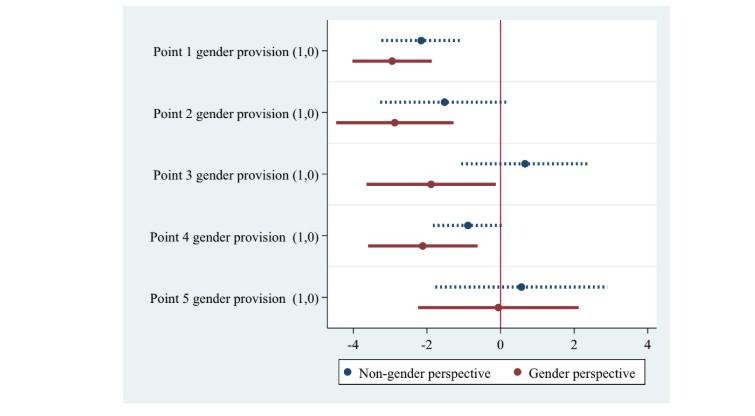
Figure 2. Point Specific Analysis of Gender Provisions and Implementation Status.
Implementing More Gender Provisions Uplifts the Entire Peace Agreement
The complete or “full” implementation of gender provisions provides a significant boost to the success of the peace process, as shown in Figure 3. The addition of more completed gendered-provisions or stipulations improves the probability of the peace agreement being implemented. This confirms the author’s second hypothesis that the implementation of gendered provisions or protections are foundational to supporting broader reforms negotiated in the agreement. Gendered conditions, in this case, act as leverage for advancing peace and stability in post-war nations.
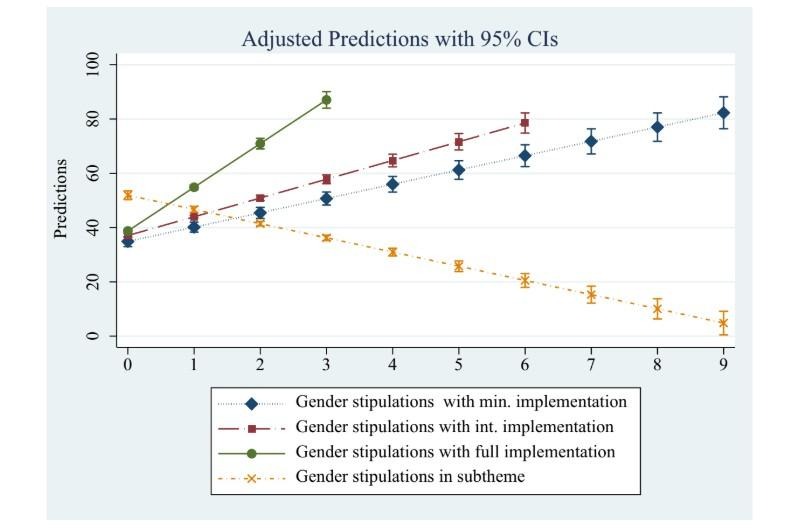
Figure 3. Prediction of Level Implementation Rate.
Why It Matters
This article provides a helpful illustration for how gendered perspectives are implemented in and shape post-war peacebuilding, in comparison with non-gendered perspectives. A dynamic connection is clearly present between gendered provisions and the rate of success for implementing a peace agreement–highlighting their significance in the peace implementation process. The author encourages future research to build upon the findings of this study to determine what conditions or factors influence the inclusion of gender protections in peace negotiations in other settings. By doing this, scholarship will be able to magnify the role of women and their perspectives in implementing important peace agreements.
Read the original article in Policy Studies Journal:
Joshi, Madhav. 2025. “Does the Implementation Status of Gender Provisions Affect the Implementation of a Peace Agreement? Evidence From Colombia’s 2016 Peace Agreement Implementation Process.” Policy Studies Journal 53(4): 1152–1163. https://doi.org/10.1111/psj.12584
About the Article’s Author(s)

Madhav Joshi is a research professor and an associate director of the Peace Accords Matrix (PAM) at the Kroc Institute for International Peace Studies at the University of Notre Dame’s Keough School of Global Affairs. He oversees the data coding for the PAM project and leads the research initiatives on peace agreement design, implementation, and post-implementation political and economic developments. His current priorities focus on collaborative initiatives fulfilling the Kroc Institute’s mandate specific to developing methodology and verifying the implementation of the 2016 peace agreement between the Colombian government and the FARC (Fuerzas Armadas Revolucionarias de Colombia – Ejercito del Pueblo). In collaboration with Catholic Relief Services-Philippines, he leads the Peace Accords Matrix-Mindanao technical accompaniment support to the Joint Normalization Committee in monitoring and verifying the implementation of the Normalization Annex in the 2014 Comprehensive Agreement on the Bangsamoro. He holds a Ph.D. in Political Science from the University of North Texas. His works are published in Political Geography, Social Science Research, British Journal of Political Science, the Journal of Conflict Resolution, the Journal of Peace Research, Democratization, International Peacekeeping, International Studies Quarterly, and many other journals.
 Policy Studies Journal Blog