How to Talk about Crises? Leaders’ Narrative Strategies During the COVID-19 Vaccination Campaign in Italy and France

During a crisis, narratives matter as they allows us to make sense of an unpredictable situation and navigate urgency. The COVID-19 pandemic showed that the type of narratives and communication strategies used fundamentally shaped public opinion toward governmental efforts aimed at mitigating the virus. This article examines the role of narrative strategies utilized by France and Italy during the pandemic; focusing on the vaccination campaigns in both countries, to see how political leaders processed and framed both pandemic-related issues and recommended solutions. Furthermore, to track how narrative strategies and patterns in both countries developed over time, the authors applied the Narrative Policy Framework (NPF) and an analytical typology that examines evidence versus emotion, as well as gain versus loss framing.

Hypotheses

The authors established several theoretical expectations to study changes in narrative strategies during crisis.

  1. Evidence-based strategies will only be preferred over emotion-based arguments when sound information is available; evidence-based strategies are less likely to appear in earlier stages of a crisis.
  2. Evidence-based strategies are more likely to be implemented when leaders have a scientific or technical background.
  3. Decision-makers will try to extensively utilize gain-framed messaging in their narrative strategies given the social acceptability of positive communication.
  4. The propensity of loss-framed messaging may increase when gain-framed strategies are ineffective or the desired outcomes need to be accelerated.

Methodology

The authors examined a total of 22 documents (13 Italian and 9 French) that included speeches and press releases from government leaders and Health Ministers in both Italy, as well as France. These documents were selected from 2021, encompassing the first phases of vaccination campaigns pursued by the French and Italian governments. Moreover, the authors utilized Discourse Network Analyzer (DNA) software to code for narratives present in the collected documents.

Key Findings

Who are the Heroes and Villains of the Pandemic?

Figure 2 shows that in the majority of cases and in both countries, vaccines were narrated as the “heroes” of the story, alongside restrictive measures and health staff—with science also featuring as a “hero”, though only in the Italian case. The distribution of “heroes” is notably similar across the two countries. The more meaningful differences emerge on the “villains” side: while COVID-19 and its variants feature as the primary “villain” in both countries, no-vax people appear far more frequently as “villains” in the French case than in the Italian one. These patterns indicate that while France and Italy broadly share the same “heroic” narratives around vaccines, French leaders were considerably more inclined to cast unvaccinated individuals in an antagonistic role—a finding consistent with the greater use of loss-framed and scaring tactics observed in the French narrative strategies more broadly.
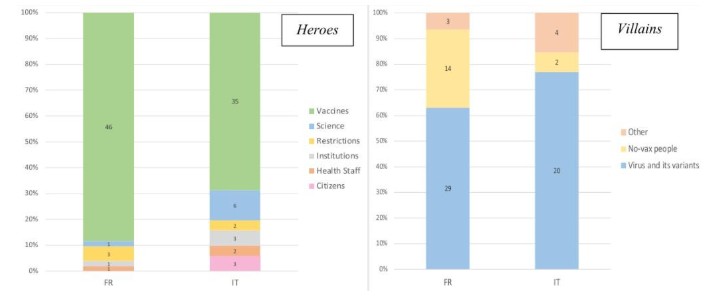
Figure 2. Heroes and Villains in the French and Italian Narratives.

France and Italy Used Different Narratives Strategies Over Time

As illustrated in Figure 6, during Phase 1 of the vaccination campaign, both France and Italy utilized encouraging narrative approaches to build trust; this was more pronounced in France whereas Italy employed a mixture of an encouraging approach and logical persuasion. However, across Phases 2-3, the narrative strategies began to diverge in both countries as France resorted toward admonition and scaring practices, whereas Italy balanced admonition with gain-framed types of narratives (i.e., logical persuasion and an encouraging approach). These findings indicate that France was more likely to depend on alarmist and emotional narrative tactics to increase vaccination rates, whereas Italy pursued a more technical, deliberative approach.
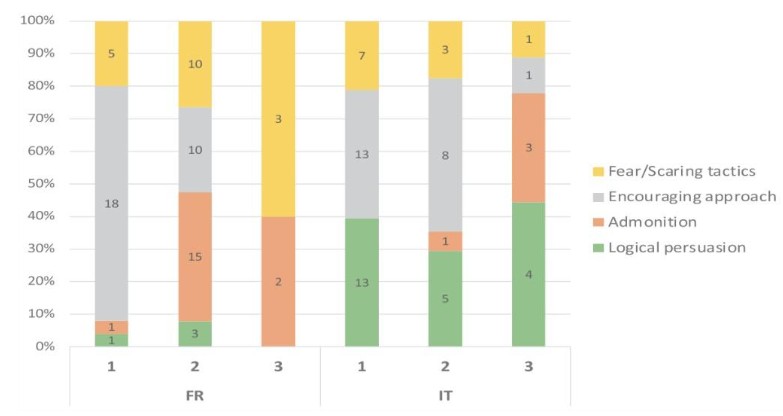
Figure 6. Narrative Strategies by Country and Phase.

Why It Matters

This article reveals that narratives are not simply “talk”, but represent strategic tools applied to shape public acceptance toward restrictive policies. By focusing on France and Italy as empirical cases of COVID-era narratives, the study illuminates how political leaders in different national settings communicated with the public during a time of crisis. The authors encourage future research to apply their typological framework to other crises, such as climate change mitigation, to determine whether evidence-based or emotion-based strategies are employed in different policy contexts. Understanding these narrative patterns can help future political leaders select communication strategies that mediate compliance and institutional trust.

Read the original article in Policy Studies Journal:

Mastroianni, Laura and Stefania Profeti. 2025. “How to Talk About Crises? Leaders’ Narrative Strategies During the COVID-19 Vaccination Campaign in Italy and France.” Policy Studies Journal 53(4): 994–1013. https://doi.org/10.1111/psj.12585.

About the Article’s Author(s)

Laura Mastroianni is a Postdoctoral Research Fellow in Public Policy at the University of Bologna, Department of Political and Social Sciences. 

Stefania Profeti is Associate Professor in Political Science at the University of Bologna, Department of Political and Social Sciences.

Coupling the Streams by Connecting Claims: Discourse Networks Show How a German Labor Market Policy Hits the Agenda in the Early Phase of the Covid‑19 Pandemic

by Malte Möck, Colette S. Vogeler, Nils C. Bandelow, & Johanna Hornung

The early textbook approach of the policy process pictures policy-makers as capable of crafting policies as solutions for existing societal problems. The multiple streams perspective pioneered by John Kingdon in the 1980s suggests that reality is far more chaotic. Too much happens simultaneously. Policies are developed, adapted and combined. Problems emerge, change and are replaced by more important ones. Policy-makers in governments come and go and are by no means capable of addressing all relevant problems in a timely and orderly manner. There are simply too many issues, while the attention of decision-makers is limited. Against this background, some actors are able to promote a policy in a way that makes it look like the perfect solution to a problem. Such actors are called policy entrepreneurs, and the purposeful sense-making of an ambiguous reality is known as coupling problems, solutions, and politics. The mechanisms of coupling, however, are understudied.

The Multiple Streams Framework distinguishes between the ever-changing but initially unconnected problems, policies and politics. In any policy area, the streams can pose more or less advantageous conditions; for example, the current government could be supporting or opposing the policy. If the streams are generally favorable and an opportunity presents itself, entrepreneurs can seize such a policy window to couple the streams. In our article, we investigate a case that presents such a constellation. In summer 2020, the Work Safety Control Act made it to the German federal government’s agenda. This policy addresses poor working conditions in the meat-processing industry by banning service contracts and temporary work, creating standards regarding the recording of working time and accommodation of workers, and introducing provisions on monitoring compliance.

We argue that the Multiple Streams Framework explains agenda setting in this case rather well. The policy proposals had been around for a while in the policy community and in the context of self-commitments by the industry. Also, the political context was favorable as the Social Democrats calling for such changes were a part of the governing coalition and in charge of the respective ministry. Finally, outbreaks of Covid‑19 in German abattoirs in spring 2020 created a policy window in the problem stream. In this early phase of the pandemic, Covid‑19 dominated every agenda and infection hubs were easily linked to insufficient working conditions in the abattoirs.

But how exactly were streams coupled while the policy window was open? To answer this question, we provide a methodology to zoom in on the coupling by entrepreneurs. We build on previous work conceptualizing coupling as making an argument or claim about elements from the streams as representations of reality and as taking place not only across all three streams, but also partially by for example linking problem and solution (cf. post in PSJ Blog below on 4 Oct 2023). Studying discourses as bipartite networks, in which actors make statements about issues, allows researchers to represent elements from a discourse as linked by actors making similar claims about them. We suggest combining these approaches as relational coupling as illustrated below.

Relational coupling enables us to study the German public debate on Covid‑19 infections and working conditions in abattoirs. In this way, it is possible to investigate how policy entrepreneurs coupled the streams in order to push the Work Safety Control Act to the government’s agenda. Our discourse network analysis shows two phases of agenda setting. In the first phase in May and early June 2020, entrepreneurs mainly engaged in presenting and linking problems. They connected issues like Covid‑19 outbreaks in the meat-processing industry, insufficient health protection and working conditions and the subcontractor system. Coupling across streams is observed rarely, for example in attributing responsibility to the companies and the German states (political stream) or in pointing to the need of improved controls (policy stream).

This is different for the second investigation period in late June and July 2020, in which more discursive elements were addressed and connected more densely also across streams. One cluster of couplings builds on crisis management considerations regarding a specific Covid‑19 outbreak in an abattoir. The respective company was held responsible (political stream) and regional lockdowns were suggested (policy stream). Building on this cluster, however, the previously framed general problems were interlinked along with the policy proposals of the Work Safety Control Act, which was considered by the German cabinet at the end of July 2020. This shows that relational coupling contributes to understanding the mechanisms of coupling the streams and facilitates investigating the crucial process of how policy entrepreneurs can make use of an opportunity to push their policy to the agenda.

You can read the original article in Policy Studies Journal at

Möck, Malte, Vogeler, Colette S., Bandelow, Nils C., and Hornung, Johanna. 2023. “Relational Coupling of Multiple Streams: The Case of COVID-19 Infections in German Abattoirs.” Policy Studies Journal, 51: 351-374. https://doi.org/10.1111/psj.12459

About the Authors

Malte Möck is a postdoctoral researcher at the Agricultural and Food Policy Group at Humboldt-Universität zu Berlin, Germany. His research addresses agricultural policy, socio-technical change and urban-rural relations, especially in inter- and transdisciplinary contexts.

Colette S. Vogeler is professor of Comparative Public Administration and Policy Analysis at the University of Speyer, Germany. Her research focuses on public policymaking in the areas of environmental, agricultural and animal welfare policy.

Nils C. Bandelow is a professor of political science and head of the Institute of Comparative Politics and Public Policy (CoPPP), Technische Universität Braunschweig, Germany. His research focuses on actor-centered approaches to the policy process, which he applies to health and infrastructure policy in inter- and transdisciplinary cooperations.

Johanna Hornung is a postdoctoral researcher at the KPM Center for Public Management, University of Bern, Switzerland. Her research focuses on the integration of (social) psychological perspectives into public policy theories, which she applies to health and environmental policy and in interdisciplinary cooperations.