
Collective action can serve as a vehicle for advancing policy change. Studies show that, to this end, coalitions may form around shared beliefs to influence policies in line with their preferences. In interaction with competing coalitions, however, intergroup dynamics can lead to a demonization of opponents and a glorification of allies; phenomena that have been termed Devil-Shift (DS) and Angel-Shift (AS), respectively. The growing interest in these observations from different strands of research has encouraged the authors in this article to investigate how DS-AS is studied across different policy frameworks. With regard to the Advocacy Coalition Framework (ACF) and the Narrative Policy Framework (NPF), the authors conducted a systematic literature review in order to promote theoretical integration and methodologically improve how policy researchers study collective action and intergroup dynamics. The authors explicitly ask: How do the ACF and NPF conceptualize, as well as measure DS-AS tactics? To what extent do similarities and/or differences exist between these frameworks that may affect mutual research progress on collective action?
Methodology
The authors conducted a systematic literature review, screening articles that engaged with the DS-AS concepts in relevant databases such as Web of Science. Subsequently, after ensuring that the collected articles aligned with the authors’ criteria/guidelines, the final sample for the literature review consisted of 38 articles. The authors then reviewed the application trends of DS and AS over time regarding publication outlets, policy domains, co-citations, conceptualization, measurement, and findings. This was done with the aim of proposing an integration of the research in a joint research program.
Key Findings
Conceptualization and Measurement Differ Substantially by Framework
The ACF and the NPF differ substantially in their conceptualization of DS-AS. While the ACF mainly uses the original definition of the perception of opponents as exaggeratingly more evil and powerful, the NPF conceptualizes the two as narrative strategies used in communication in policy processes. Table 1 also reveals that ACF studies predominantly employ survey data/questionnaires, as well as interviews, to capture the perceptions of policy actors. Meanwhile, NPF studies draw on textual data, such as news articles and documents, to analyze how actors’ biases/perceptions are translated into viable narrative strategies. These discrepancies highlight a severe disconnect between ACF and NPF-centric studies, showcasing that while both studies attempt to further explore collective action dynamics, the applied methods lead to varied understandings of actor behaviors.
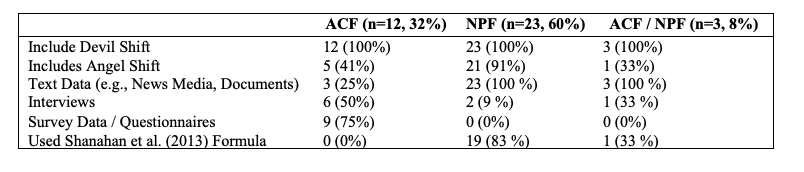
Table 1. Summary of Methods for DS/AS in ACF/NPF Studies.
A Unified Sub-Theory with Different Methods
Despite using different conceptualizations and methodological approaches to study the two phenomena, there is a converging interest in examining similar facets of cognitive processes that shape preferences and behavior in the policy process, as well as strategies used to mobilize and/or combat other coalitions. Therefore, the authors propose a unified research program to structure and jointly advance research on the DS-AS. Figure 7 visualizes this theory, in which DS-AS can be analyzed as both an independent and a dependent variable, and to the study of which both ACF and NPF can make a meaningful and complementary contribution. While ACF provides insights into DS-AS alongside the NPF’s identified narrative strategies, the NPF adds a manifestation of DS-AS in the public discourse of what the ACF captures as cognitive misperceptions.
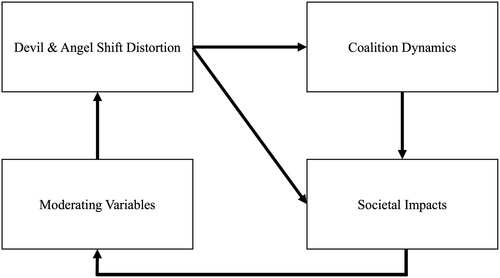
Figure 7. Flow Diagram of General Devil Shift-Angel Shift Theory.
Why It Matters
This article provides a critical foundation for exploring how cognitive biases influence the identification of allies and adversaries by political actors amidst policy conflicts. By focusing on DS-AS tactics across two different theoretical frameworks, an opportunity exists for cross-theoretical integration. The prospective blend of coalitional and discourse-focused research in ACF and NPF, respectively, has the potential to shed light on inter-group dynamics affecting collective action on complex policy issues. While both theoretical frameworks diverge on conceptualizations and measurements of DS-AS, they are actively molding a robust and unified sub-theory of actor perceptions in policy research. The authors recommend that both research communities contribute to this unified sub-theory with different theoretical and methodological extensions and advancements, and by engaging in an interdisciplinary dialogue to better understand the drivers of policy actor biases and activities during policy conflict.
Read the original article in Policy Studies Journal:
Hornung, Johanna, Allegra H. Fullerton, and Christopher M. Weible. 2025. “Devil and Angel Shifts in Collective Action: A Call For Integration and Improvements”. Policy Studies Journal 53(4): 1014-1044. https://doi.org/10.1111/psj.70018.
About the Article’s Author(s)

Dr. Johanna Hornung is an assistant professor in Public Policy at the University of Lausanne. She is Co-Editor of the Review of Policy Research (RPR) and the European Policy Analysis (EPA) journal. Her research interests lie in public policy research, particularly health policy, and the integration of psychological perspectives in actor-centered explanations of policy processes.

Dr. Allegra H. Fullerton is a researcher and lecturer at the School of Public Affairs at the University of Colorado Denver. Her work focuses on policy theories, emotions in politics, and improving fairness for marginalized communities. She serves on the Conference on Policy Process Research organizing committee and as Digital Associate Editor at Policy and Politics.

Dr. Christopher M. Weible is a University of Colorado Distinguished Professor at the School of Public Affairs. He is the Co-Founder and Co-Director of the Center for Policy and Democracy (CPD) and Co-Editor of Policy & Politics. His work includes Theories of the Policy Process, Methods of the Policy Process, and Policy Debates in Hydraulic Fracturing. He has an Honorary Doctor of Philosophy and is a Guest Professor at the Luleå University of Technology, Luleå, Sweden.

