
Academics perform a much larger role beyond the classroom when it comes to shaping public policy decisions and outcomes. They provide data and evidence to political leaders, run trial experiments to test new ideas, and supply expert advice at government hearings. However, traditional frameworks often fail to examine how academics deploy specialized knowledge to shape policy within parliamentary settings. In this study, a core political puzzle is investigated: why Australia moved to a multicultural policy framework in the 1970s. To answer this, the author applies the Five-Thread Model (FTM) to synthesize policy stage activities and continuous policy streams (i.e., problems, solutions, politics, process, program), demonstrating how major societal shifts in controversial public policy are triggered by academic policy entrepreneurs capitalizing on “windows” of opportunity.
Hypotheses
The author proposes the following hypotheses:
H1: The more a cultural representation issue puts a politician’s (re-)election at risk, the more likely a policy window in the FTM will open.
H2: Multicultural policies are more likely to be adopted by a party if they are attached to that party’s ideology or core positions.
H3: The FTM’s critical juncture opens in the problem thread due to the ‘slow-onset’ crisis.
H4: Policy entrepreneurs of academics were consequential in accessing these critical junctures and employed an issue-linking strategy to link it to an urgent short-term issue.
Methodology
The author utilized a minimalist process tracing approach to explore how academic policy entrepreneurs engaged with Australia’s institutional context to shape multicultural policy. To maximize the number of observations and examine a comprehensive period of policy development in Australia’s multicultural framework, the time frame spans from 1945 to 1985. The author’s empirical analysis relies on tracking policy statements, oral histories (i.e., testimonies, interviews, diaries) along with regional and metropolitan news reporting.
Key Findings
Knowledge is Power: How Academics Shaped Australia’s Multiculturalism Policy
Academics successfully influenced Australian multicultural policy by directly securing seats within the Department of Immigration’s advisory systems, as shown in the continuous streams in Figure 2. This finding suggests that institutional credentials provide scholars with the leverage needed to create official administrative frameworks and reshape national narratives. These mechanisms proved important as systemic policy transformations were not solely driven by politicians rather by external scholarly communities who strategically reframed the “migrant issue”, to encourage multicultural policies. More importantly, this findings directly supports Hypothesis 4, showcasing that academic policy entrepreneurs can be consequential in accessing key policy venues and imprinting their influence on public policy decisions.
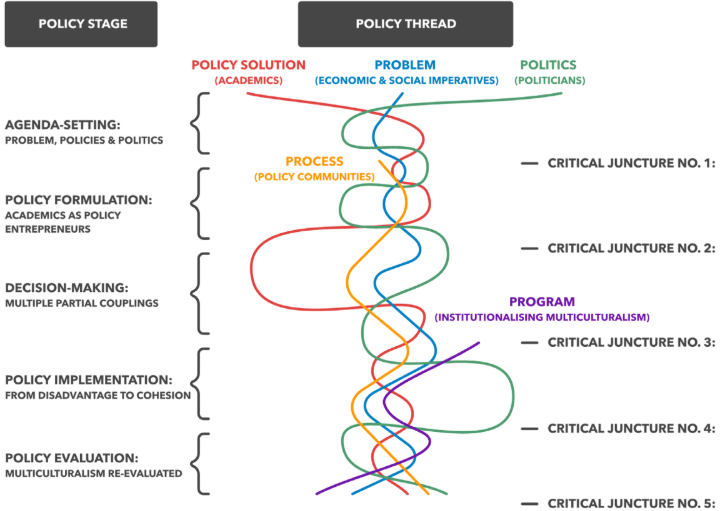
Figure 2. The FTM and Australian Multiculturalism Policymaking. Source: Author (adapted from Howlett et al. 2017).
Multiculturalism as a Vehicle for Political Survival
Demographic panic and high political anxieties compelled political parties in Australia to adjust their policy preferences to a diversifying electorate to ensure political survival, as seen in the political thread in Figure 2. This suggests that as thousands of non-British European migrants became naturalized citizens and were concentrated in inner-city electorates, electoral calculations shifted. As a result, this pattern exposes that underlying electoral calculus pressures political parties to alter their institutional ideologies and campaign practices. Therefore, the described political behavior provides strong support for Hypothesis 1 by highlighting that cultural representation issues open up policy windows, prompting politicians to attach their (re-)election prospects to embracing newer policy perspectives and ideas.
Why It Matters
This research adds to a growing body of public policy literature showing how major changes need not necessarily be driven by crisis alone. By using the Five-Thread Model (FTM) to analyze Australia’s embrace of multiculturalism, the author offers a more extacting account of how encroaching, long-term issues can generate enough structural friction to produce changes in deeply rooted, policy frameworks. More importantly, this research demonstrates that academic inputs into the policy process via ideas, expertise and narrative framing can significantly reshape policy approaches. This provides a potential roadmap for how academic research and contributions can inform government institutions and the quality of created policies in the long-term. Future research can build upon this study by applying the FTM to other jurisdictions and political systems to investigate how the intersection of policy and political sequences restructure longstanding institutional architectures.
Read the original article in Policy Studies Journal:
Mok, Julius C.S. 2025. “The Five-Thread Model & Academic Policy Entrepreneurs: From the White Australia Policy to Multicultural Australia.” Policy Studies Journal, 54(2), https://doi.org/10.1111/psj.70075.
About the Article’s Author(s)

Julius Mok is a doctoral candidate at the Asia Institute, the University of Melbourne. His research centers on the politics of multiculturalism and social cohesion.

