

Who sets the federal policy agenda in the United States? Is it the President, House of Representatives, or the Senate? These are the broader questions that the authors explore in this article, to magnify how the policy issues focused on by federal institutions are determined. As politicians experience a bombardment of concerns or issues from citizens and lobbyists like inflation or national security, they often must decide which issues deserve their attention. Coupled with this challenge, policymaking success often depends on the President, House of Representatives, and Senate paying attention to the same issue. This coordinated nature of policymaking encouraged the authors to investigate who has the most “agenda-setting” authority at the federal-level, and whether the power dynamics are consistent across multiple policy issue areas.
Hypotheses
The authors propose the following hypotheses to guide their exploration of federal policy agenda-setting dynamics:
Hypothesis 1: The president has a significant influence on the agendas in the House and Senate in more policy areas than either chamber of Congress.
Hypothesis 2: The House and the Senate will have influence over the president’s agenda in fewer policy areas.
Hypothesis 3: The House of Representatives will influence the agenda of the president in a greater number of policy arenas than the Senate.
Hypothesis 4: Publicly salient policy areas are more likely to have significant inter-institutional agenda setting relationships than lower salience policy areas.
Methodology
The study analyzed presidential and legislative attention in the United States from 1956 to 2017, using presidential policy messages to Congress from previous archived addresses. To track congressional attention, legislative hearings were extracted from the US Policy Agendas Project. The authors used Vector Autoregression (VAR) to analyze how policy attention shifts among the President, the House of Representatives, and the Senate. This tool allowed the authors to predict the direction and magnitude of federal agenda-setting movements.
Key Findings
The President Dominates the Agenda
The results show that the U.S. President acts as the primary policy agenda setting influencer with increases in presidential attention leading to increases in legislative attention from the House and Senate. This relationship held consistent across nine out of the ten policy topics that were examined in this study (as shown in Figure 1 below – economic policy), confirming Hypothesis 1. The sole exception to this pattern is civil rights policy, however, historically, there has been a lower baseline of presidential policy messages to the Congress on this topic. Nonetheless, these results illustrate the authoritative power the U.S. President possesses in determining which macro-policy topics are focused on by Congress, and how the legislative cycle can initiate.
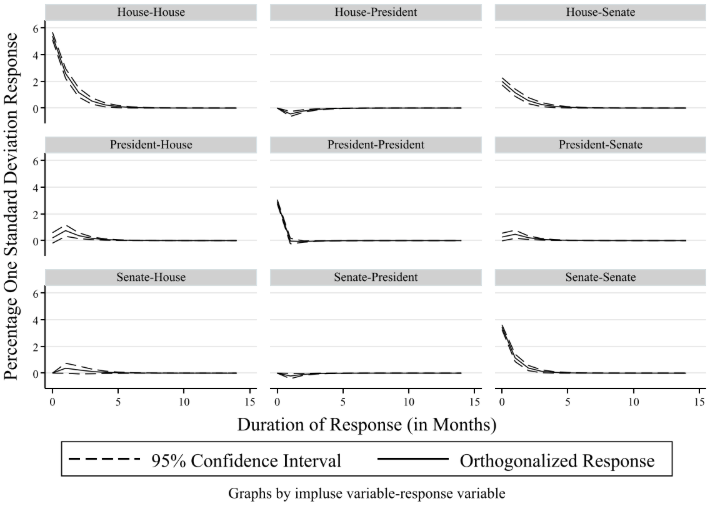
Figure 1. Economy impulse response function.
Legislative Effects on the President’s Agenda are Chamber-Specific
Beyond the agenda-setting powers of the U.S. President, the results also confirm that the House and the Senate influence the President on different policy topics. For example, the House influenced the President’s agenda in six policy areas: economy, social welfare (as shown below in Figure 2), Agriculture/Labor, Civil Rights, Infrastructure, and Government Operations. Meanwhile, the Senate only displayed a statistically significant impact on the President’s agenda in economic matters. These results not only confirmed Hypotheses 2 and 3, but also hinted at deeper institutional differences in capturing presidential attention. Since members of the House are able to specialize more through the structure of policy sub-committees, this allows for greater policy signaling compared to the Senate, which has fewer subcommittees and each member is on more committees.
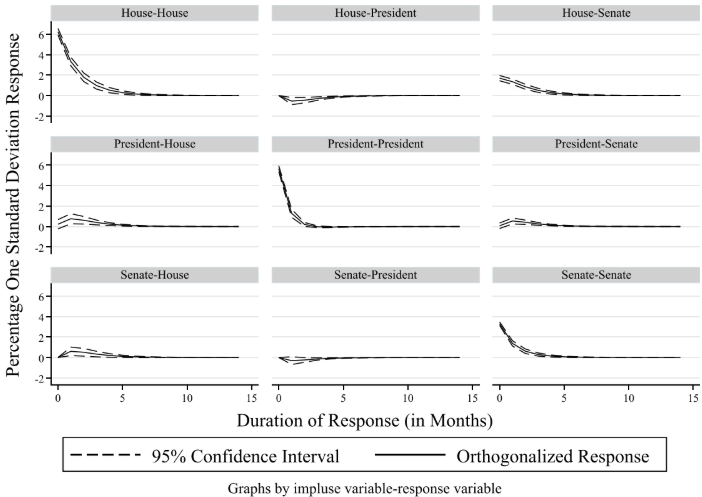
Figure 2. Social welfare impulse response function.
Why It Matters
The article effectively clarifies how key federal players in the executive and legislative branches of the U.S. government set the tone and direction for policymaking on important issues. When issues arise, it is evident that policymakers defer to an executive, kinetic leader who can wield public and media attention to shape the agenda. Retrospectively, legislative institutions wield signaling powers that expedite the movement of policy items. These dynamics produce an illustration for how executive and legislative components interact to produce policy change from a foundational context. For future research, the authors encourage an examination into the agenda setting dynamics between the House and the Senate, as well as further exploration of what issues the President is attentive or inattentive to.
Read the original article in Policy Studies Journal:
Eissler, Rebecca M., & Paul E. Rutledge. 2026. “Power Play: The Agenda Dynamics of the United States President, House of Representatives, and Senate”. Policy Studies Journal 54(1): 1-22. https://doi.org/10.1111/psj.70036.
About the Article’s Author(s)

Rebecca M. Eissler is an Associate Professor of Political Science at San Francisco State University. Her research focuses on the U.S. presidency and public policy processes.

Paul E. Rutledge is a Professor of Political Science at the University of West Georgia. He earned his Ph.D. from West Virginia University in 2009.

