

How does public service delivery actually happen? Traditional literature has recognized that interactions between citizens and governments are vital to delivering key services such as public safety and education. However, scholars and practitioners have struggled to agree on how to define and visualize coproduction in the public sector. In his recent article, Dr. Gregg Van Ryzin addresses this ambiguity. He argues that coproduction can be understood as a dynamic, sequential causal process. And by visually mapping the causal pathways, scholars and practitioners can gain a new perspective on how to design and improve existing public services.
Mapping Van Ryzin’s Framework
The causal framework prescribed by Van Ryzin diagrams a highly dynamic, interactive process featuring three core variables:
- Regular Producer (RP): This is represented by the government, municipal workforce, is public contractor who produces a public good or service.
- Consumer Producer (CP): The client, citizen, or community group who assists in producing a public good or service.
- Quality/Quantity (Q): The final quantifiable output or outcome—i.e., drivable roads, educated children, safe neighborhoods, etc.
Furthermore, public service production is treated not as a one-way street, but as the result of relationships between citizens and the government in six distinctive causal pathways (Edges):
- Edge A (Direct Government): The government acts alone to create and deliver the public good/service.
- Edge B (Grassroots Action): Citizens act independently through grassroots infrastructure or self-help.
- Edge C (Government Facilitation): The government interacts with and guides citizens in their efforts.
- Edge D (Citizen Feedback): Citizens actively monitor and provide information or assistance to the government to improve operations.
- Edge E (Coercion/Mandates): The government mandates citizen compliance through regulations, sanctions, or penalties.
- Edge F (Political Advocacy): Citizens employ advocacy strategies to pressure the government.
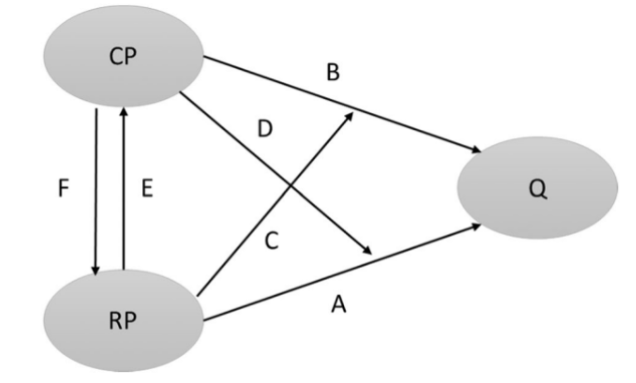
Figure 1. Causal diagram of coproduction.
Real-World Applications Across Public Services
Public services do not rely on the same blueprint for coproduction. By applying the framework to diverse public services, Van Ryzin demonstrates how purpose and context combine to shape service delivery. For example, in the case of community gardens (2B), the grassroots efforts of citizens drive the creation of these services, with the support of government measures such as grants. To achieve traffic safety (2C), the government must, of necessity, rely on legal rules and educational campaigns to ensure driver compliance. These instances convey that coproduction is a context-dependent phenomenon, shaped by the actions and behaviors of citizens and government, unique to the public good or service being created.
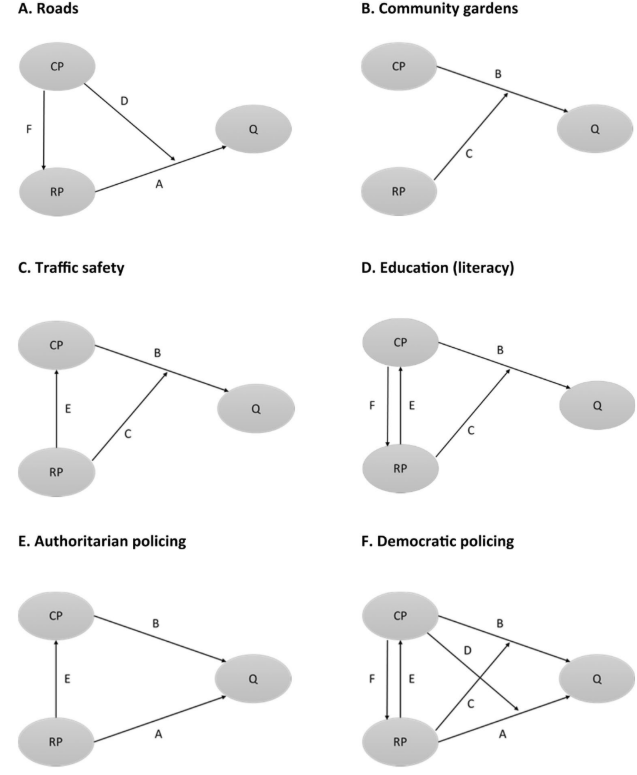
Figure 2. Causal diagrams of the coproduction of various public goods and services.
Why It Matters
This perspective piece elegantly highlights how the coproduction of everyday public goods and services is not merely a static mixture of resources, but a dynamic causal process shaped by joint government and citizen inputs. The causal lens also helps clarify how coproduction relates to adjacent concepts like volunteering, participation, co-creation, and collaborative governance, sharpening a term that has long been difficult to pin down. For policymakers, the use of causal diagrams provides several concrete advantages for improving public service delivery. Visualizing similar causal dynamics between distinct public services can unlock opportunities for inter-agency learning and cross-sector collaboration. Moreover, program managers can map their operations to pinpoint pathways for improvements in service delivery by leveraging the input of clients and citizens. Collectively, these visual blueprints enable existing public programs to be optimized to achieve efficiency, equity, and quality in real-world practice.
Read the original article in Policy Studies Journal:
Van Ryzin, G.G. (2026). “Coproduction as a Causal Process.” Policy Studies Journal 54(1), e70053. https://doi.org/10.1111/psj.70053.
About the Article’s Author(s)
Gregg G. Van Ryzin is a professor in the School of Public Affairs and Administration (SPAA) at Rutgers University-Newark, where he is also director of the Lab for Experimental and Behavioral Public Administration (L-EBPA). His research focuses on various behavioral aspects of public policy and administration, including subjective evaluations of government performance, trust of institutions, coproduction, and the symbolic effects of representative bureaucracy. He is currently an editor of the International Public Management Journal, and he was a founding co-editor of the Journal of Behavioral Public Administration.

