

Narratives are central to how people communicate and understand public policy. Policy actors use stories to explain what went wrong, when, who is responsible, and what we should do about it. Within the Narrative Policy Framework (NPF), scholars study those policy stories by identifying common narrative elements, including the characters (Heroes, Villains, Victims), settings, morals of the story, and the story’s plot.
Plot has been one of the most difficult concepts to define and measure consistently because it can refer to several related ideas; it might describe the sequence of events or identify where things went wrong (e.g., the policy problem), or perhaps describe the reason there is a problem to begin with. This article takes a step toward bounding those ideas into a single useful descriptor: plot is the action of a narrative.
Methodology
This article uses a scoping review to examine how NPF scholars have defined and measured plot across existing research. The review identified NPF studies that explicitly engaged plot as a narrative element and examined how each study described, conceptualized, and operationalized plot. The review also looked for recurring patterns in how scholars used plot in practice.
Key Findings
This article finds that NPF research has used plot in diverse but often complementary ways. Rather than treating those differences as competing definitions, the article organizes plot around three conceptual dimensions: structure, valence, and causality.
Structure refers to how action unfolds in a policy narrative, including sequence, timing, beginnings, and endings. Valence captures the direction or tone of action, such as whether a narrative describes improvements, declines, crisis, or progress on a policy issue. Causality refers to how responsibility for action is assigned, explaining why events happen, who or what is responsible, and how policy problems are connected to policy solutions.
Figure 4 summarizes this argument by showing how these three dimensions connect to common operational approaches in the NPF literature. This helps clarify that NPF scholars may all be studying plot, but they are often measuring different parts of plot.
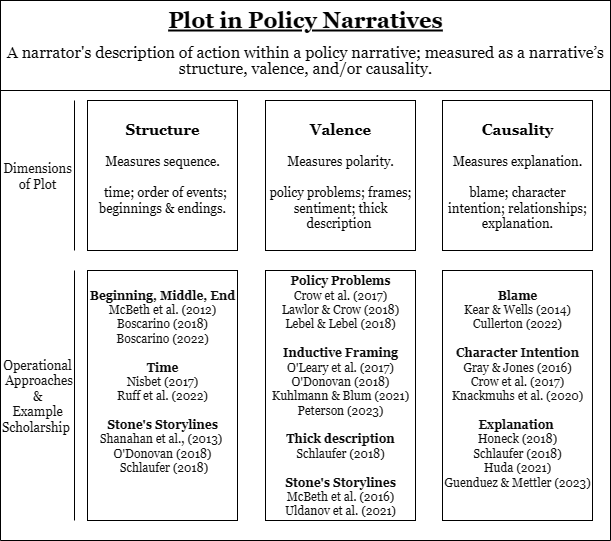
Figure 4. A Reference for Plot in NPF Scholarship.
Why It Matters
This article argues that plot should not be treated as a single, fixed measurement. Instead, scholars can use structure, valence, and causality as a shared language for describing what they mean when they study plot. That shared language can help NPF scholars communicate their research designs more clearly, compare findings across studies, and build cumulative knowledge about how policy stories shape public life.
As the NPF continues to grow across policy areas, methods, and levels of analysis, clear concepts matter. Boundaries for plot can help researchers explain how policy stories organize action, assign meaning, and connect policy problems to policy solutions. The article concludes with opportunities for future research on plot, especially in better measuring how structure and causality work together to create momentum for policy narratives.
Read the original article in Policy Studies Journal:
Ruff, Jonathan WA. 2026. “Structure, Valence, and Causality: A Scoping Review of Plot Concepts and Measurements in the Narrative Policy Framework”. Policy Studies Journal 54(1). https://doi.org/10.1111/psj.70066.
About the Article’s Author(s)

Jonathan Ruff is an Assistant Professor of Political Science in the School of American and Global Studies at South Dakota State University. His research examines how governments use storytelling to define policy problems, justify bureaucratic authority, and organize institutional responsibilities.

